
Wide Band Balanced Mixers (970 & 980 Series)
Mi-Wave’s 970 Series Wideband Balanced Mixer Down-Converters and 980 Series Wideband Balanced Mixer Up-Converters are high-performance frequency conversion products engineered for RF, microwave, and millimeter-wave systems requiring exceptionally wide operating bandwidths, excellent conversion performance, and reliable signal translation across demanding electronic warfare (EW), electronic intelligence (ELINT), communications, radar, and test applications.
The 970 Series Down-Converters translate high-frequency RF signals to lower intermediate frequencies (IF), enabling easier signal processing, analysis, and receiver integration. Conversely, the 980 Series Up-Converters translate lower-frequency IF signals to higher RF frequencies for transmission, signal generation, and system integration.
Both series utilize balanced mixer architectures that provide excellent port isolation, reduced spurious responses, improved harmonic suppression, and stable conversion performance across extremely wide frequency ranges. Select models are available with internally biased mixers, allowing operation with lower local oscillator (LO) drive levels while maintaining excellent conversion efficiency.
Designed for demanding military, aerospace, laboratory, and commercial RF systems, the 970 and 980 Series support applications including electronic warfare (EW), electronic intelligence (ELINT), radar systems, satellite communications (SatCom), RF instrumentation, signal intelligence (SIGINT), and advanced microwave research.
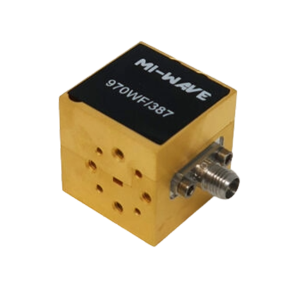
The models shown represent only a portion of Mi-Wave’s full frequency converter capabilities. Custom frequency ranges, IF configurations, LO requirements, connector options, and mechanical packaging are available to meet specialized system requirements.
The standard models shown represent only part of Mi-Wave’s broader product capabilities. Custom configurations are available to support specific frequency bands, interfaces, and application requirements, enabling optimized solutions for specialized RF, microwave, and millimeter-wave systems.


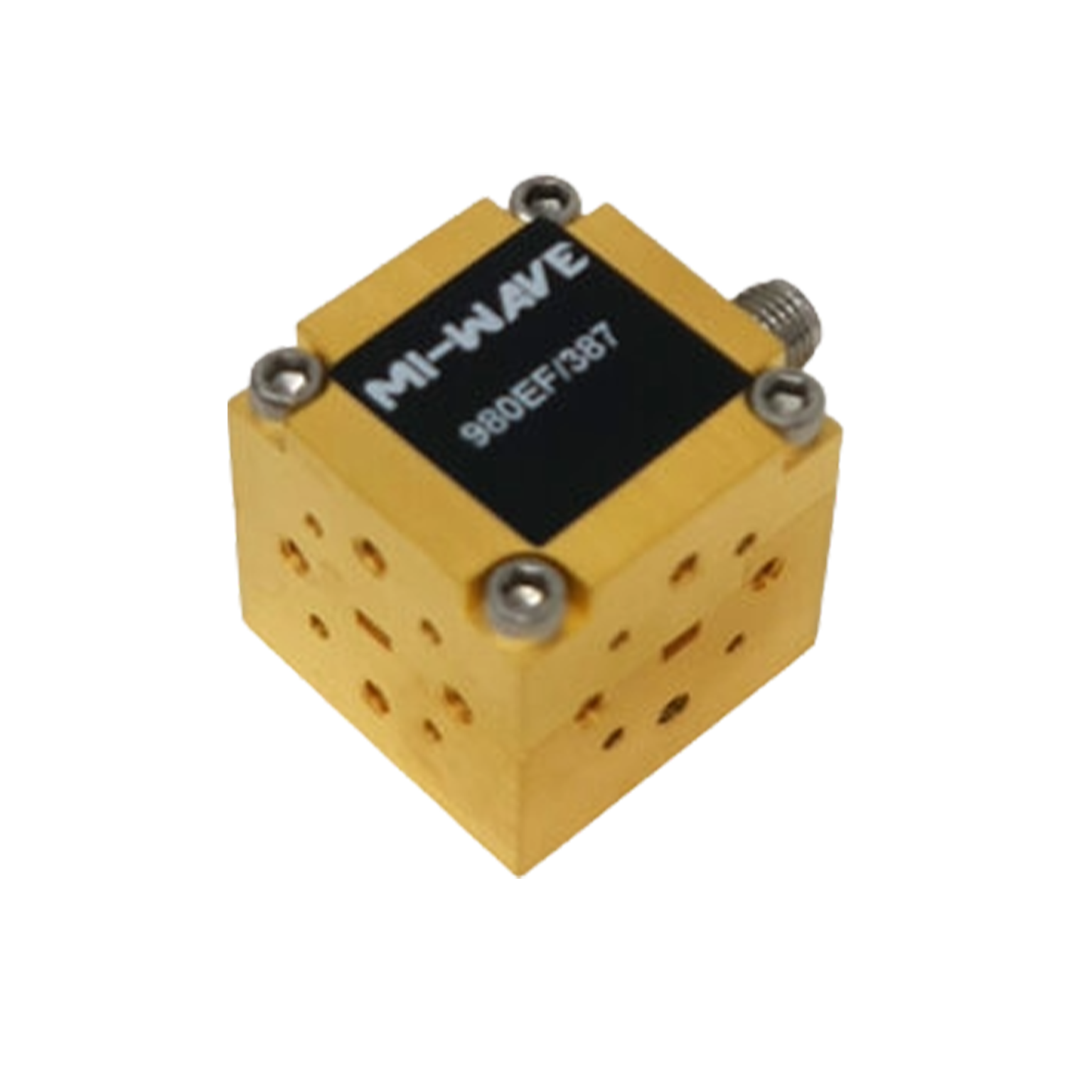

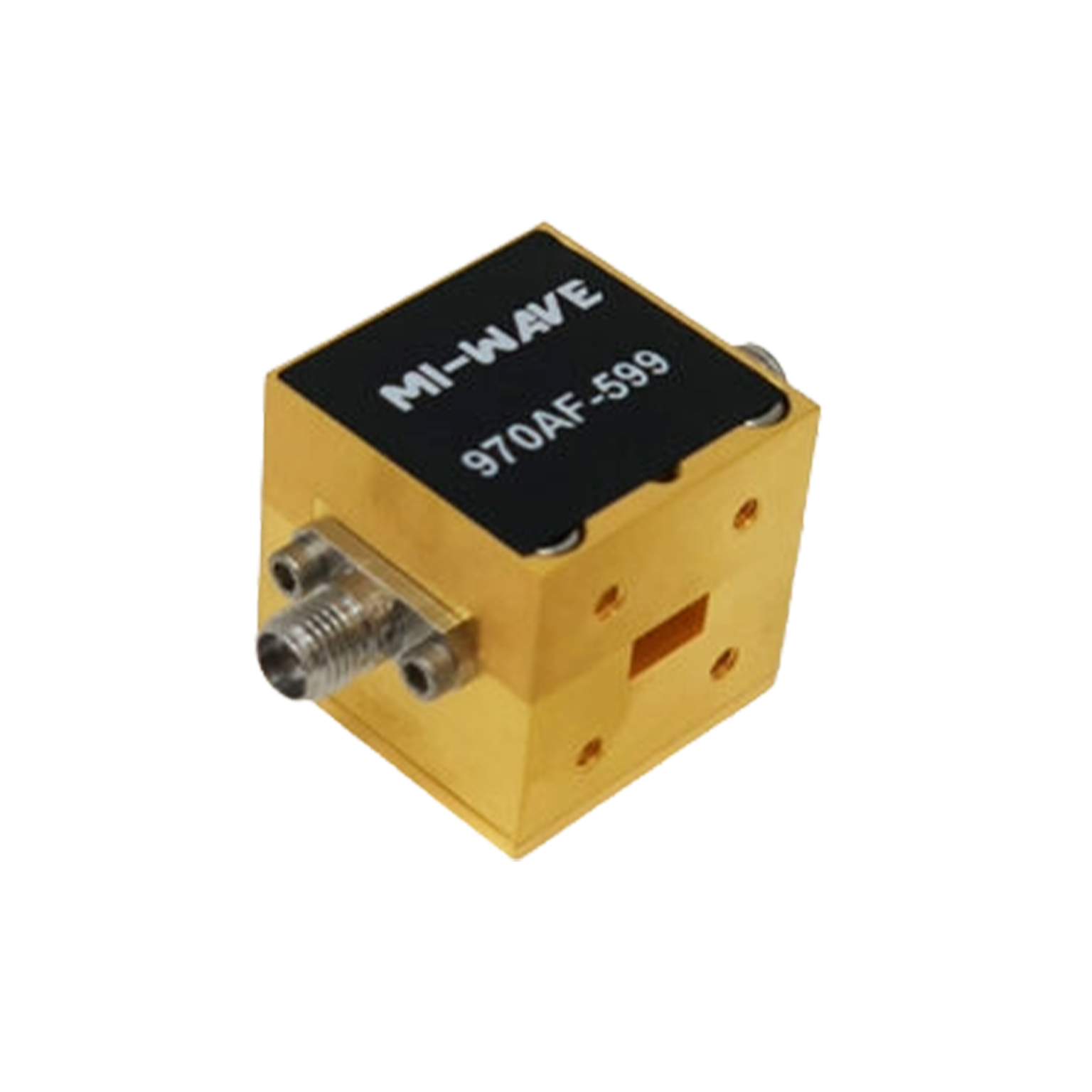
| Model | RF Frequency | LO Frequency | IF Frequency | LO Drive Level | RF-to-IF Conversion Loss | LO-to-RF Isolation | Max LO + RF Input Power | RF / LO Ports | IF Port | LINK |
|---|---|---|---|---|---|---|---|---|---|---|
| 970AF/599 | 980AF/599 | 26.5–40 GHz | 26.5–40 GHz | DC–10 GHz | +13 dBm | 10 dB | 28 dB | +17 dBm | WR-28 Waveguide, UG-599/U Flange | SMA Female | |
| 970BF/383 | 980BF/383 | 33–50 GHz | 33–50 GHz | DC–12 GHz | +13 dBm | 10 dB | 28 dB | +17 dBm | WR-22 Waveguide, UG-383/U Flange | SMA Female | |
| 970UF/383 | 980UF/383 | 40–60 GHz | 40–60 GHz | DC–12 GHz | +13 dBm | 10 dB | 28 dB | +17 dBm | WR-19 Waveguide, UG-383/U-M Flange | SMA Female | |
| 970VF/385 | 980VF/385 | 50–75 GHz | 50–75 GHz | DC–25 GHz | +13 dBm | 8 dB | 28 dB | +17 dBm | WR-15 Waveguide, UG-385/U Flange | SMA Female | |
| 970EF/387 | 980EF/387 | 60–90 GHz | 60–90 GHz | DC–30 GHz | +13 dBm | 10 dB | 28 dB | +17 dBm | WR-12 Waveguide, UG-387/U Flange | SMA Female | |
| 970WF/387 | 980WF/387 | 75–110 GHz | 75–110 GHz | DC–25 GHz | +13 dBm | 12 dB | 28 dB | +17 dBm | WR-10 Waveguide, UG-387/U-M Flange | SMA Female |
Wideband Balanced Mixer Overview
Mi-Wave's 970 Series Wideband Balanced Mixer Down-Converters and 980 Series Wideband Balanced Mixer Up-Converters perform RF frequency translation by combining an incoming signal with a Local Oscillator (LO). The resulting output contains the sum and difference frequencies, allowing systems to shift signals between RF and Intermediate Frequency (IF) for transmission, reception, processing, and analysis.
The 970 Series is optimized for down-conversion, translating high-frequency RF signals to lower IF frequencies for receivers and signal processing equipment. The 980 Series performs up-conversion by translating IF signals to higher RF frequencies for transmitters, signal generators, and microwave communication systems. Both utilize balanced mixer architectures that provide excellent port isolation, reduced spurious responses, and stable conversion performance across extremely wide operating bandwidths.
970 & 980 Series Frequency Conversion
970 Series Down Converter
Converts high-frequency RF signals into lower IF signals for receivers, spectrum analyzers, and digital processing systems.
980 Series Up Converter
Converts IF signals into higher RF frequencies for transmitters, radar systems, and communication links.
Signal Input
An RF or IF signal enters one mixer port while a Local Oscillator (LO) provides the reference frequency for frequency translation.
Frequency Mixing
The balanced mixer combines the RF and LO signals, generating both the sum and difference frequencies while suppressing many unwanted mixing products.
Frequency Selection
External filtering selects either the desired IF or RF output while rejecting unwanted harmonics, LO leakage, and spurious signals.
System Integration
The translated signal is routed to receivers, transmitters, spectrum analyzers, radar systems, or digital processing equipment for further operation.
Applications
Mi-Wave’s 970 Series Wideband Balanced Mixer Down-Converters and 980 Series Wideband Balanced Mixer Up-Converters are used in RF, microwave, and millimeter-wave systems requiring wideband frequency conversion, stable mixer performance, and reliable signal translation.
Electronic Warfare (EW)
Used in wideband EW receiver and transmitter systems where rapid frequency coverage, signal detection, and frequency translation are critical.
Electronic Intelligence (ELINT)
Supports ELINT systems that collect, down-convert, analyze, and classify RF signals across wide operating bandwidths.
Signal Intelligence (SIGINT)
Used in signal monitoring and analysis systems where high-frequency RF signals must be converted to usable IF frequencies for processing.
Radar Systems
Supports radar receivers, transmitters, test systems, target simulation, and frequency conversion stages in microwave and millimeter-wave radar platforms.
Satellite Communications (SatCom)
Used in frequency conversion chains for uplink, downlink, gateway, and test systems requiring stable RF-to-IF or IF-to-RF translation.
RF Test & Measurement
Ideal for spectrum analysis, signal generation, receiver testing, mixer characterization, lab validation, and microwave subsystem development.
Communications Systems
Supports microwave and millimeter-wave communication links requiring up-conversion for transmission or down-conversion for receiver processing.
Research & Development
Used in academic, government, aerospace, defense, and commercial RF laboratories for advanced microwave and millimeter-wave experimentation.
Frequently Asked Questions (FAQ)
What is a balanced mixer?
A balanced mixer is a frequency conversion device that combines an RF signal with a Local Oscillator (LO) signal to generate new frequencies while providing improved port isolation and reduced unwanted signal feedthrough compared to simpler mixer designs.
What is the difference between the 970 and 980 Series?
The 970 Series performs down-conversion, translating high-frequency RF signals to lower Intermediate Frequencies (IF). The 980 Series performs up-conversion, translating IF signals to higher RF frequencies for transmission.
What is frequency conversion?
Frequency conversion is the process of shifting a signal from one frequency to another by mixing it with a Local Oscillator (LO). This produces both the sum and difference frequencies, allowing RF systems to process signals more efficiently.
What is an Intermediate Frequency (IF)?
An Intermediate Frequency (IF) is a lower-frequency signal used within RF systems after down-conversion or before up-conversion. Operating at an IF simplifies signal filtering, amplification, and digital processing.
What is a Local Oscillator (LO)?
A Local Oscillator (LO) is a stable reference signal supplied to a mixer that enables frequency translation between RF and IF frequencies.
Why are balanced mixers used?
Balanced mixers improve system performance by providing better port isolation, reducing LO leakage, suppressing unwanted mixing products, and improving overall spectral purity.
What is conversion loss?
Conversion loss is the reduction in signal power that occurs during the frequency conversion process. It is expressed in decibels (dB) and represents the difference between the input and converted output power.
What is LO drive?
LO drive is the amount of Local Oscillator power required to properly operate the mixer. Proper LO drive ensures optimum conversion efficiency and mixer performance.
What is a biased mixer?
A biased mixer incorporates internal DC biasing to reduce the required Local Oscillator drive level while maintaining stable conversion performance. Select Mi-Wave models are available with biased mixer options.
What is image frequency?
The image frequency is an unwanted RF signal that produces the same Intermediate Frequency (IF) as the desired signal during mixing. RF filtering is typically used to suppress image responses.
What are spurious responses?
Spurious responses are unwanted frequencies generated by harmonic mixing between the RF, LO, and IF signals. Balanced mixer architectures help reduce many of these unwanted products.
What is port isolation?
Port isolation describes how effectively the RF, LO, and IF ports are isolated from one another. Higher isolation reduces signal leakage and improves overall system performance.
What applications use wideband balanced mixers?
Wideband balanced mixers are commonly used in:
- Electronic Warfare (EW)
- Electronic Intelligence (ELINT)
- Signal Intelligence (SIGINT)
- Radar systems
- Satellite Communications (SatCom)
- RF test and measurement
- Spectrum analyzers
- Signal generators
- Microwave and millimeter-wave research
Are the 970 and 980 Series suitable for EW and ELINT systems?
Yes. Both series were specifically designed to provide the exceptionally wide bandwidth and stable frequency conversion required by Electronic Warfare (EW) and Electronic Intelligence (ELINT) applications.
Can these mixers be used for millimeter-wave systems?
Yes. The 970 and 980 Series support microwave and millimeter-wave frequency conversion for communications, radar, instrumentation, and research applications.
Can Mi-Wave customize balanced mixers?
Yes. Mi-Wave offers custom configurations including:
- RF frequency ranges
- IF frequency ranges
- Local Oscillator frequencies
- Conversion characteristics
- Connector and interface options
- Biased mixer configurations
- Mechanical packaging
What is the advantage of wideband mixer performance?
Wideband mixers allow a single device to operate across large frequency ranges, reducing the need for multiple narrowband converters while simplifying RF system design.
How do I select the correct balanced mixer?
Engineers typically consider:
- RF operating frequency
- IF frequency requirements
- Local Oscillator frequency
- Conversion loss
- LO drive level
- Port isolation
- Bandwidth
- Linearity
- Power handling
- Connector type
- Environmental requirements
What industries commonly use wideband balanced mixers?
Wideband balanced mixers are widely used in:
- Aerospace & Defense
- Electronic Warfare
- Intelligence Systems
- Satellite Communications
- Radar & Tracking
- Telecommunications
- RF Instrumentation
- Government Laboratories
- Commercial Research
- University Research Centers
RF Mixer Calculators
Estimate frequency conversion, image frequencies, conversion loss, LO drive power, wavelength, and mixer spurious products for RF, microwave, and millimeter-wave systems.
Down-Conversion
Up-Conversion
Image Frequency
Conversion Loss
LO Drive Conversion
Wavelength
Mixer Spur Calculator
Glossary of Wideband Balanced Mixer Terms
This glossary defines common terminology related to Mi-Wave’s 970 Series Wideband Balanced Mixer Down-Converters and 980 Series Wideband Balanced Mixer Up-Converters. These products are used in RF, microwave, and millimeter-wave systems requiring broadband frequency conversion, excellent port isolation, stable conversion performance, and reliable signal translation for communications, radar, EW/ELINT, SatCom, and RF test applications.
Mixer Fundamentals
Balanced Mixer
A frequency conversion device that combines an RF signal with a Local Oscillator (LO) signal while using a balanced circuit architecture to improve port isolation and suppress unwanted mixer products.
Double-Balanced Mixer
A mixer configuration that provides high isolation between the RF, LO, and IF ports while minimizing carrier leakage and many even-order distortion products.
Frequency Conversion
The process of translating a signal from one frequency to another by mixing it with a Local Oscillator signal.
Down-Conversion
The process of converting a higher-frequency RF signal into a lower Intermediate Frequency (IF). This is the primary function of Mi-Wave’s 970 Series.
Up-Conversion
The process of converting a lower-frequency IF signal into a higher RF frequency. This is the primary function of Mi-Wave’s 980 Series.
Mixer Core
The active or passive nonlinear circuit inside a mixer where RF and LO signals combine to generate new frequencies.
RF Signal Terms
Radio Frequency (RF)
The primary high-frequency input or output signal within an RF system.
Intermediate Frequency (IF)
A lower-frequency signal produced after down-conversion or used before up-conversion to simplify filtering, amplification, and digital processing.
Local Oscillator (LO)
A stable reference signal supplied to the mixer that enables frequency translation.
LO Drive
The amount of Local Oscillator power required for proper mixer operation.
LO Leakage
Unwanted Local Oscillator energy appearing at the RF or IF port.
RF Leakage
Unwanted RF energy that leaks into the LO or IF ports.
IF Leakage
Unwanted Intermediate Frequency energy appearing at other mixer ports.
Frequency Conversion Terms
Sum Frequency
The frequency produced by adding the RF and LO frequencies.
RF + LO
Difference Frequency
The frequency produced by subtracting the RF and LO frequencies.
|RF − LO|
Image Frequency
An unwanted frequency that produces the same IF as the desired RF signal during down-conversion.
Frequency Translation
Another term describing the movement of a signal from one frequency to another through a mixer.
Frequency Plan
The arrangement of RF, LO, and IF frequencies used throughout an RF system.
Performance Terms
Conversion Loss
The reduction in signal power during frequency conversion, expressed in decibels (dB).
Conversion Gain
A positive gain provided by active mixer designs during frequency conversion.
Port Isolation
The degree of electrical isolation between the RF, LO, and IF ports.
Dynamic Range
The range between the smallest and largest signals that can be processed while maintaining acceptable performance.
Linearity
A measure of how accurately the mixer reproduces desired signals without introducing distortion.
Third-Order Intercept Point (IP3)
A commonly used linearity metric that estimates a mixer’s resistance to third-order intermodulation distortion.
1 dB Compression Point (P1dB)
The input or output power level where mixer gain or conversion performance compresses by 1 dB due to nonlinear behavior.
Noise Figure
A measurement of how much noise the mixer introduces into the RF signal chain.
Spur-Free Dynamic Range (SFDR)
The usable dynamic range over which unwanted spurious responses remain below the desired signal.
Spurious Signal Terms
Spurious Response
An unwanted output frequency generated by combinations of RF, LO, harmonics, and mixer nonlinearities.
Harmonic
A signal occurring at an integer multiple of a fundamental frequency.
Harmonic Mixing
Frequency conversion involving one or more harmonic frequencies of the Local Oscillator or RF signal.
Intermodulation Distortion (IMD)
Unwanted frequencies produced when multiple signals interact within a nonlinear device.
Carrier Feedthrough
Leakage of the Local Oscillator or RF carrier directly to the output without proper conversion.
Wideband Performance
Wideband Mixer
A mixer capable of operating across a broad RF, LO, or IF frequency range without requiring multiple narrowband designs.
Broadband Frequency Coverage
The ability to support large continuous frequency ranges using a single mixer architecture.
Stable Conversion Performance
Consistent conversion loss, isolation, and electrical characteristics across the specified operating bandwidth.
Biased Mixer
A mixer that incorporates internal DC biasing to reduce Local Oscillator drive requirements while maintaining stable conversion efficiency.
RF System Applications
Electronic Warfare (EW)
Military systems used to detect, analyze, jam, or manipulate electromagnetic signals.
Electronic Intelligence (ELINT)
The collection and analysis of non-communications electromagnetic emissions for intelligence purposes.
Signal Intelligence (SIGINT)
The interception and analysis of electronic and communication signals for intelligence gathering.
Radar System
A system that transmits and receives RF energy to detect, locate, and track objects.
Satellite Communications (SatCom)
Communication systems that transmit and receive RF signals through satellites.
RF Test & Measurement
Laboratory equipment used to generate, analyze, characterize, and verify RF system performance.
Spectrum Analyzer
An instrument used to display signal amplitude as a function of frequency.
Signal Generator
An RF instrument that produces known microwave or millimeter-wave signals for testing and calibration.
Common Frequency Bands
L-Band
1–2 GHz
S-Band
2–4 GHz
C-Band
4–8 GHz
X-Band
8–12 GHz
Ku-Band
12–18 GHz
K-Band
18–27 GHz
Ka-Band
26–40 GHz
Q-Band
33–50 GHz
U-Band
40–60 GHz
V-Band
50–75 GHz
E-Band
60–90 GHz
W-Band
75–110 GHz
D-Band
110–170 GHz
These frequency bands are commonly used in microwave and millimeter-wave communication systems, radar platforms, satellite communications, electronic warfare, RF instrumentation, and research applications supported by Mi-Wave’s 970 and 980 Series Wideband Balanced Mixers.



Interested in this product or other Mi-Wave solutions?
Contact our team to discuss your frequency range, interface needs, and application requirements.
Custom configurations are available for specialized RF, microwave, and millimeter-wave systems.
Return to Mixers
Return to Products Page