
Products> Detectors
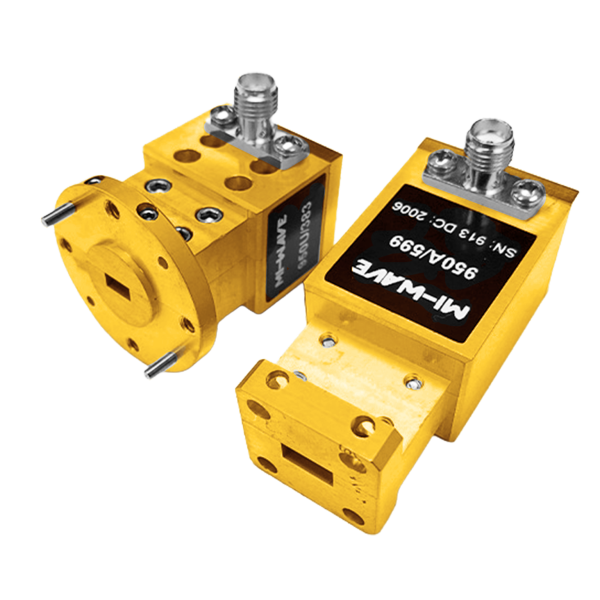
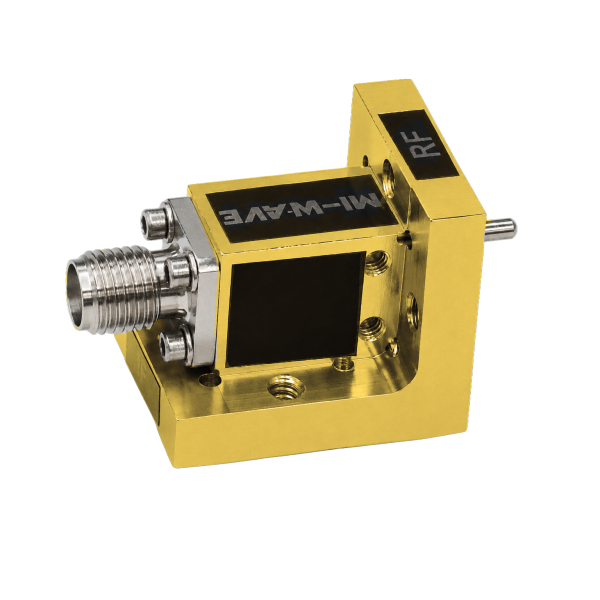
Mi-Wave manufactures millimeter wave detectors across two product lines: Balanced Phase Detectors (Series 950) and Amplitude Detectors (Series 990), built for precision RF power and phase measurement applications.
The standard models shown represent only part of Mi-Wave’s broader probe antenna capabilities. Custom configurations are available to support specific frequency bands, interfaces, and application requirements, enabling optimized solutions for specialized RF, microwave, and millimeter-wave systems.
Watch our informational video to learn more about this product family, including its key features, operating principles, and common applications.
Amplitude Detectors – Series 950
Balanced Phase Detectors – Series 990
Key Features & Performance Benefits
Comprehensive RF Signal Detection Solutions
Mi-Wave’s RF detector product family includes Amplitude Detectors (Series 950), Balanced Phase Detectors (Series 990), and Quadrature Phase Detectors (Series 991), providing versatile solutions for RF power, amplitude, and phase measurement across microwave and millimeter-wave systems.
Fast RF-to-DC Signal Conversion
Designed for rapid response, Mi-Wave detectors convert incident RF signals into proportional DC voltage outputs with minimal latency. Their high-speed operation makes them ideal for real-time monitoring, automatic control systems, and dynamic RF measurements.
High Sensitivity and Wide Dynamic Range
The Series 950 Amplitude Detectors offer excellent sensitivity over a broad dynamic range, enabling accurate measurements of both low-level and high-power RF signals. This makes them well suited for scalar measurements, power monitoring, and instrumentation applications.
Accurate Phase Detection
The Series 990 Balanced Phase Detectors utilize matched Schottky diode technology to generate a DC output proportional to the phase difference between two equal-frequency input signals. This enables precise phase comparison for synchronization, phase measurement, and closed-loop control systems.
Low DC Offset and Excellent Port Isolation
Carefully matched detector circuitry minimizes DC offset while providing excellent isolation between input ports. This improves measurement accuracy and reduces unwanted coupling in precision phase-sensitive applications.
Quadrature Phase Measurement Capability
The Series 991 Quadrature Phase Detectors are designed for applications requiring accurate in-phase (I) and quadrature (Q) signal detection, supporting advanced communication systems, phase-sensitive instrumentation, and signal processing applications.
Precision Schottky Diode Technology
High-performance Schottky detector diodes provide fast switching speeds, low junction capacitance, excellent repeatability, and reliable microwave performance over supported frequency bands.
Passive, Reliable Operation
Mi-Wave RF detectors operate without complex active circuitry, providing dependable long-term performance with minimal maintenance requirements while integrating easily into existing RF systems.
Supports Microwave and Millimeter-Wave Applications
Available across multiple frequency bands, Mi-Wave RF detectors support a wide range of commercial, scientific, aerospace, and defense applications operating throughout the microwave and millimeter-wave spectrum.
Ideal for Test & Measurement Systems
These detectors are widely used in scalar analyzers, vector measurement systems, automated test equipment (ATE), frequency synthesizers, calibration systems, and laboratory instrumentation where fast, repeatable RF measurements are required.
Easily Integrated into RF Subsystems
Mi-Wave RF detectors integrate seamlessly with the company’s mixers, frequency converters, amplifiers, filters, couplers, waveguide components, antennas, and other RF subsystems, providing complete microwave and millimeter-wave measurement solutions.
Custom Configurations Available
Custom detector solutions are available for specific frequency ranges, connector types, waveguide interfaces, electrical performance requirements, and specialized system applications.
RF detectors are essential microwave and millimeter-wave components that convert high-frequency RF signals into proportional DC voltage outputs for measurement, monitoring, and control applications. Unlike components that amplify or frequency-convert signals, RF detectors extract useful information such as signal amplitude or phase, allowing electronic systems to accurately monitor RF performance in real time.
Mi-Wave’s RF detector family includes the 950 Series Amplitude Detectors, 990 Series Balanced Phase Detectors, and 991 Series Quadrature Phase Detectors, providing solutions for RF power detection, phase comparison, and quadrature signal measurement. Whether measuring signal strength or comparing the phase relationship between two RF signals, these detectors deliver fast response, excellent sensitivity, and reliable performance across microwave and millimeter-wave frequency bands.
The 950 Series Amplitude Detectors convert incident RF energy into a proportional DC voltage, making them ideal for scalar analyzers, power monitoring, automatic level control (ALC), and instrumentation requiring rapid RF measurements over a wide dynamic range. The 990 Series Balanced Phase Detectors compare two equal-frequency RF signals using matched Schottky diode technology, producing a DC voltage proportional to the phase difference between the inputs while maintaining low DC offset and excellent port-to-port isolation. The 991 Series Quadrature Phase Detectors are designed for applications requiring accurate in-phase (I) and quadrature (Q) signal detection for advanced communications, phased-array systems, and precision phase-sensitive measurements.
These detectors are widely used throughout radar systems, satellite communications (SatCom), electronic warfare (EW), frequency synthesizers, phase-locked loops (PLLs), scalar and vector measurement systems, automatic test equipment (ATE), microwave instrumentation, and research laboratories. They integrate seamlessly with Mi-Wave’s mixers, frequency converters, amplifiers, filters, couplers, switches, and other RF components to provide complete microwave and millimeter-wave subsystem solutions.
RF Detector Signal Processing
Mi-Wave RF Detectors convert microwave and millimeter-wave signals into measurable DC voltage outputs for amplitude, power, and phase measurement applications.
RF Input
Microwave or millimeter-wave signal enters the detector.
RF Detector
Series 950 Amplitude
Series 990 Balanced Phase
Series 991 Quadrature Phase
DC Output
Voltage proportional to signal amplitude or phase.
950 Series Amplitude Detection
Converts incident RF power into a proportional DC voltage for rapid power measurements, scalar analyzers, automatic level control systems, and RF instrumentation.
990 Series Balanced Phase Detection
Uses matched Schottky diodes to compare two equal-frequency RF signals and generate a DC voltage proportional to their phase difference while maintaining low DC offset and excellent port isolation.
991 Series Quadrature Detection
Provides precise in-phase (I) and quadrature (Q) detection for communication systems, phased-array antennas, phase-sensitive instrumentation, and signal processing applications.
Typical Measurement Flow
The detector converts RF information into a low-frequency DC voltage that can be measured by instrumentation, digitized by control systems, or used for automatic feedback such as power control, phase alignment, or system calibration.
RF Power Monitoring
Mi-Wave RF detectors provide fast and accurate conversion of RF power into proportional DC voltage, making them ideal for continuous power monitoring in microwave and millimeter-wave transmitters, receivers, and laboratory test systems.
Scalar Network Analysis
The Series 950 Amplitude Detectors are widely used in scalar network analyzers to measure insertion loss, gain, attenuation, and frequency response without requiring complex vector measurements. Their high sensitivity enables rapid characterization of RF components and subsystems.
Phase-Locked Loops (PLLs)
The Series 990 Balanced Phase Detectors are commonly integrated into phase-locked loops where accurate phase comparison between reference and feedback signals is essential for frequency synthesis, oscillator stabilization, and timing synchronization.
Frequency Synthesizers
RF phase detectors help maintain stable frequency generation by continuously monitoring phase error between oscillators. This allows frequency synthesizers to achieve excellent frequency stability and low phase noise in microwave communication and radar systems.
Radar Systems
Radar systems utilize RF detectors for signal monitoring, receiver calibration, automatic gain control, and phase measurement. Fast detector response supports accurate target detection, signal processing, and system diagnostics across microwave and millimeter-wave frequencies.
Satellite Communications (SatCom)
In satellite communication systems, RF detectors monitor transmitted and received signal levels while supporting phase synchronization and system calibration. They help maintain reliable link performance in both ground stations and satellite payload equipment.
Phased Array Antennas
Balanced and quadrature phase detectors enable precise measurement of phase relationships between antenna elements, supporting beam steering, beamforming, and calibration of phased-array radar and communication systems.
Automatic Test Equipment (ATE)
RF detectors are extensively used in automated production and laboratory test systems for rapid RF power measurement, component verification, calibration, and acceptance testing. Their fast response speeds improve measurement throughput while maintaining high accuracy.
Automatic Level Control (ALC)
Amplitude detectors generate feedback signals that allow automatic level control circuits to maintain constant RF output power despite variations in amplifier gain, temperature, or operating conditions.
Microwave Instrumentation
Microwave instruments—including power monitoring equipment, frequency converters, spectrum analysis systems, and laboratory measurement platforms—use RF detectors to convert high-frequency signals into easily measured DC voltages for monitoring and control.
Electronic Warfare (EW)
Electronic warfare systems rely on RF detectors to monitor signal amplitude and phase characteristics, supporting threat detection, signal intelligence, jamming systems, and electronic countermeasure applications operating across wide microwave frequency bands.
Research & Development Laboratories
Universities, government laboratories, and commercial research organizations use Mi-Wave RF detectors for microwave experimentation, device characterization, prototype evaluation, and advanced RF measurement where accurate amplitude and phase information is required.
Communication Systems
Modern microwave communication equipment uses amplitude and phase detectors for signal alignment, modulation verification, synchronization, calibration, and overall system performance monitoring.
Calibration & Verification Systems
RF detectors provide repeatable DC outputs that simplify the calibration of amplifiers, attenuators, filters, mixers, couplers, and frequency converters, helping ensure measurement accuracy throughout RF test environments.
Integrated RF & Microwave Subsystems
Mi-Wave RF detectors integrate seamlessly with the company’s mixers, frequency converters, amplifiers, filters, couplers, switches, waveguide components, and antennas, providing complete microwave and millimeter-wave subsystem solutions for commercial, aerospace, defense, and scientific applications.
Frequently Asked Questions (FAQ)
What is an RF detector?
An RF detector is a microwave or millimeter-wave component that converts a high-frequency RF signal into a proportional DC voltage. This DC output can be measured or processed by electronic systems to determine signal amplitude, power, or phase characteristics without directly measuring the RF waveform.
What is the difference between an amplitude detector and a phase detector?
An amplitude detector measures the strength or power level of an RF signal and converts it into a DC voltage. A phase detector compares two RF signals of the same frequency and produces a DC output proportional to the phase difference between them. Phase detectors are commonly used in synchronization, frequency control, and phased-array applications.
What is a quadrature phase detector?
A quadrature phase detector measures the in-phase (I) and quadrature (Q) components of an RF signal. This allows engineers to analyze phase relationships, modulation schemes, and complex signal characteristics used in advanced communication, radar, and electronic warfare systems.
How do Mi-Wave RF detectors work?
Mi-Wave RF detectors use high-performance Schottky diode technology to rectify or compare microwave signals. Depending on the detector type, the incoming RF energy is converted into a proportional DC voltage representing either signal amplitude, RF power, or the phase relationship between two input signals.
What is the advantage of Schottky diode technology?
Schottky diodes provide extremely fast switching speeds, low forward voltage, low junction capacitance, and excellent sensitivity at microwave and millimeter-wave frequencies. These characteristics allow RF detectors to respond quickly while maintaining accurate and repeatable measurements.
What frequency ranges are available?
Mi-Wave RF detectors are available across multiple microwave and millimeter-wave frequency bands. Specific operating frequencies depend on the detector series and model. Custom frequency bands may also be available to meet specialized application requirements.
What applications use RF detectors?
RF detectors are widely used in:
- Radar systems
- Satellite communications (SatCom)
- Phase-locked loops (PLLs)
- Frequency synthesizers
- Scalar network analyzers
- Automatic test equipment (ATE)
- Microwave instrumentation
- Electronic warfare (EW)
- Phased-array antennas
- Research and development laboratories
- RF production testing
- Automatic level control (ALC) systems
What is a balanced phase detector used for?
Balanced phase detectors compare two RF signals operating at the same frequency and generate a DC voltage proportional to their phase difference. They are commonly used in PLLs, phase bridges, synchronization circuits, coherent receivers, and precision phase measurement systems.
Why is low DC offset important?
Low DC offset improves measurement accuracy by reducing unwanted voltage errors when little or no phase difference exists between input signals. This enables more precise phase measurements and improves overall system stability.
What is port-to-port isolation?
Port-to-port isolation describes how well one input is electrically isolated from another within the detector. High isolation minimizes signal leakage, reduces measurement errors, and improves the accuracy of phase-sensitive applications.
Can RF detectors measure very low signal levels?
Yes. The Series 950 Amplitude Detectors are designed with excellent sensitivity, allowing accurate measurements of low-level microwave signals while maintaining a wide dynamic range for higher signal levels.
Are RF detectors the same as RF power sensors?
No. While both convert RF energy into measurable outputs, RF detectors typically provide much faster response times and are designed for continuous monitoring and control applications. Precision power sensors are generally optimized for absolute power measurement accuracy rather than high-speed operation.
Do RF detectors require external power?
Most RF detector designs are passive devices that generate a DC output directly from the incident RF signal. Depending on the overall measurement system, external electronics may be used to amplify, digitize, or process the detector’s output voltage.
Can Mi-Wave RF detectors be integrated into existing systems?
Yes. Mi-Wave RF detectors are designed to integrate with existing microwave and millimeter-wave systems, including amplifiers, mixers, frequency converters, filters, couplers, antennas, and automated test equipment.
Does Mi-Wave offer custom RF detector solutions?
Yes. Mi-Wave can provide custom RF detector configurations for specific frequency bands, waveguide interfaces, connector types, electrical performance requirements, and specialized commercial, aerospace, defense, and research applications.
RF Detector Calculator
Estimate RF power, detector output voltage, phase difference, quadrature magnitude, and dynamic range for microwave and millimeter-wave detector systems.
RF Power Converter
Convert RF power between dBm, milliwatts, and watts.
Amplitude-Detector Output
Estimate detector DC output from RF input power and detector sensitivity.
Phase Difference from DC Output
Estimate phase difference using detector output voltage, zero offset, and phase-detector gain.
Quadrature I/Q Analysis
Calculate resultant magnitude and phase angle from measured in-phase and quadrature voltage components.
Detector Dynamic Range
Determine the usable RF power span between minimum and maximum detector input levels.
Glossary of RF Detector Terms
Amplitude Detector
An RF amplitude detector converts the power or amplitude of a microwave or millimeter-wave signal into a proportional DC voltage. Amplitude detectors are commonly used for power monitoring, automatic level control (ALC), scalar measurements, and RF instrumentation.
RF Detector
An RF detector is a device that extracts information from a high-frequency RF signal by converting it into a measurable DC voltage. Depending on its design, an RF detector may measure signal amplitude, RF power, or the phase relationship between multiple signals.
Balanced Phase Detector
A balanced phase detector compares two RF signals operating at the same frequency and produces a DC output voltage proportional to the phase difference between them. These detectors are widely used in phase-locked loops (PLLs), synchronization systems, and frequency synthesizers.
Quadrature Phase Detector
A quadrature phase detector measures the in-phase (I) and quadrature (Q) components of an RF signal, enabling accurate determination of signal phase, magnitude, and modulation characteristics used in advanced communication and radar systems.
Schottky Diode
A Schottky diode is a semiconductor device known for its low forward voltage, fast switching speed, and low junction capacitance. These characteristics make Schottky diodes ideal for microwave and millimeter-wave detector applications.
RF-to-DC Conversion
RF-to-DC conversion is the process of transforming a microwave signal into a proportional direct current (DC) voltage that can be measured by electronic instrumentation or used in automatic control systems.
Dynamic Range
Dynamic range is the span between the smallest and largest RF signal levels that a detector can accurately measure while maintaining acceptable linearity and measurement accuracy.
Detector Sensitivity
Detector sensitivity defines how much DC output voltage is produced for a given RF input power. It is commonly specified in millivolts per milliwatt (mV/mW) or volts per watt (V/W).
DC Offset
DC offset is the output voltage present when no ideal measurement signal exists. Low DC offset improves measurement accuracy, particularly in precision phase detection and synchronization applications.
Port-to-Port Isolation
Port-to-port isolation measures how effectively one detector input is electrically isolated from another. High isolation minimizes signal leakage and improves phase measurement accuracy.
Phase Difference
Phase difference is the angular separation between two RF signals of identical frequency. It is typically measured in degrees or radians and is a key parameter in synchronization, beamforming, and coherent communication systems.
In-Phase (I)
The in-phase (I) component is one of two orthogonal signal components used to represent a complex RF waveform. It serves as the reference component for quadrature signal processing.
Quadrature (Q)
The quadrature (Q) component is the signal that is shifted by 90 degrees relative to the in-phase component. Together, the I and Q signals fully describe the amplitude and phase of an RF waveform.
Phase-Locked Loop (PLL)
A phase-locked loop is an electronic control system that continuously compares the phase of an output signal with a reference signal and automatically adjusts an oscillator to maintain synchronization.
Frequency Synthesizer
A frequency synthesizer generates stable RF frequencies by combining oscillators, phase detectors, PLLs, and frequency dividers. RF detectors play a critical role in maintaining frequency accuracy and stability.
Automatic Level Control (ALC)
Automatic Level Control is a feedback system that maintains constant RF output power by adjusting amplifier gain based on detector output voltage.
Scalar Network Analyzer
A scalar network analyzer measures only the amplitude characteristics of an RF component, such as insertion loss or gain, without measuring phase information. Amplitude detectors are commonly used in these systems.
Automatic Test Equipment (ATE)
Automatic Test Equipment (ATE) consists of computer-controlled instrumentation used to verify the performance of RF components and systems during manufacturing, calibration, and quality assurance testing.
Radar System
Radar systems use RF detectors to monitor transmitted and received signals, support calibration, and provide signal information for target detection, tracking, and system diagnostics.
Satellite Communications (SatCom)
Satellite communication systems utilize RF detectors to monitor RF power levels, phase relationships, and system performance within ground stations, payloads, and communication terminals.
Microwave Instrumentation
Microwave instrumentation includes laboratory and production equipment designed to generate, measure, monitor, or analyze microwave and millimeter-wave signals. RF detectors are fundamental components in many of these instruments.
Electronic Warfare (EW)
Electronic Warfare systems use RF detectors to monitor signal amplitude, phase, and frequency characteristics for threat detection, electronic support measures (ESM), electronic attack (EA), and countermeasure applications.
Millimeter-Wave
Millimeter-wave (mmWave) refers to the portion of the electromagnetic spectrum typically spanning 30 GHz to 300 GHz, supporting high-resolution radar, satellite communications, 5G/6G networks, scientific instrumentation, and advanced defense systems.
RF Power
RF power is the amount of electromagnetic energy carried by a radio frequency signal. It is commonly expressed in watts (W), milliwatts (mW), or decibels referenced to one milliwatt (dBm).
dBm
dBm is a logarithmic unit of RF power referenced to 1 milliwatt. It is widely used throughout microwave engineering because it simplifies calculations involving gains, losses, and system performance.
Microwave Frequency
Microwave frequencies generally cover the spectrum from approximately 1 GHz to 30 GHz, supporting radar, communications, sensing, navigation, and laboratory measurement applications.
Interested in this product or other Mi-Wave solutions?
Contact our team to discuss your frequency range, interface needs, and application requirements.
Custom configurations are available for specialized RF, microwave, and millimeter-wave systems.
Return to Products Page