
Products> Antenna Products > Prime Focus Antennas
Product Description
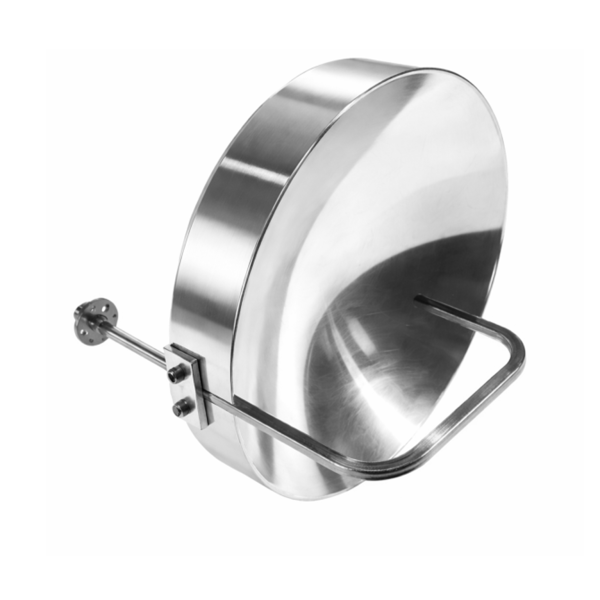
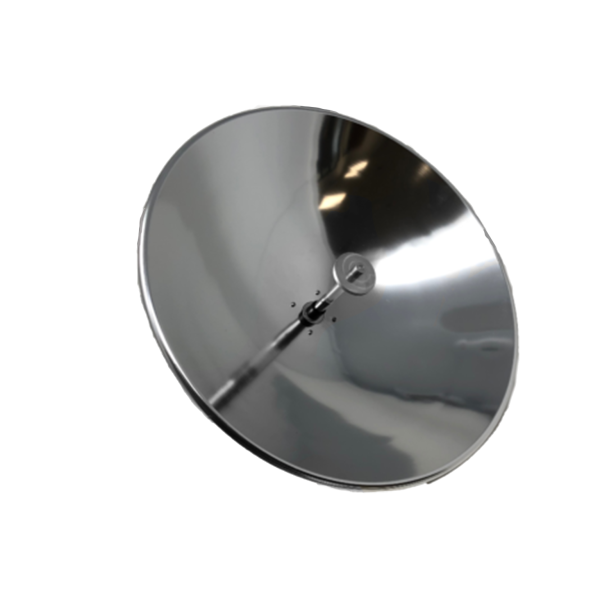
Consult Mi-Wave if material selection, plating options, reflector diameter, feed configuration, antenna orientation, or electrical parameters are critical to your application. The antennas shown on the website represent only a portion of Mi-Wave’s capabilities. Additional antenna sizes, custom reflector designs, and specialized frequency configurations are available upon request.
Outlines & Drawings
| Model | Band | Reflector Diameter | Frequency Range | Gain | 3 dB Beamwidth | Polarization | VSWR | Antenna Port | Reflector Material |
|---|---|---|---|---|---|---|---|---|---|
| 202A-6/599 | Ka-Band | 6 in | 26.5–40 GHz | 30 dB | 4.2° | Linear | 1.3:1 | WR-28 Waveguide, UG-599/U Flange | Aluminum |
| 202A-9/599 | Ka-Band | 9 in | 26.5–40 GHz | 33 dB | 3° | Linear | 1.3:1 | WR-28 Waveguide, UG-599/U Flange | Aluminum |
| 202A-12/599 | 203A-12/599 | Ka-Band | 12 in | 26.5–40 GHz | 36 dB | 2° | Linear | 1.3:1 | WR-28 Waveguide, UG-599/U Flange | Aluminum / Fiberglass |
| 202A-18/599 | 203A-18/599 | Ka-Band | 18 in | 26.5–40 GHz | 39 dB | 1.3° | Linear | 1.3:1 | WR-28 Waveguide, UG-599/U Flange | Aluminum / Fiberglass |
| 202A-24/599 | 203A-24/599 | Ka-Band | 24 in | 26.5–40 GHz | 42 dB | 1.5° | Linear | 1.3:1 | WR-28 Waveguide, UG-599/U Flange | Aluminum / Fiberglass |
| 202B-3/383 | Q-Band | 3 in | 33–50 GHz | 26 dB | 6.5° | Linear | 1.3:1 | WR-22 Waveguide, UG-383/U Flange | Aluminum |
| 202B-6/383 | Q-Band | 6 in | 33–50 GHz | 32 dB | 3.5° | Linear | 1.3:1 | WR-22 Waveguide, UG-383/U Flange | Aluminum |
| 202B-9/383 | Q-Band | 9 in | 33–50 GHz | 36 dB | 2.5° | Linear | 1.3:1 | WR-22 Waveguide, UG-383/U Flange | Aluminum |
| 202B-12/383 | 203B-12/383 | Q-Band | 12 in | 33–50 GHz | 38.5 dB | 1.7° | Linear | 1.3:1 | WR-22 Waveguide, UG-383/U Flange | Aluminum / Fiberglass |
| 202B-18/383 | 203B-18/383 | Q-Band | 18 in | 33–50 GHz | 42 dB | 1.5° | Linear | 1.3:1 | WR-22 Waveguide, UG-383/U Flange | Aluminum / Fiberglass |
| 202B-24/383 | 203B-24/383 | Q-Band | 24 in | 33–50 GHz | 44 dB | 1° | Linear | 1.3:1 | WR-22 Waveguide, UG-383/U Flange | Aluminum / Fiberglass |
| 202E-3/387 | E-Band | 3 in | 60–90 GHz | 31 dB | 3.5° | Linear | 1.3:1 | WR-12 Waveguide, UG-387/U Flange | Aluminum |
| 202E-6/387 | E-Band | 6 in | 60–90 GHz | 37 dB | 1.8° | Linear | 1.3:1 | WR-12 Waveguide, UG-387/U Flange | Aluminum |
| 202E-9/387 | E-Band | 9 in | 60–90 GHz | 41 dB | 1.2° | Linear | 1.3:1 | WR-12 Waveguide, UG-387/U Flange | Aluminum |
| 202E-12/387 | 203E-12/387 | E-Band | 12 in | 60–90 GHz | 43 dB | 1° | Linear | 1.3:1 | WR-12 Waveguide, UG-387/U Flange | Aluminum / Fiberglass |
| 202E-18/387 | 203E-18/387 | E-Band | 18 in | 60–90 GHz | 47 dB | 0.6° | Linear | 1.3:1 | WR-12 Waveguide, UG-387/U Flange | Aluminum / Fiberglass |
| 202E-24/387 | 203E-24/387 | E-Band | 24 in | 60–90 GHz | 49 dB | 0.5° | Linear | 1.3:1 | WR-12 Waveguide, UG-387/U Flange | Aluminum / Fiberglass |
| 202K-6/595 | K-Band | 6 in | 18–26.5 GHz | 26.5 dB | 6° | Linear | 1.3:1 | WR-42 Waveguide, UG-595/U Flange | Aluminum |
| 202K-9/595 | K-Band | 9 in | 18–26.5 GHz | 30 dB | 4° | Linear | 1.3:1 | WR-42 Waveguide, UG-595/U Flange | Aluminum |
| 202K-12/595 | 203K-12/595 | K-Band | 12 in | 18–26.5 GHz | 33 dB | 3° | Linear | 1.3:1 | WR-42 Waveguide, UG-595/U Flange | Aluminum / Fiberglass |
| 202K-18/595 | 203K-18/595 | K-Band | 18 in | 18–26.5 GHz | 36 dB | 2° | Linear | 1.3:1 | WR-42 Waveguide, UG-595/U Flange | Aluminum / Fiberglass |
| 202K-24/595 | 203K-24/595 | K-Band | 24 in | 18–26.5 GHz | 39 dB | 1.5° | Linear | 1.3:1 | WR-42 Waveguide, UG-595/U Flange | Aluminum / Fiberglass |
| 202Ku-9/419 | Ku-Band | 9 in | 12.4–18 GHz | 27 dB | 5.8° | Linear | 1.3:1 | WR-62 Waveguide, UG-419/U Flange | Aluminum |
| 202Ku-12/419 | 203-12/419 | Ku-Band | 12 in | 12.4–18 GHz | 30 dB | 4.5° | Linear | 1.3:1 | WR-62 Waveguide, UG-419/U Flange | Aluminum / Fiberglass |
| 202Ku-18/419 | 203-18/419 | Ku-Band | 18 in | 12.4–18 GHz | 33 dB | 3° | Linear | 1.3:1 | WR-62 Waveguide, UG-419/U Flange | Aluminum / Fiberglass |
| 202Ku-24/419 | 203-24/419 | Ku-Band | 24 in | 12.4–18 GHz | 36.5 dB | 2° | Linear | 1.3:1 | WR-62 Waveguide, UG-419/U Flange | Aluminum / Fiberglass |
| 202U-3/383 | U-Band | 3 in | 40–60 GHz | 28 dB | 5.5° | Linear | 1.3:1 | WR-19 Waveguide, UG-383/U-M Flange | Aluminum |
| 202U-6/383 | U-Band | 6 in | 40–60 GHz | 34 dB | 2.8° | Linear | 1.3:1 | WR-19 Waveguide, UG-383/U-M Flange | Aluminum |
| 202U-9/383 | U-Band | 9 in | 40–60 GHz | 37.5 dB | 2° | Linear | 1.3:1 | WR-19 Waveguide, UG-383/U-M Flange | Aluminum |
| 202U-12/383 | 203U-12/383 | U-Band | 12 in | 40–60 GHz | 40 dB | 1.5° | Linear | 1.3:1 | WR-19 Waveguide, UG-383/U-M Flange | Aluminum / Fiberglass |
| 202U-18/383 | 203U-18/383 | U-Band | 18 in | 40–60 GHz | 43 dB | 1° | Linear | 1.3:1 | WR-19 Waveguide, UG-383/U-M Flange | Aluminum / Fiberglass |
| 202U-24/383 | 203U-24/383 | U-Band | 24 in | 40–60 GHz | 46 dB | 0.7° | Linear | 1.3:1 | WR-19 Waveguide, UG-383/U-M Flange | Aluminum / Fiberglass |
| 202V-3/385 | V-Band | 3 in | 50–75 GHz | 30 dB | 4.5° | Linear | 1.3:1 | WR-15 Waveguide, UG-385/U Flange | Aluminum |
| 202V-6/385 | V-Band | 6 in | 50–75 GHz | 36 dB | 2.5° | Linear | 1.3:1 | WR-15 Waveguide, UG-385/U Flange | Aluminum |
| 202V-9/385 | V-Band | 9 in | 50–75 GHz | 39 dB | 1.5° | Linear | 1.3:1 | WR-15 Waveguide, UG-385/U Flange | Aluminum |
| 202V-12/385 | 203V-12/385 | V-Band | 12 in | 50–75 GHz | 42 dB | 1.2° | Linear | 1.3:1 | WR-15 Waveguide, UG-385/U Flange | Aluminum / Fiberglass |
| 202V-18/385 | 203V-18/385 | V-Band | 18 in | 50–75 GHz | 45 dB | 0.9° | Linear | 1.3:1 | WR-15 Waveguide, UG-385/U Flange | Aluminum / Fiberglass |
| 202V-24/385 | 203V-24/385 | V-Band | 24 in | 50–75 GHz | 48 dB | 0.6° | Linear | 1.3:1 | WR-15 Waveguide, UG-385/U Flange | Aluminum / Fiberglass |
| 202W-3/387 | W-Band | 3 in | 75–110 GHz | 33 dB | 2.9° | Linear | 1.3:1 | WR-10 Waveguide, UG-387/U-M Flange | Aluminum |
| 202W-6/387 | W-Band | 6 in | 75–110 GHz | 39 dB | 1.5° | Linear | 1.3:1 | WR-10 Waveguide, UG-387/U-M Flange | Aluminum |
| 202W-9/387 | W-Band | 9 in | 75–110 GHz | 43 dB | 1° | Linear | 1.3:1 | WR-10 Waveguide, UG-387/U-M Flange | Aluminum |
| 202W-12/387 | 203W-12/387 | W-Band | 12 in | 75–110 GHz | 45 dB | 0.8° | Linear | 1.3:1 | WR-10 Waveguide, UG-387/U-M Flange | Aluminum / Fiberglass |
| 202W-18/387 | 203W-18/387 | W-Band | 18 in | 75–110 GHz | 49 dB | 0.5° | Linear | 1.3:1 | WR-10 Waveguide, UG-387/U-M Flange | Aluminum / Fiberglass |
| 202W-24/387 | 203W-24/387 | W-Band | 24 in | 75–110 GHz | 51 dB | 0.4° | Linear | 1.3:1 | WR-10 Waveguide, UG-387/U-M Flange | Aluminum / Fiberglass |
| 202X-18/39 | 203X-18/39 | X-Band | 18 in | 8.2–12.4 GHz | 29 dB | 4.5° | Linear | 1.3:1 | WR-90 Waveguide, UG-39/U Flange | Aluminum / Fiberglass |
| 202X-24/39 | 203X-24/39 | X-Band | 24 in | 8.2–12.4 GHz | 32 dB | 3.5° | Linear | 1.3:1 | WR-90 Waveguide, UG-39/U Flange | Aluminum / Fiberglass |
| 203A-36/599 | Ka-Band | 36 in | 26.5–40 GHz | 45.5 dB | 1° | Linear | 1.3:1 | WR-28 Waveguide, UG-599/U Flange | Fiberglass |
| 203A-48/599 | Ka-Band | 48 in | 26.5–40 GHz | 48 dB | 0.8° | Linear | 1.3:1 | WR-28 Waveguide, UG-599/U Flange | Fiberglass |
| 203B-36/383 | Q-Band | 36 in | 33–50 GHz | 48 dB | 0.7° | Linear | 1.3:1 | WR-22 Waveguide, UG-383/U Flange | Fiberglass |
| 203B-48/383 | Q-Band | 48 in | 33–50 GHz | 50 dB | 0.5° | Linear | 1.3:1 | WR-22 Waveguide, UG-383/U Flange | Fiberglass |
| 203E-36/387 | E-Band | 36 in | 60–90 GHz | 53 dB | 0.35° | Linear | 1.3:1 | WR-12 Waveguide, UG-387/U Flange | Fiberglass |
| 203E-48/387 | E-Band | 48 in | 60–90 GHz | 55.5 dB | 0.3° | Linear | 1.3:1 | WR-12 Waveguide, UG-387/U Flange | Fiberglass |
| 203K-36/595 | K-Band | 36 in | 18–26.5 GHz | 43 dB | 1° | Linear | 1.3:1 | WR-42 Waveguide, UG-595/U Flange | Fiberglass |
| 203K-48/595 | K-Band | 48 in | 18–26.5 GHz | 45.5 dB | 1° | Linear | 1.3:1 | WR-42 Waveguide, UG-595/U Flange | Fiberglass |
| 203Ku-36/419 | Ku-Band | 36 in | 12.4–18 GHz | 40.5 dB | 1.5° | Linear | 1.3:1 | WR-62 Waveguide, UG-419/U Flange | Fiberglass |
| 203Ku-48/419 | Ku-Band | 48 in | 12.4–18 GHz | 43 dB | 1° | Linear | 1.3:1 | WR-62 Waveguide, UG-419/U Flange | Fiberglass |
| 203U-36/383 | U-Band | 36 in | 40–60 GHz | 49.5 dB | 0.5° | Linear | 1.3:1 | WR-19 Waveguide, UG-383/U-M Flange | Fiberglass |
| 203U-48/383 | U-Band | 48 in | 40–60 GHz | 52 dB | 0.5° | Linear | 1.3:1 | WR-19 Waveguide, UG-383/U-M Flange | Fiberglass |
| 203V-36/385 | V-Band | 36 in | 50–75 GHz | 51 dB | 0.4° | Linear | 1.3:1 | WR-15 Waveguide, UG-385/U Flange | Fiberglass |
| 203V-48/385 | V-Band | 48 in | 50–75 GHz | 54 dB | 0.3° | Linear | 1.3:1 | WR-15 Waveguide, UG-385/U Flange | Fiberglass |
| 203W-36/387 | W-Band | 36 in | 75–110 GHz | 55 dB | 0.25° | Linear | 1.3:1 | WR-10 Waveguide, UG-387/U-M Flange | Fiberglass |
| 203W-48/387 | W-Band | 48 in | 75–110 GHz | 57 dB | 0.18° | Linear | 1.3:1 | WR-10 Waveguide, UG-387/U-M Flange | Fiberglass |
*All data presented is collected from a sample lot.
* Actual data may vary unit to unit, slightly.
*All testing was performed under +25 °C case temperature.
*Consult factory to confirm if material, plating, size, shape, orientation and any electrical parameter is critical for the application as website information is for reference only.
*Millimeter Wave Products, Inc. reserves the right to change the information presented on website without notice as we continue to enhance the performance and design of our products.
Key Features & Performance Benefits
High Gain Performance
Prime focus reflector antennas provide strong directional gain across RF, microwave, and millimeter-wave frequencies. Their simple reflector geometry enables efficient energy focusing, making them ideal for long-range communication links, radar systems, and measurement applications.
Symmetrical Beam Patterns
The centered feed design produces highly symmetrical radiation patterns with predictable beam shape and consistent sidelobe behavior. This is especially important in antenna measurement, calibration, and controlled RF environments.
Wideband Frequency Operation
Prime focus antennas support broad frequency coverage across microwave and millimeter-wave bands, including X, Ku, K, Ka, Q, V, and W-Band systems. Their design allows flexibility across multiple applications without complex feed architectures.
Simple Feed Structure
The direct feed placement at the focal point simplifies system design and reduces complexity. This makes prime focus antennas easy to integrate with standard feeds, waveguides, and test equipment.
Stable and Predictable Performance
Prime focus antennas offer repeatable radiation characteristics, making them well suited for applications where consistency and reliability are critical. Engineers rely on their predictable performance for both operational systems and test setups.
Ideal for Measurement and Test Applications
These antennas are widely used in antenna ranges, RF test systems, and laboratory environments where accurate gain, beamwidth, and radiation pattern measurements are required.
Robust Mechanical Design
Prime focus antennas are available in durable materials such as aluminum and fiberglass, providing structural stability and long-term performance in both indoor and outdoor environments.
Cost-Effective Solution
With a simpler design compared to dual-reflector systems, prime focus antennas often provide a cost-effective option while still delivering high performance for many RF and microwave applications.
Flexible Configuration Options
Available in a wide range of diameters, frequency bands, and feed configurations, prime focus antennas can be tailored to meet specific system requirements across communications, radar, and research applications.
Well Suited for General-Purpose RF Systems
Prime focus antennas are a versatile solution for a wide variety of RF applications, offering a balance of performance, simplicity, and reliability across commercial, defense, and research environments.
How Prime Focus Antennas Work & How to Select the Right Antenna
Prime focus antennas are high-gain directional reflector antennas designed to concentrate RF energy into controlled beam patterns for microwave and millimeter-wave communication, radar, and measurement applications.
How Prime Focus Antennas Work
A prime focus antenna uses a parabolic reflector surface to focus electromagnetic energy toward a feed antenna positioned at the reflector’s geometric focal point.
During signal reception, incoming RF energy striking the reflector is redirected and concentrated at the feed assembly. During transmission, RF energy from the feed illuminates the reflector surface, which collimates the energy into a narrow directional beam.
This reflector geometry enables high gain, narrow beamwidth, and stable radiation performance across microwave and millimeter-wave frequency bands.
Parabolic Reflector Performance
The reflector surface is precisely shaped into a parabola so electromagnetic energy arriving parallel to the antenna axis converges at the focal point.
This controlled energy distribution improves aperture efficiency, reduces beam distortion, and supports symmetrical radiation patterns for predictable RF performance.
High Gain & Beamwidth
Prime focus antennas achieve high directivity by concentrating RF energy into a narrow main beam.
Larger reflector diameters typically provide:
- Higher antenna gain
- Narrower beamwidth
- Improved link efficiency
- Greater directional control
Feed Systems & Polarization
Feed antennas positioned at the focal point illuminate the reflector surface and determine polarization characteristics, aperture efficiency, sidelobe performance, and overall beam symmetry.
Common feed configurations include horn antennas, scalar feeds, and specialized microwave feed assemblies supporting linear or circular polarization.
Selecting Reflector Material
Aluminum reflectors provide rigid lightweight construction with excellent electrical conductivity and stable mechanical accuracy, making them well suited for laboratory systems, antenna ranges, and radar calibration environments.
Fiberglass reflectors offer improved environmental durability and corrosion resistance for outdoor satellite communication systems and field installations.
Choosing the Right Reflector Size
Reflector diameter directly affects antenna gain and beamwidth. Larger antennas provide improved gain and narrower beam patterns but require more physical space and tighter alignment tolerances.
Engineers typically balance:
- Gain requirements
- Operating frequency
- Available installation space
- Beamwidth objectives
- Environmental conditions
Frequency Selection
Prime focus antennas are available across RF, microwave, and millimeter-wave frequency bands including X, Ku, Ka, Q, V, and W-Band systems.
As operating frequency increases, reflector surface precision and feed alignment become increasingly important for maintaining gain and radiation performance.
Waveguide & Feed Interfaces
Prime focus antennas commonly integrate with standard WR-series waveguide interfaces, feed horns, OMTs, and microwave feed assemblies depending on system architecture and frequency range.
Proper interface selection helps minimize insertion loss, mismatch, and unwanted reflections within the RF chain.
Environmental Considerations
Outdoor installations may require additional consideration for wind loading, corrosion resistance, temperature variation, and long-term environmental exposure.
Mechanical stability becomes especially important at millimeter-wave frequencies where small alignment variations can affect beam pointing accuracy and gain performance.
Common Prime Focus Applications
Prime focus antennas are widely used in:
- Satellite communications
- Radar systems
- Antenna measurement ranges
- RF and EMC laboratories
- Telemetry systems
- Millimeter-wave research
- Point-to-point communication links
Prime Focus Antenna Engineering Calculators
These RF engineering calculators help estimate antenna performance for prime focus antennas, including satcom antennas, radar antennas, antenna measurement systems, and microwave test ranges. Use them to calculate antenna gain, beamwidth, reflector diameter required for target gain, effective aperture, free-space path loss, and wavelength across RF, microwave, and millimeter-wave frequencies.
Prime focus reflector antennas are widely used where high gain, predictable beam patterns, and stable directional performance are required. A typical starting efficiency range for many systems is 0.50 to 0.70.
Antenna Gain Calculator
Antenna Gain (dBi):
Antenna Beamwidth Calculator
Reflector Size Required for Target Gain
Antenna Effective Aperture Calculator
Effective Aperture (m²):
Free Space Path Loss Calculator
RF Wavelength Calculator
Wavelength (mm):
Applications
Mi-Wave Prime Focus Antennas are widely used across RF, microwave, and millimeter-wave systems that require high-gain directional antennas, predictable radiation patterns, and stable performance across wide frequency ranges. Their precision reflector geometry and controlled beam characteristics make them ideal for both communication systems and RF measurement environments.
These antennas support applications in satellite communications, radar systems, antenna measurement ranges, wireless research, and electromagnetic compatibility testing, where accurate signal transmission and reception are essential.
Satellite Communications (SatCom)
Prime focus antennas are commonly used in satellite communication systems for both uplink and downlink operations. Their high gain and narrow beamwidth allow efficient communication with satellites operating in microwave and millimeter-wave frequency bands.
Typical satcom applications include:
-
Satellite ground terminals and gateway stations
-
Experimental satellite communication links
-
Ka-band, Q-band, and V-band research systems
-
Telemetry and satellite tracking systems
-
Antenna testing for satcom payload development
-
RF link experiments and satellite communication demonstrations
These antennas help provide stable beam patterns and high signal gain, improving link reliability and signal quality in satellite communication environments.
Antenna Measurement Ranges
Prime focus antennas are widely used in antenna measurement facilities where accurate radiation pattern characterization and gain measurements are required.
Typical measurement applications include:
-
Antenna gain and pattern measurements
-
Near-field and far-field antenna testing
-
Calibration of RF antennas and measurement equipment
-
Verification of antenna beamwidth and sidelobe levels
-
RF component and subsystem testing
The predictable radiation pattern of prime focus reflectors makes them well suited for precision RF measurement and calibration environments.
Radar Testing and Radar Systems
Prime focus antennas are often integrated into radar research and radar testing platforms where high directivity and stable beam patterns are required.
Common radar applications include:
-
Radar cross-section (RCS) testing
-
Radar signal transmission and reception
-
Radar calibration and system verification
-
FMCW and pulse radar research systems
-
Microwave and millimeter-wave radar experiments
Their high gain and directional characteristics allow radar engineers to control signal illumination and improve measurement accuracy.
RF and Microwave Laboratory Research
Research laboratories and universities frequently use prime focus antennas in RF and microwave experimental systems for signal transmission, propagation studies, and antenna research.
Typical research applications include:
-
Wireless propagation experiments
-
Microwave and millimeter-wave system development
-
RF component characterization
-
Advanced antenna design research
-
Academic and government research projects
These antennas provide a stable and repeatable RF platform for experimental testing and system prototyping.
EMC and RF Test Facilities
Prime focus antennas are also used in electromagnetic compatibility (EMC) testing environments where controlled radiation patterns and directional signal transmission are required.
Common EMC applications include:
-
Radiated emissions testing
-
RF susceptibility testing
-
Controlled RF illumination in test chambers
-
EMC measurement and compliance verification
-
Antenna system validation
Their directional performance allows engineers to focus RF energy toward specific test targets, improving measurement precision.
Frequently Asked Questions (FAQ)
What is a prime focus antenna?
A prime focus antenna is a parabolic reflector antenna where the feed is located at the focal point of the dish. RF energy reflects off the parabolic surface and concentrates at the feed, producing high gain and directional radiation patterns.
What are the advantages of a prime focus antenna?
Prime focus antennas offer simple design, symmetrical beam patterns, predictable performance, and cost-effective construction. They are widely used in RF systems where reliability and measurement accuracy are important.
What frequencies do prime focus antennas support?
Prime focus antennas operate across a wide range of frequencies, including microwave and millimeter-wave bands such as X, Ku, K, Ka, Q, V, and W-Band. The usable frequency range depends on reflector size and surface accuracy.
What is the difference between prime focus and Cassegrain antennas?
The main difference is the feed configuration.
- Prime focus antennas place the feed directly at the focal point
- Cassegrain antennas use a secondary reflector to redirect energy
Prime focus designs are simpler, while Cassegrain antennas offer more compact feed placement and potentially higher efficiency.
What determines antenna gain in a prime focus antenna?
Antenna gain is primarily determined by reflector diameter, operating frequency, and efficiency. Larger reflectors and higher frequencies produce higher gain and narrower beamwidth.
What is beamwidth in a prime focus antenna?
Beamwidth is the angular width of the main radiation beam. Prime focus antennas typically produce symmetrical beam patterns, and beamwidth decreases as reflector size increases or wavelength decreases.
What is antenna efficiency?
Antenna efficiency describes how effectively the antenna converts input RF power into radiated energy. In prime focus antennas, efficiency is influenced by factors such as feed illumination, spillover, and surface accuracy, with typical values ranging from 0.50 to 0.70.
What are prime focus antennas used for?
Prime focus antennas are used in:
- Satellite communications (SatCom)
- Radar systems
- Antenna measurement ranges
- RF and microwave laboratories
- EMC and RF testing environments
- Wireless research and development
Are prime focus antennas suitable for measurement and test applications?
Yes. Their predictable radiation patterns and symmetrical beam characteristics make them ideal for antenna calibration, gain measurements, and RF system testing.
Can prime focus antennas be customized?
Yes. Prime focus antennas can be customized for diameter, frequency range, feed type, polarization, mounting configuration, and environmental requirements, depending on the application.
What materials are used in prime focus antennas?
Prime focus antennas are commonly constructed from aluminum or fiberglass reflectors, depending on structural requirements, weight considerations, and environmental conditions.
What is the F/D ratio and why does it matter?
The F/D ratio (focal length to diameter) affects feed design, illumination efficiency, and overall antenna performance. It is an important parameter when optimizing antenna systems for specific applications.
Glossary of Prime Focus Antenna Terms
This glossary defines key terminology related to prime focus reflector antennas used in RF, microwave, and millimeter-wave systems. These antennas are widely deployed in satellite communications, radar systems, antenna measurement ranges, RF laboratories, EMC testing environments, and research platforms where high gain, controlled beam patterns, and predictable performance are required.
Reflector Antenna Fundamentals
Prime Focus Antenna
A parabolic reflector antenna where the feed is positioned at the focal point of the reflector. RF energy reflects off the surface and concentrates at the feed, producing high gain and directional radiation.
Parabolic Reflector
A precisely shaped reflective surface designed to focus electromagnetic energy toward a single focal point, enabling efficient signal transmission and reception.
Reflector Diameter
The physical width of the antenna dish. Larger diameters result in higher gain and narrower beamwidth.
Reflector Aperture
The effective opening area of the reflector that captures or radiates RF energy.
Reflector Surface Accuracy
The degree to which the reflector surface conforms to the ideal parabolic shape. Higher accuracy is required for microwave and millimeter-wave frequencies.
Reflector Rim
The outer boundary of the reflector that defines the antenna’s physical aperture.
Reflector Offset
A reflector configuration where the feed is positioned off-center to reduce blockage and improve efficiency.
Cassegrain Antenna
A dual-reflector antenna design that uses a main reflector and a sub-reflector to improve feed placement and overall efficiency.
Feed System Terms
Feed Antenna
The radiating element located at the focal point that transmits energy toward the reflector or receives reflected signals.
Horn Antenna Feed
A common waveguide-based feed used with reflector antennas, offering controlled radiation patterns and broadband performance.
Feed Support Structure
Mechanical components that hold the feed antenna in the correct focal position.
Feed Illumination Pattern
The distribution of RF energy from the feed across the reflector surface.
Edge Taper
The intentional reduction of feed illumination at the reflector edges to minimize sidelobes and spillover.
Feed Blockage
Loss caused when the feed and its supports obstruct part of the reflector aperture.
Spillover
RF energy that radiates beyond the reflector instead of being captured, reducing efficiency.
Antenna Radiation Characteristics
Antenna Gain
A measure of how effectively an antenna directs RF energy compared to an isotropic source.
Directivity
The degree to which radiation is concentrated in a specific direction.
Beamwidth
The angular width of the main radiation lobe.
Half-Power Beamwidth (HPBW)
The angle between points where gain drops by 3 dB from the peak value.
Main Lobe
The region of maximum radiation in the antenna pattern.
Sidelobes
Secondary radiation peaks outside the main lobe.
Back Lobe
Radiation emitted in the opposite direction of the main beam.
Radiation Pattern
A graphical representation of how RF energy is distributed in space.
Pattern Symmetry
The uniformity of the radiation pattern across different axes.
Antenna Geometry and Alignment
Focal Point
The location where reflected RF energy converges.
Focal Length
The distance from the reflector surface to the focal point.
F/D Ratio
The ratio of focal length to reflector diameter, influencing feed design and illumination.
Antenna Alignment
The process of orienting the antenna toward a target signal source.
Pointing Accuracy
The precision with which an antenna is aimed.
Pointing Loss
Signal degradation caused by misalignment.
Antenna Efficiency and Performance
Antenna Efficiency
The percentage of input RF power effectively radiated or received.
Aperture Efficiency
The ratio of effective aperture to the physical reflector area.
Effective Aperture
The area over which an antenna collects usable RF energy.
Surface Loss
Losses due to imperfections or material limitations in the reflector surface.
Ohmic Loss
Power loss caused by electrical resistance in conductive materials.
Gain-to-Diameter Ratio
A measure of how efficiently a given reflector size produces gain.
RF Measurement and Testing Terms
Antenna Measurement Range
A facility used to evaluate antenna gain, pattern, polarization, and sidelobes.
Near-Field Region
The region close to the antenna where electromagnetic fields are not fully formed.
Far-Field Region
The region where waves behave as plane waves and radiation patterns stabilize.
Compact Antenna Test Range (CATR)
A system that simulates far-field conditions in a confined space.
Antenna Calibration
The process of validating antenna performance against known standards.
Reference Antenna
A calibrated antenna used as a measurement baseline.
RF Frequency and Signal Terms
Radio Frequency (RF)
Electromagnetic frequencies used for wireless communication and sensing.
Microwave Frequencies
Typically 1 GHz to 30 GHz.
Millimeter-Wave (mmWave)
30 GHz to 300 GHz frequencies used in advanced communication and radar systems.
Wavelength
The physical distance between repeating peaks of a wave.
Frequency
The number of cycles per second of a wave.
Satellite Communication and Radar Applications
Satellite Communications (SatCom)
Systems that use satellites to relay RF signals between locations.
Ground Station Antenna
A high-gain antenna used to communicate with satellites.
Uplink
Transmission from Earth to a satellite.
Downlink
Transmission from a satellite to Earth.
Radar Antenna
An antenna used to transmit and receive signals for detection and tracking.
Radar Cross Section (RCS)
A measure of how detectable an object is by radar.
Tracking Antenna
An antenna capable of continuously following a moving target.
Common Frequency Bands
- L-Band: 1–2 GHz
- S-Band: 2–4 GHz
- C-Band: 4–8 GHz
- X-Band: 8–12 GHz
- Ku-Band: 12–18 GHz
- Ka-Band: 26–40 GHz
- Q-Band: 33–50 GHz
- V-Band: 50–75 GHz
- W-Band: 75–110 GHz
These bands are widely used in satellite communications, radar systems, wireless networks, and millimeter-wave research applications.
Interested in this product or other Mi-Wave solutions?
Contact our team to discuss your frequency range, interface needs, and application requirements.
Custom configurations are available for specialized RF, microwave, and millimeter-wave systems.
Return to Antennas
Return to Products Page