
Products> Antenna Products > Standard Gain Horns
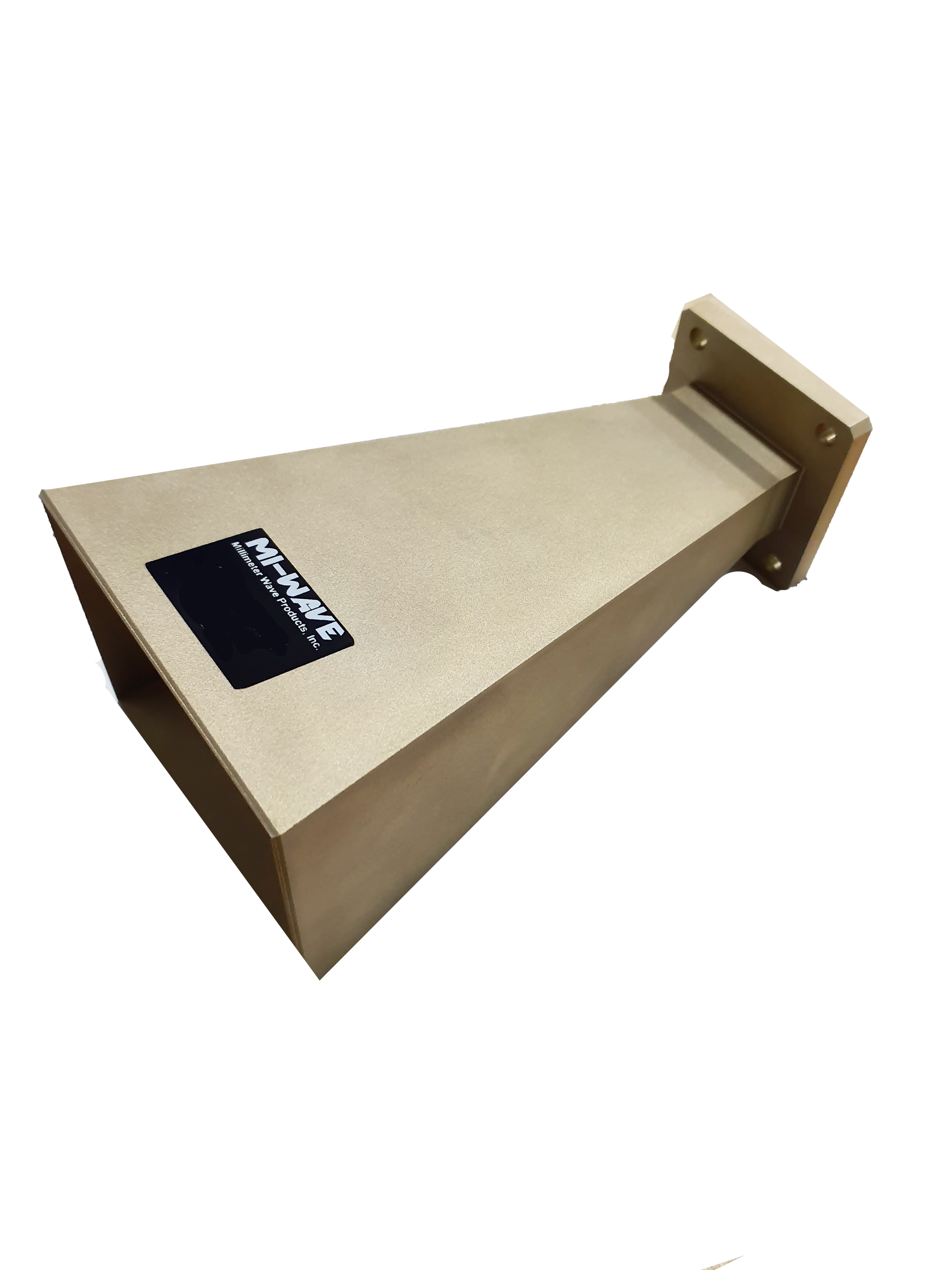
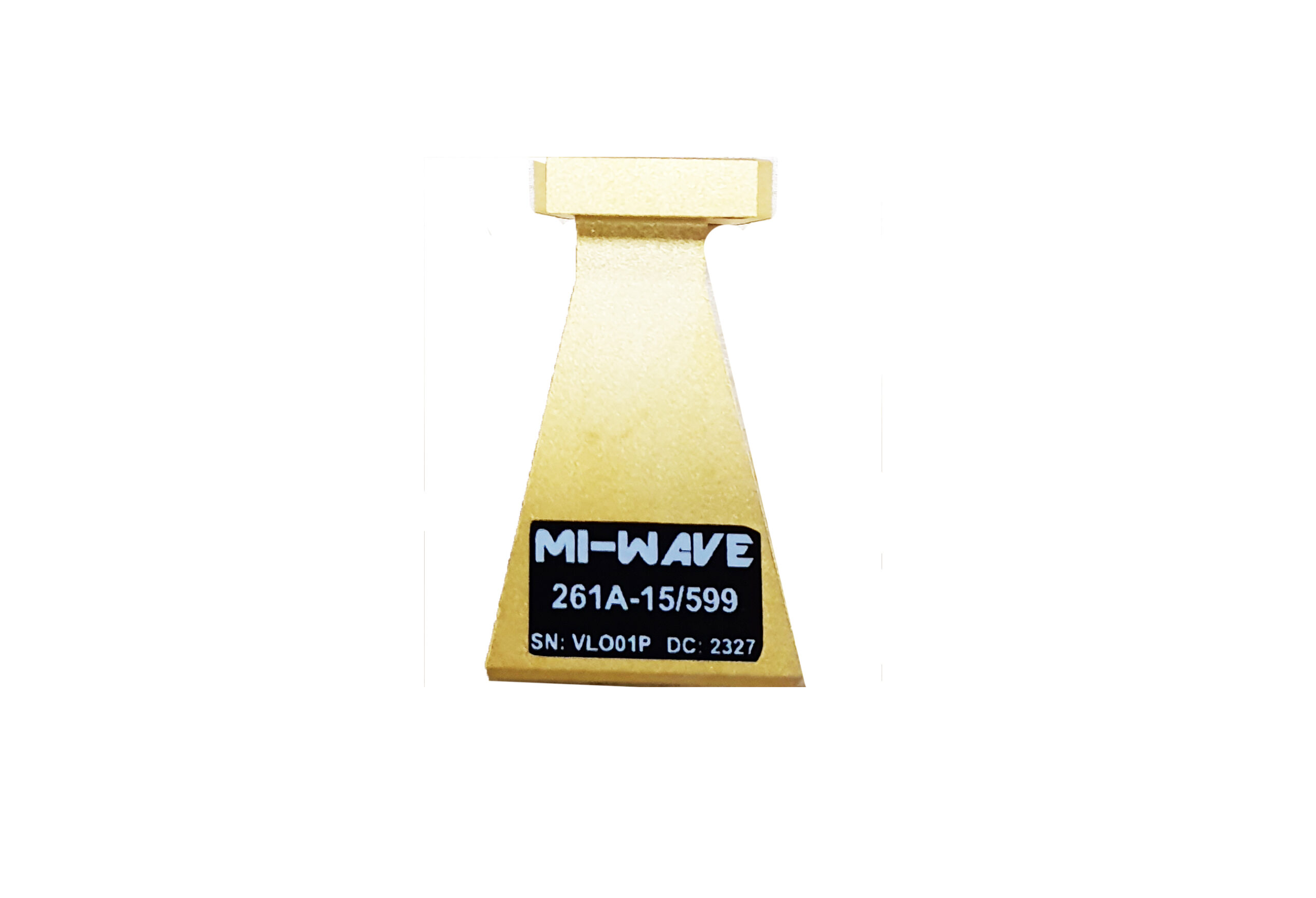
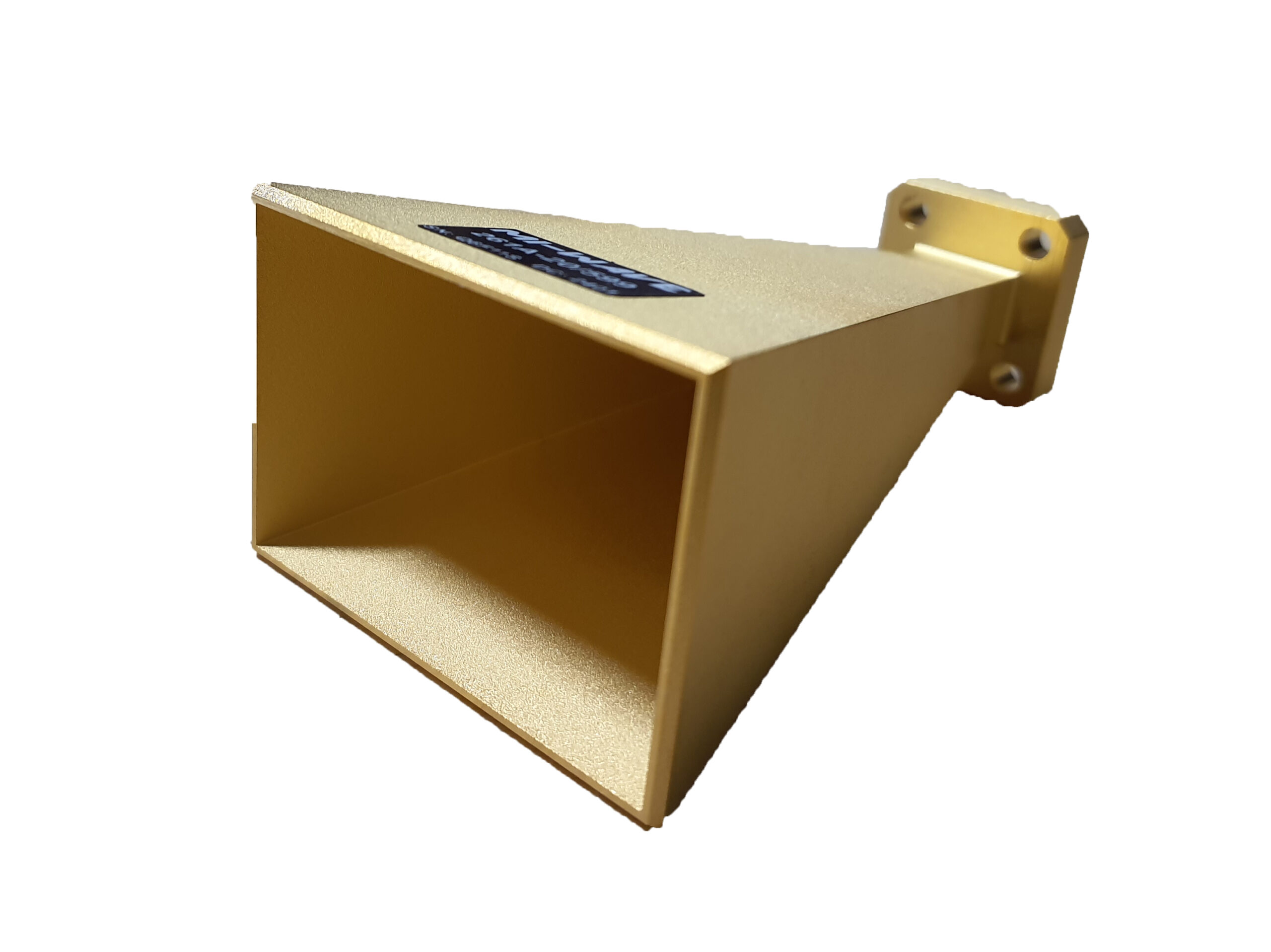
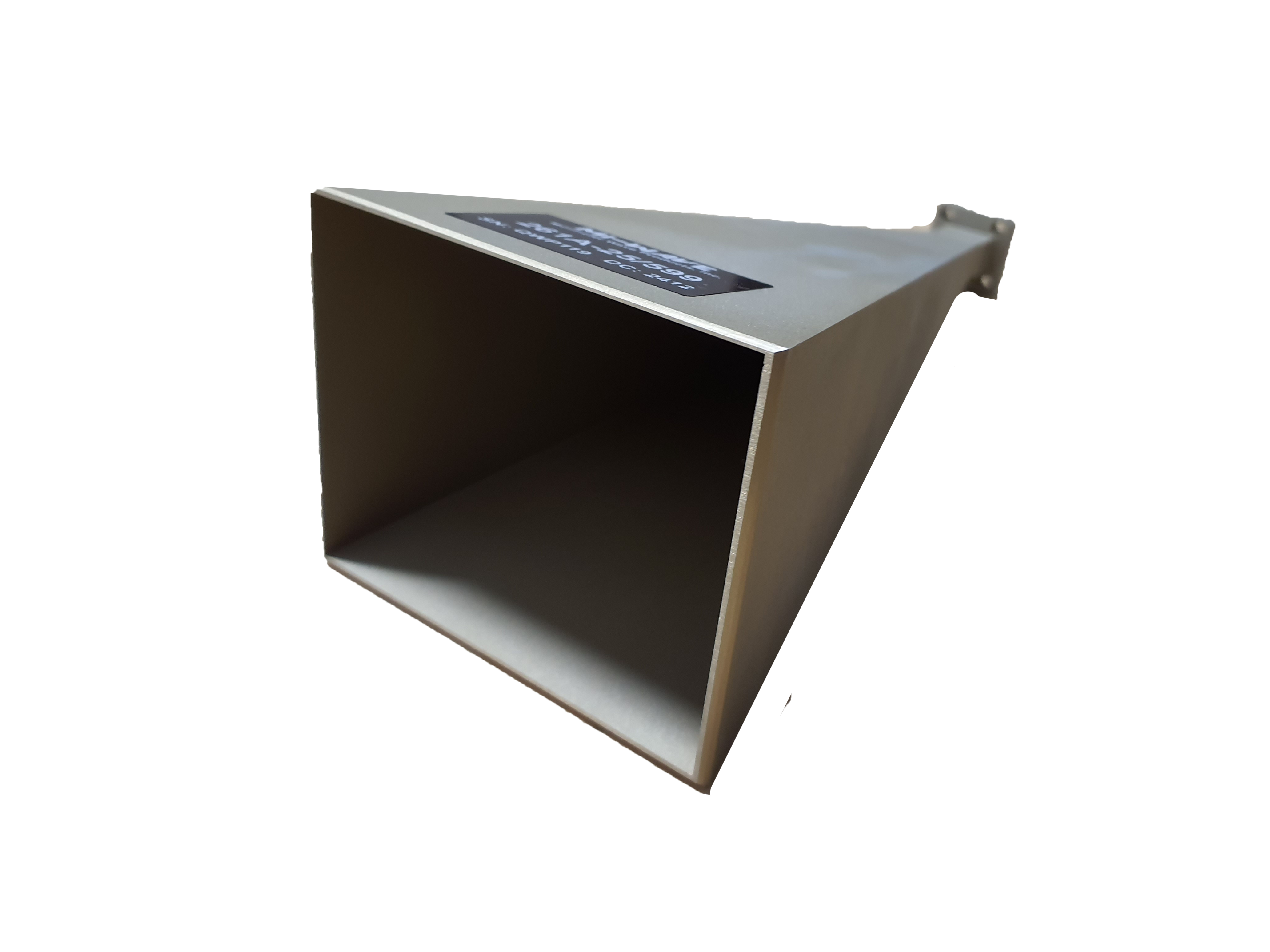
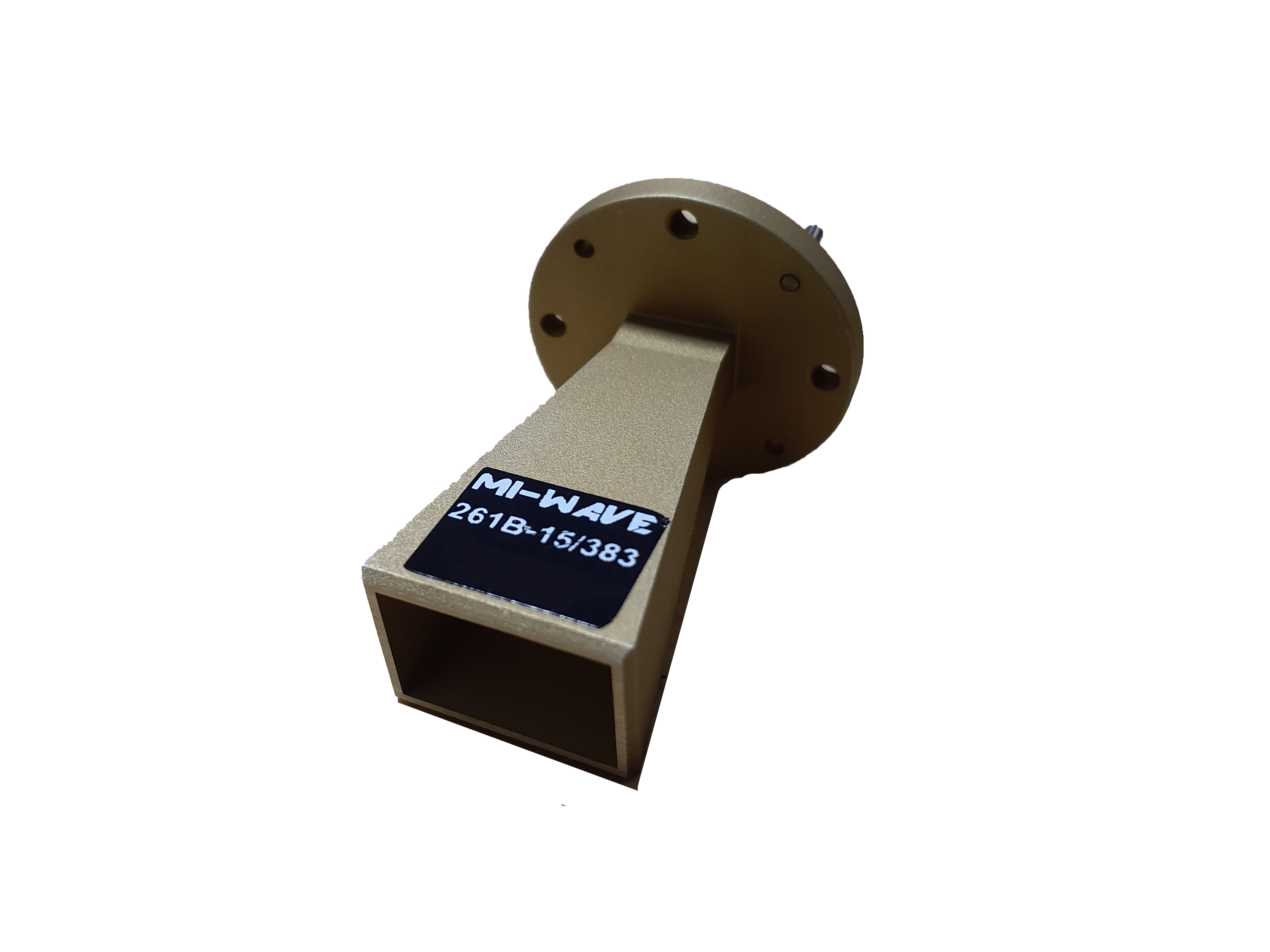
Mi-Wave’s Series 261 Standard Gain Horn Antennas are precision-engineered antennas designed to provide accurate, repeatable gain and predictable radiation patterns across RF, microwave, and millimeter-wave frequency ranges. Standard gain horn antennas are widely used as reference antennas in high-frequency systems where measurement accuracy, repeatability, and consistency are critical.
The Series 261 design uses a carefully optimized horn geometry to produce well-defined beam patterns, stable polarization characteristics, and low VSWR across the operating band. These antennas are commonly employed in antenna calibration, system characterization, and RF testing, as well as in operational communication and radar systems where predictable performance is required.
Series 261 standard gain horn antennas are a core part of Mi-Wave’s antenna portfolio, supporting both laboratory-based testing and field-deployed systems worldwide.
Note: The standard gain horn antennas shown on this website represent only a portion of Mi-Wave’s manufacturing capabilities. Mi-Wave designs and builds a wide range of additional standard gain horn configurations beyond those listed, including custom frequency ranges, waveguide interfaces, polarization options, and mechanical form factors. Consult with Mi-Wave to discuss your specific application requirements.

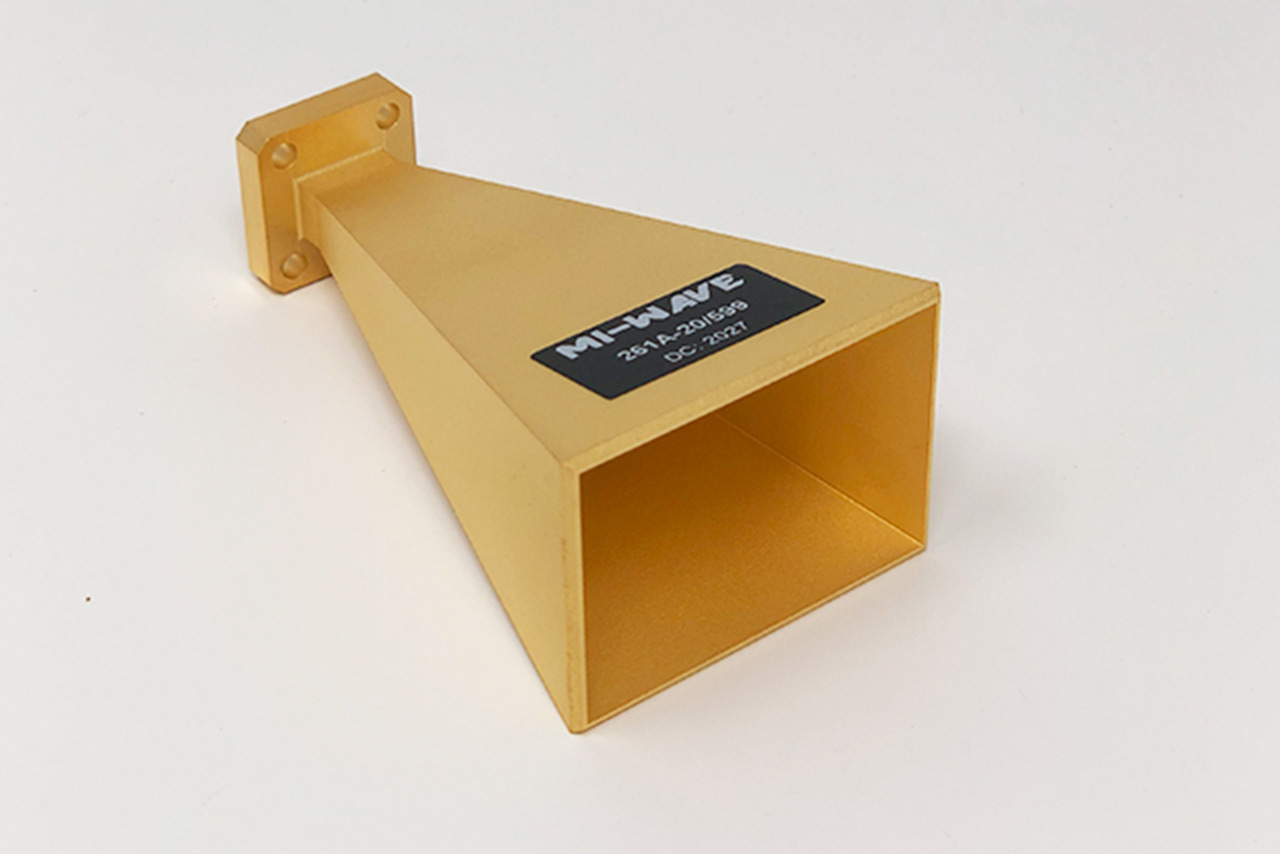
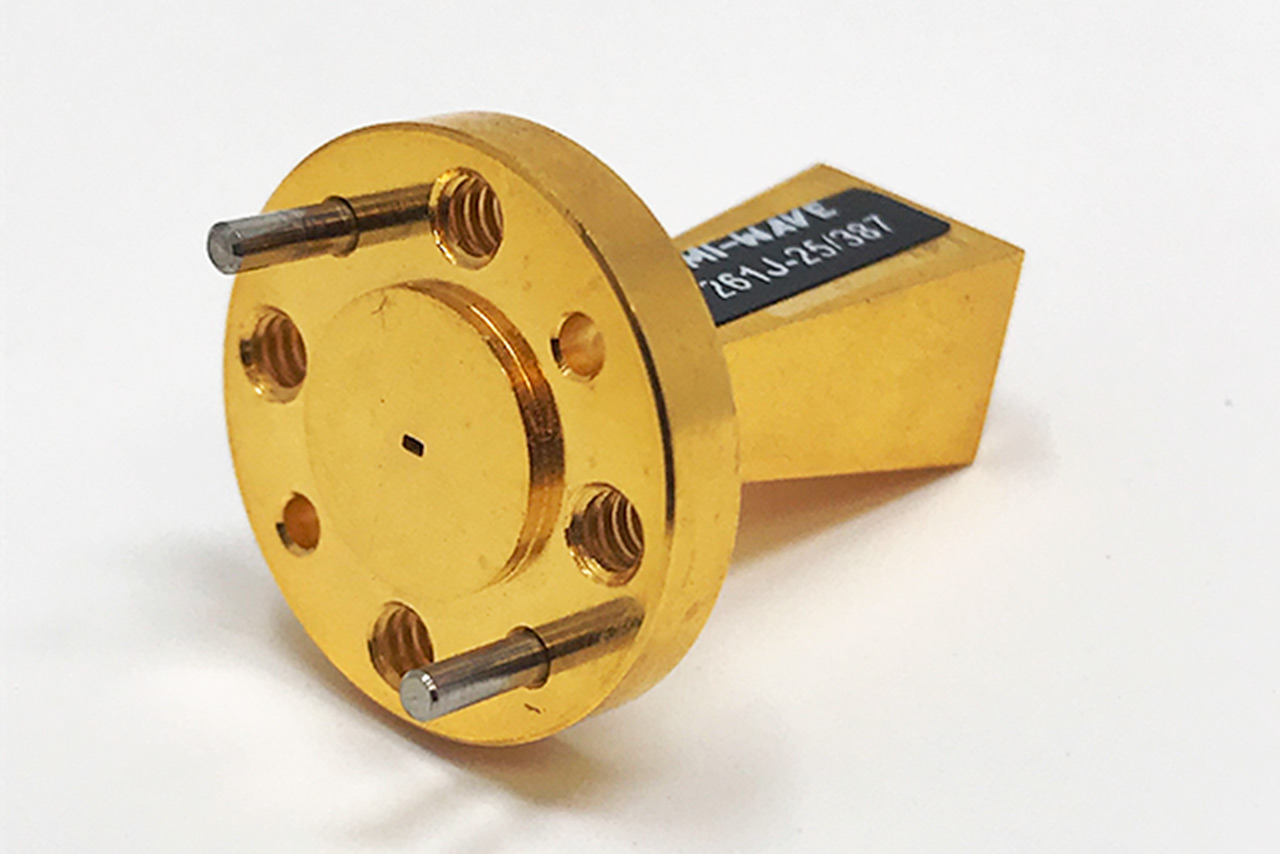
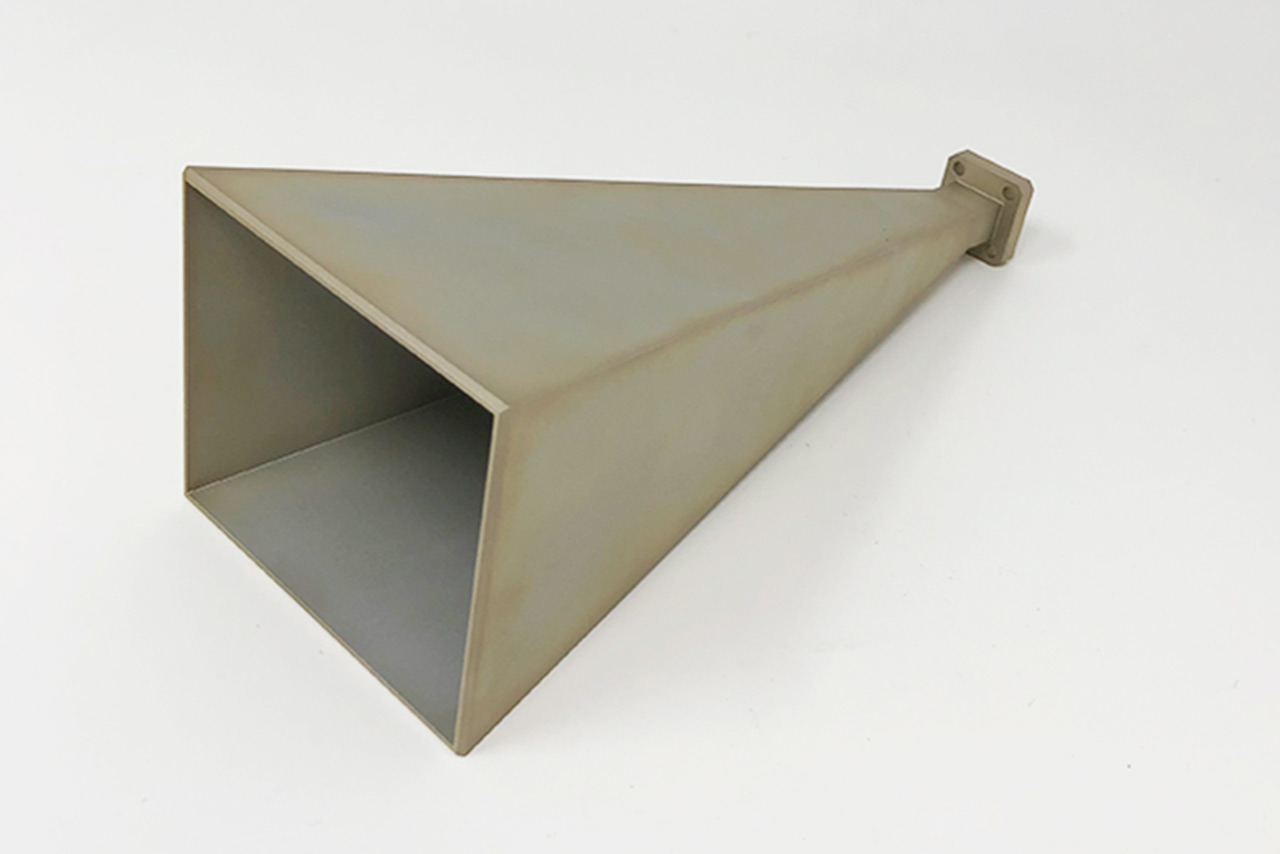
| Model | Minimum Frequency (GHz) | Maximum Frequency (GHz) | Gain (dBi) typical | Polarization | Beamwidth, E-Plane (db) | Beamwidth, H-Plane (dB) | Side Lobes (E-Plane)(dB) | Side Lobes (H-Plane) (dB) | RF Ports | LINK |
|---|---|---|---|---|---|---|---|---|---|---|
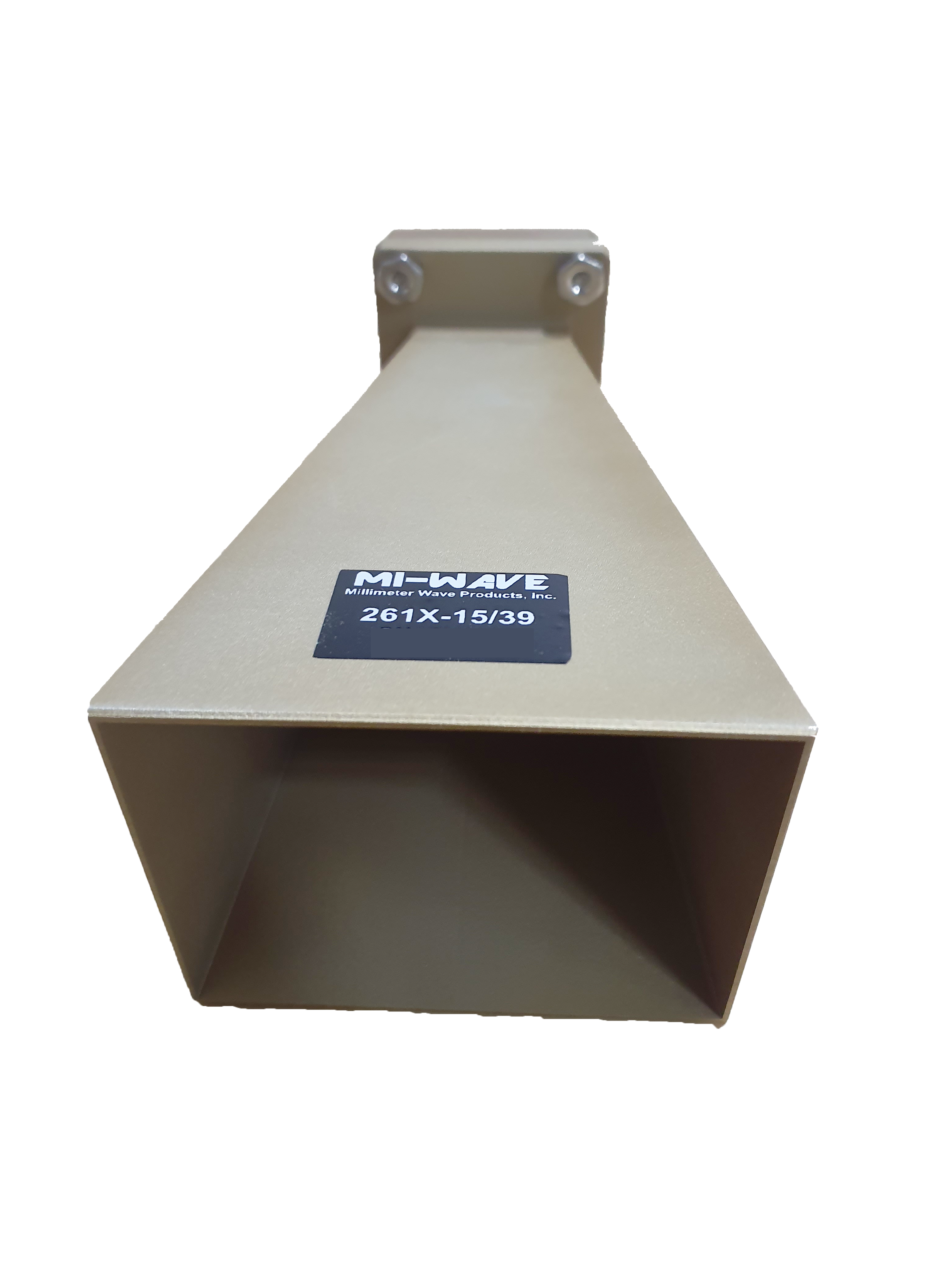
| 261X-15/39 | 8.2 | 12.4 | 15 | Linear | 29.3 | 29 | 20 | 20 | WR-90 Waveguide with UG-39 Flange | |
| 261(75)-20/120 | 10 | 15 | 20 | Linear | 16.22 | 19.81 | 12 | 18 | WR-75 waveguide UBR - 120 / U | |
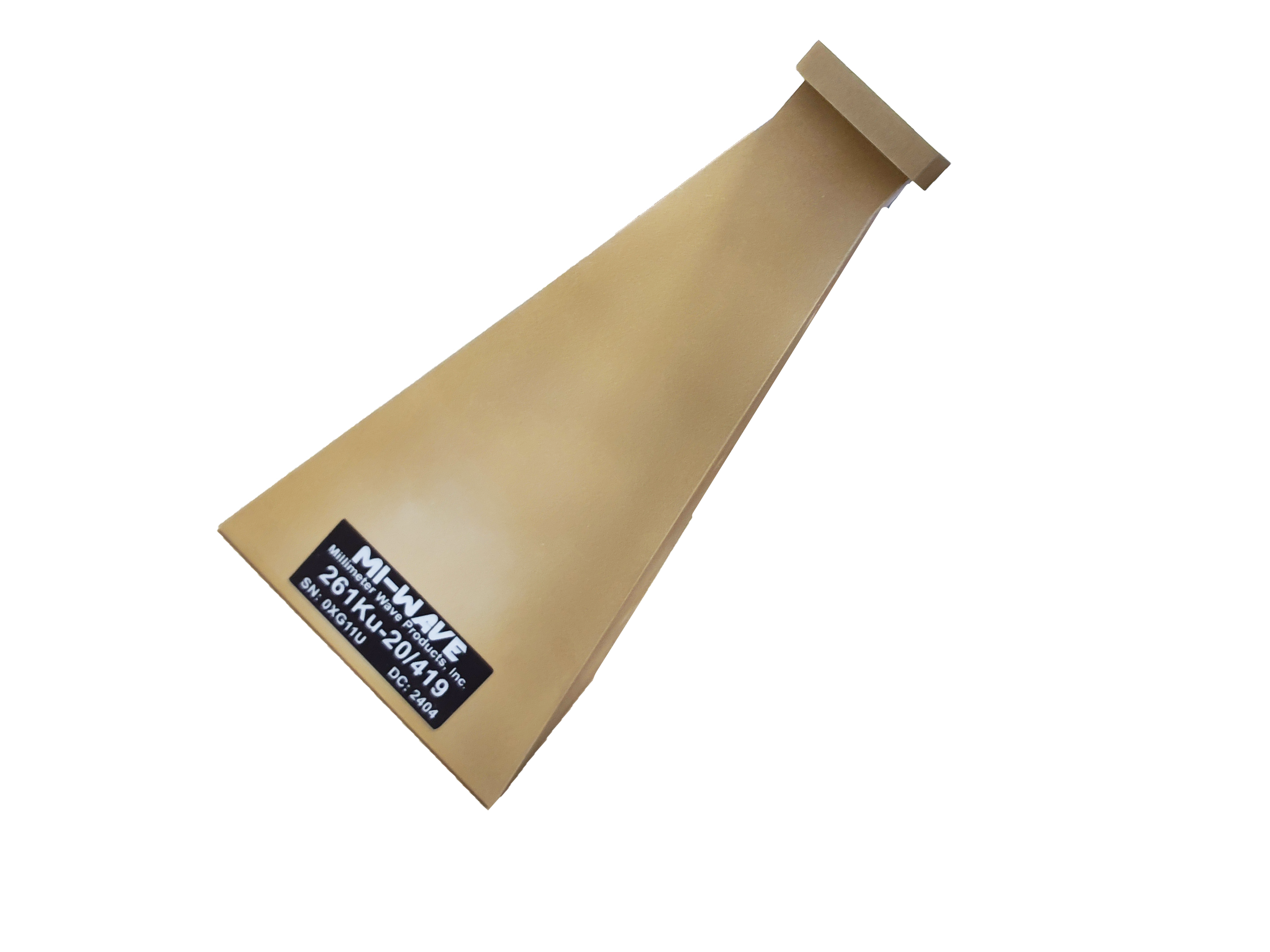
| 261Ku-20/419 | 12 | 18 | 20 | Linear | 16.90 | 17.80 | 16 | 18 | WR-90 Waveguide port UG-419/U Flange | |
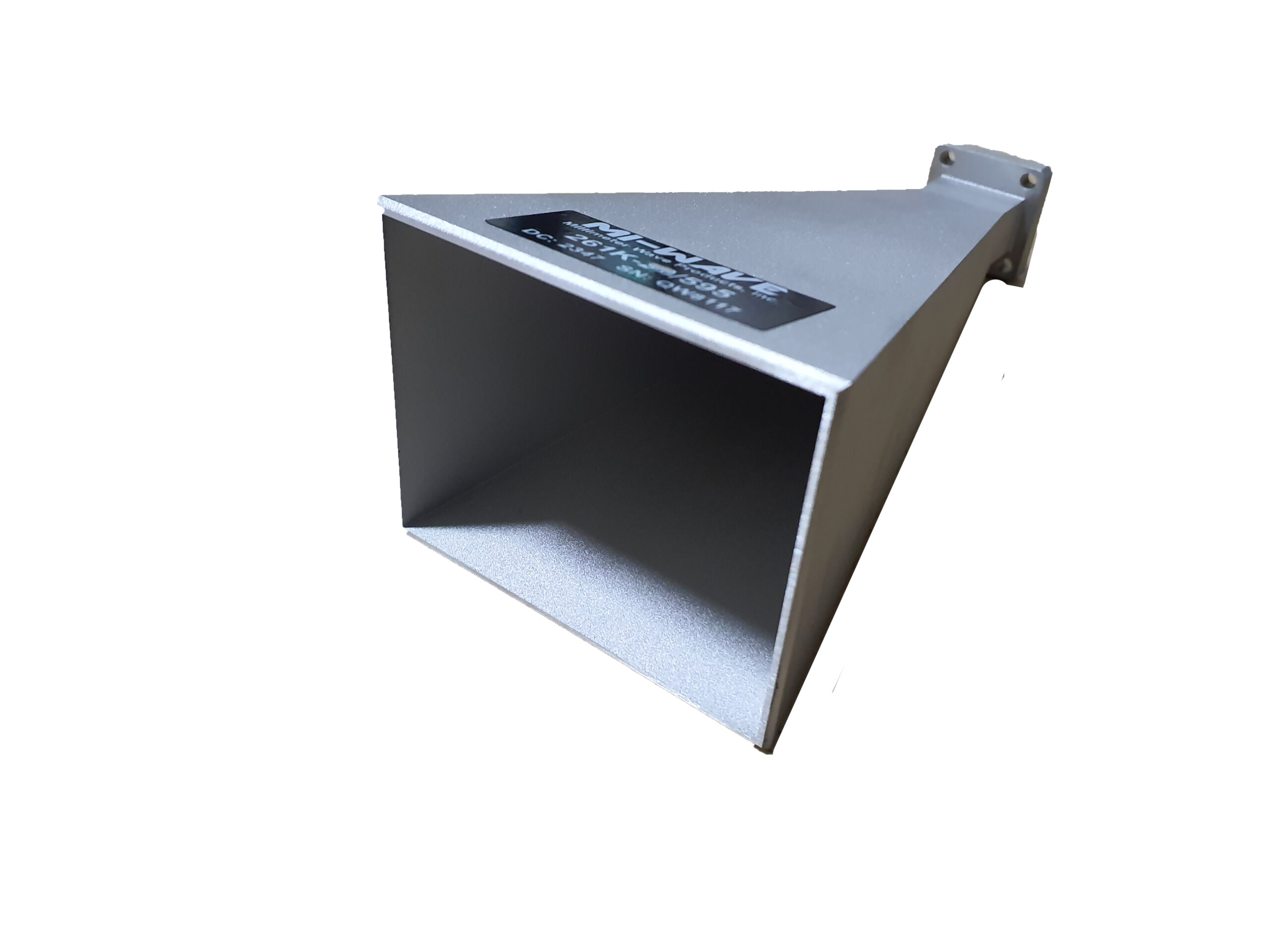
| 261K-10/595 | 18 | 26.5 | 10 | Linear | 55 | 57 | 17 | 25 | WR-42 Waveguide UG-595/U Flange | |
| 261K-15/595 | 18 | 26.5 | 15 | Linear | 19 | 21 | 20 | 23 | WR-42 Waveguide UG-595/U Flange | |
| 261K-20/595 | 18 | 26.5 | 20 | Linear | 19 | 21 | 20 | 20 | WR-42 Waveguide UG-595/U Flange | |
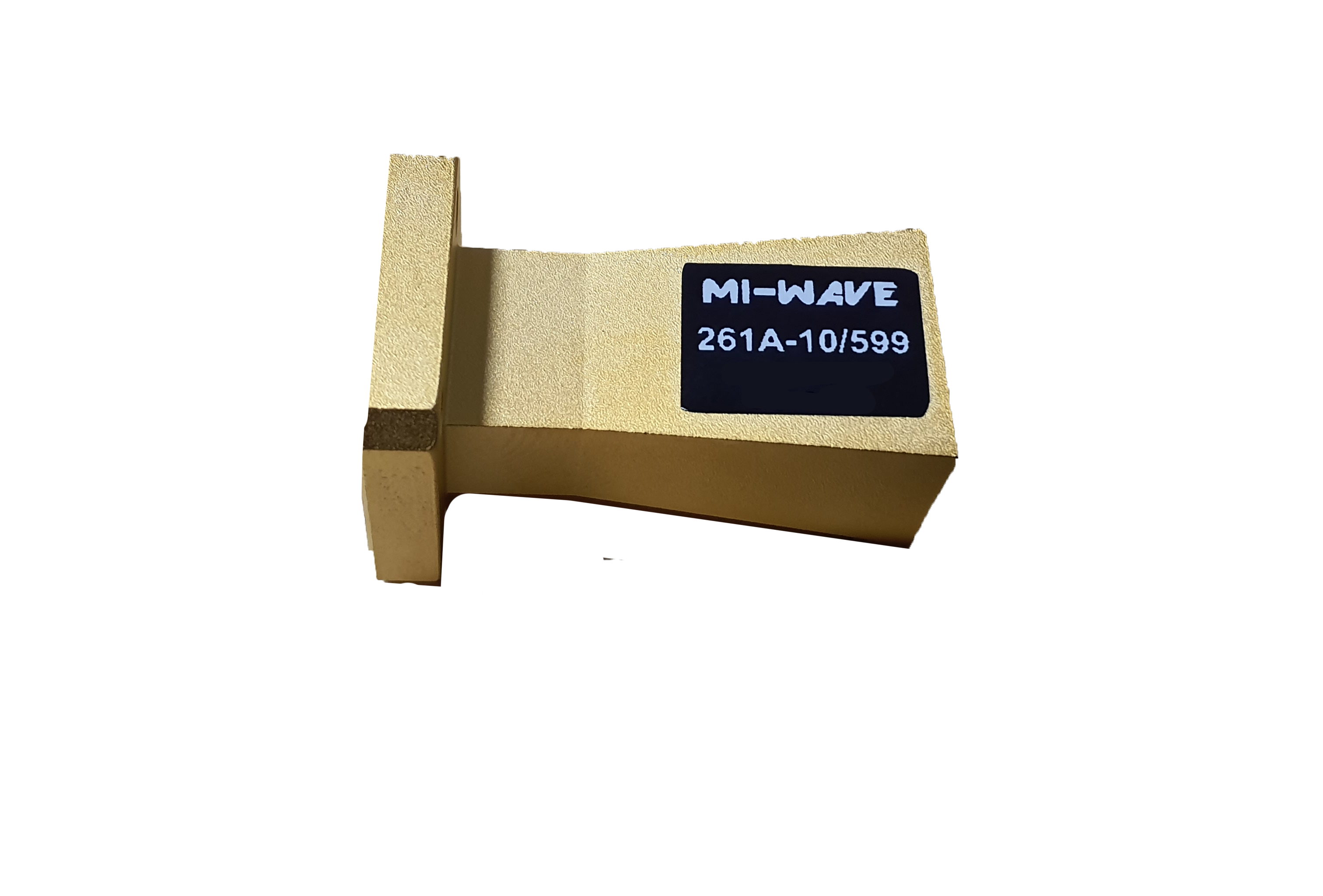
| 261A-10/599 | 26.5 | 40 | 10 | Linear | 56 | 54 | 20 | 20 | WR-28 Waveguide UG-599/U Flange | |
| 261A-15/599 | 26.5 | 40 | 15 | Linear | 33 | 33 | 20 | 20 | WR-28 Waveguide UG-599/U Flange | |
| 261A-20/599 | 26.5 | 40 | 20 | Linear | 16.57 | 16.58 | 20 | 20 | WR-28 Waveguide UG-599/U Flange | |
| 261A-25/599 | 26.5 | 40 | 25 | Linear | 7 | 9 | 20 | 20 | WR-28 Waveguide UG-599/U Flange | |
| 261B-15/383 | 33 | 50 | 15 | Linear | 39.81 | 25.9 | 20 | 20 | WR-22 Waveguide UG-383/U Flange | |
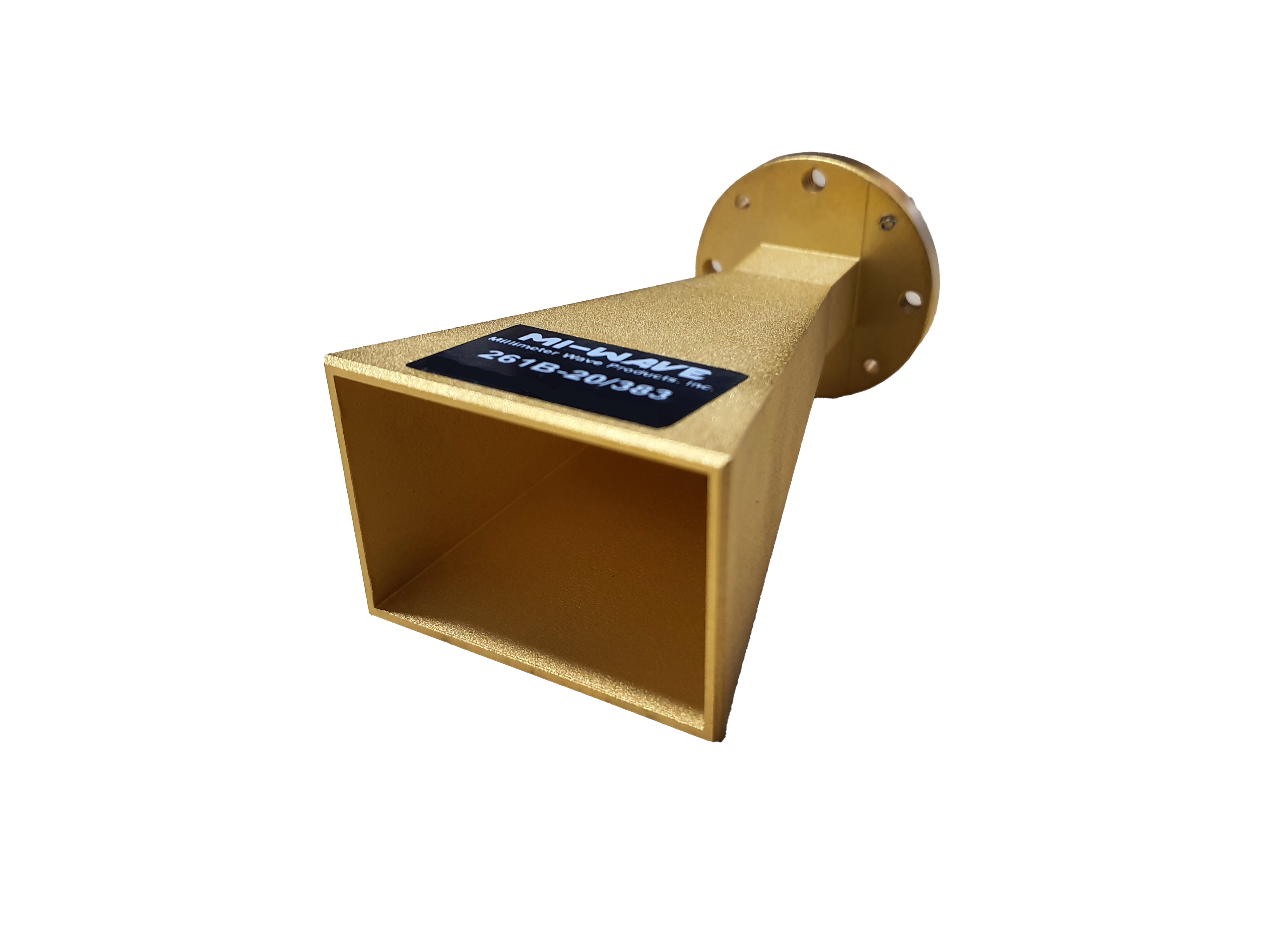
| 261B-20/383 | 30 | 50 | 20 | Linear | 15 | 16 | 20 | 20 | WR-22 Waveguide UG-383/U Flange | |
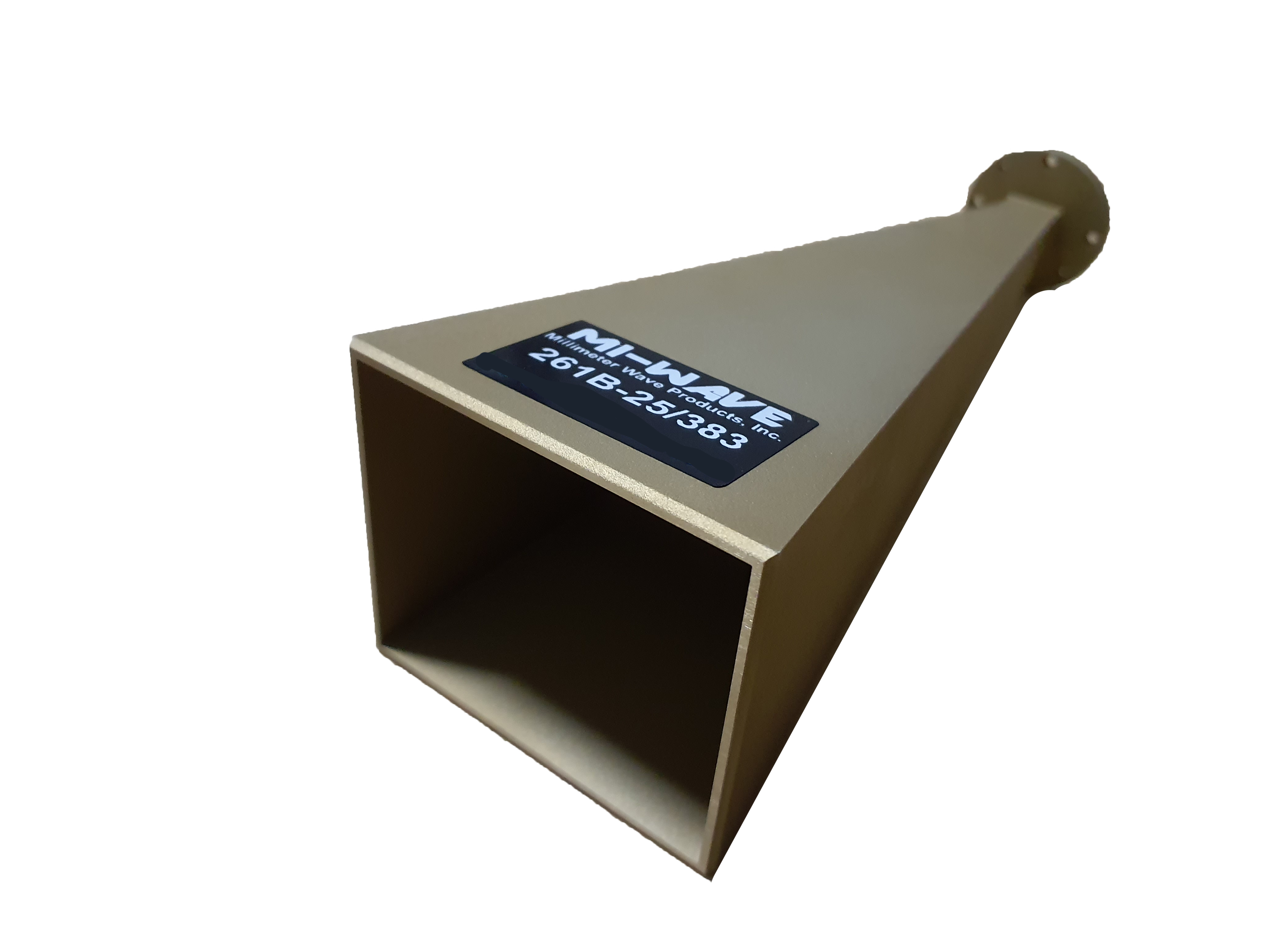
| 261B-25/383 | 33 | 50 | 25 | Linear | 7 | 9 | 20 | 20 | WR-22 Waveguide UG-383/U Flange | |
| 261U-10/383 | 40 | 60 | 10 | Linear | 55 | 55 | 20 | 20 | WR-19 Waveguide UG-383/U-M Flange | |
| 261U-15/383 | 40 | 60 | 15 | Linear | 32 | 32 | 14 | 20 | WR-19 Waveguide UG-383/U-M Flange | |
| 261U-20/383 | 40 | 60 | 20 | Linear | 14 | 16 | 14 | 30 | WR-19 Waveguide UG-383/U-M Flange | |
| 261U-25/383 | 40 | 60 | 25 | Linear | 9 | 10 | 20 | 20 | WR-19 Waveguide UG-383/U-M Flange | |
| 261V-10/385 | 50 | 75 | 10 | Linear | 55 | 55 | 20 | 20 | WR-15 Waveguide UG-385/U-M Flange | |
| 261V-15/385 | 50 | 75 | 15 | Linear | 29 | 32 | 20 | 20 | WR-15 Waveguide UG-385/U-M Flange | |
| 261V-20/385 | 50 | 75 | 20 | Linear | 14 | 15 | 20 | 20 | WR-15 Waveguide UG-385/U Flange | |
| 261V-25/385-FL | 50 | 75 | 25 | Linear | 9 | 10 | 20 | 20 | WR-15 Waveguide UG-385/U Flange | |
| 261E-10/387 | 60 | 90 | 10 | Linear | 55 | 55 | 20 | 20 | WR-12 Waveguide UG-387/U Flange | |
| 261E-15/387 | 60 | 90 | 15 | Linear | 30 | 32 | 20 | 20 | WR-12 Waveguide UG-387/U Flange | |
| 261E-20/387 | 60 | 90 | 20 | Linear | 14 | 15 | 20 | 20 | WR-12 Waveguide UG-387/U Flange | |
| 261E-25/387 | 60 | 90 | 25 | Linear | 9 | 10 | 20 | 20 | WR-12 Waveguide UG-387/U Flange | |
| 261W-10/387 | 75 | 110 | 10 | Linear | 51.76 | 52 | 2 | 25 | WR-10 Waveguide UG-387/U-M Flange | |
| 261W-15/387 | 75 | 110 | 15 | Linear | 32 | 32 | 14 | 25 | WR-10 Waveguide UG-387/U-M Flange | |
| 261W-20/387 | 75 | 110 | 20 | Linear | 16 | 18 | 20 | 20 | WR-10 Waveguide UG-387/U-M Flange | |
| 261W-25/387-FL | 75 | 110 | 25 | Linear | 9 | 10 | 20 | 20 | WR-10 Waveguide UG-387/U-M Flange | |
| 261F-10/387 | 90 | 140 | 10 | Linear | 53 | 55 | 19 | 22 | WR-08 Waveguide UG-387/U-M Flange | |
| 261F-15/387 | 90 | 140 | 15 | Linear | 29.73 | 33.67 | 14 | 25 | WR-08 Waveguide UG-387/U-M Flange | |
| 261F-20/387 | 90 | 140 | 20 | Linear | 16 | 18 | 14 | 30 | WR-08 Waveguide UG-387/U-M Flange | |
| 261F-25/387 | 90 | 140 | 25 | Linear | 9 | 10 | 12 | 15 | WR-08 Waveguide UG-387/U-M Flange | |
| 261D-15/387 | 110 | 170 | 15 | Linear | 33 | 31 | 20 | 20 | WR-06 Waveguide UG-387/U-M Flange | |
| 261D-20/387 | 110 | 170 | 20 | Linear | 17 | 18 | 20 | 20 | WR-06 Waveguide UG-387/U-M Flange | |
| 261D-25/387 | 110 | 170 | 25 | Linear | 25 | 25.5 | 20 | 20 | WR-06 Waveguide UG-387/U-M Flange | |
| 261G-10/387 | 140 | 220 | 10 | Linear | 56 | 54 | 19 | 21 | WR-05 Waveguide UG-387/U-M Flange | |
| 261G-15/387 | 140 | 220 | 15 | Linear | 33.41 | 31.9 | 17 | 23 | WR-05 Waveguide UG-387/U-M Flange | |
| 261G-20/387 | 140 | 220 | 20 | Linear | 13 | 13 | 12 | 25 | WR-05 Waveguide UG-387/U-M Flange | |
| 261G-25/387 | 140 | 220 | 25 | Linear | 8.9 | 10.28 | 20 | 20 | WR-05 Waveguide UG-387/U-M Flange | |
| 261H-25/387 | 170 | 260 | 25 | Linear | 10 | 10 | WR-04 Waveguide UG-387/U Flange | |||
| 261J-15/387 | 220 | 325 | 15 | Linear | 35 | 38 | 14 | 17 | WR-3 Waveguide UG-387/U-M Flange | |
| 261J-25/387 | 220 | 325 | 25 | Linear | 9 | 10 | 20 | 20 | WR-3 Waveguide UG-387/U-M Flange | |
| 261(2.8)-25/387 | 260 | 400 | 25 | Linear | 26.18 | 25.8 | 20 | 20 | WR-2.8 Waveguide UG-387/U-M Flange | |
| 261(2.2)/387 | 325 | 500 | 25 | Linear | 13 | 15 | 22 | 23 | WR-2.2 Waveguide UG-387/U-M Flange | |
| 261(1.5)-25/387 | 500 | 750 | 25 | Linear | 22 | 23 | WR-1.5 Waveguide UG-387/U-M Flange |
Your Content Goes Here
Mi-Wave’s 261 Series standard gain horn antennas are created with the end consumer in mind. We know you need and demand the absolute best when it comes to horn antennas and we look to provide you with the best solutions possible. We can customize horn antennas for all your needs.
• Other gain values available upon request (ex: 10 dB, 15 dB, 20 dB, etc.)
Standard gain horn antennas can be ordered with a waveguide to coax adapter attached to it, or can be built with a custom-configured connector. Our broadband waveguide horn antennas have frequency capabilities ranging from 5 GHz to 40 GHz depending on type and needs. Our RF and microwave gain horn antennas are RoHS and REACH compliant.
Mi-Wave offers the broadest selection as we are the factory source that builds gain horns for organizations globally. Our expert sales engineers are always here to assist you.
Select Your Frequency Band
Click on the frequency band you’re interested in for specific gain horn antenna information.
Why Choose Mi-Wave
Mi-Wave is a trusted manufacturer of RF, microwave, and millimeter-wave antennas and components, supporting commercial, government, and research systems worldwide. Our Series 261 standard gain horn antennas are engineered to deliver measurement-grade accuracy, stable radiation patterns, and reliable electrical performance in demanding high-frequency environments.
High-Frequency Engineering Expertise
With decades of experience in microwave and millimeter-wave design, Mi-Wave develops standard gain horn antennas optimized for accurate gain values, low VSWR, and controlled beamwidths across broad operating bandwidths.
Precision Manufacturing and Quality Control
Each antenna is manufactured using precision machining and controlled assembly processes to ensure repeatable electrical performance, mechanical stability, and long-term reliability, which are essential for calibration and reference applications.
Broad Frequency and Application Support
Mi-Wave supports standard gain horn antennas across a wide range of RF, microwave, and millimeter-wave frequency bands, making them suitable for antenna calibration, communications, radar, telemetry, and test environments.
Custom Antenna Solutions
In addition to standard offerings, Mi-Wave provides custom standard gain horn antenna designs tailored to specific frequency ranges, gain requirements, polarization options, waveguide interfaces, and mechanical constraints. Our sales engineering team works closely with customers to ensure seamless system integration.
What Standard Gain Horn Antennas Are and What They Do
Standard gain horn antennas are directional horn antennas designed to provide known, predictable gain values and stable radiation patterns over a specified frequency range. They are commonly used as reference standards in antenna measurements and system calibration.
Unlike broadband horns optimized primarily for coverage, standard gain horns are designed with controlled geometry and known electrical characteristics, allowing engineers to accurately measure antenna gain, verify system performance, and establish traceable calibration references.
How Standard Gain Horn Antennas Work
RF energy enters the antenna through a standard waveguide interface and propagates toward the horn aperture. As the signal travels through the horn flare, the electromagnetic fields are shaped to produce a well-defined main beam with controlled sidelobes and predictable polarization behavior.
This design provides:
-
Accurate and repeatable gain values
-
Stable beamwidth and radiation patterns
-
Low VSWR and minimal signal reflections
-
Consistent polarization characteristics
These attributes are essential for antenna calibration, pattern measurement, and system verification.
Frequency Coverage and Waveguide Interfaces
Mi-Wave Series 261 standard gain horn antennas support operation across a wide range of RF, microwave, and millimeter-wave frequencies, depending on configuration. Typical coverage spans from X-Band through W-Band, with custom frequency ranges available.
Common supported WR waveguide interfaces include:
-
WR-90 | X-Band
-
WR-62 | Ku-Band
-
WR-42 | K-Band
-
WR-28 | Ka-Band
-
WR-22 | Q-Band
-
WR-15 | V-Band
-
WR-10 | W-Band
Additional waveguide sizes and frequency extensions are available upon request.
Why Standard Gain Horns Matter
Standard gain horn antennas play a critical role in high-frequency systems because they provide a reliable reference for performance measurement and validation. Their known gain and stable radiation patterns allow engineers to:
-
Accurately measure and compare antenna performance
-
Calibrate test ranges and measurement equipment
-
Validate RF, microwave, and millimeter-wave systems
-
Ensure repeatability and traceability in test results
These capabilities are essential in communications, radar, telemetry, and research environments where measurement accuracy directly impacts system performance.
Features
-
Known, calibrated gain characteristics
Designed to provide accurate and repeatable gain values, making Series 261 horns ideal as reference antennas for measurement and calibration applications. -
Stable and predictable radiation patterns
Produces well-defined main beams with controlled sidelobes, ensuring consistent and repeatable performance across the operating frequency band. -
Low VSWR across the operating band
Ensures efficient power transfer, minimal signal reflection, and improved measurement accuracy in high-frequency RF systems. -
Controlled beamwidth and sidelobe performance
Optimized horn geometry provides reliable beam shape and directivity, supporting precise antenna characterization and system verification. -
Stable polarization characteristics
Maintains consistent polarization behavior across frequency, supporting accurate polarization measurements and system alignment. -
Wideband frequency support within defined bands
Each standard gain horn is designed to operate predictably across its designated RF, microwave, or millimeter-wave band. -
High power handling capability
Suitable for both transmit and receive applications, including demanding test and validation environments. -
Precision mechanical construction
Manufactured with tight tolerances to ensure mechanical stability, repeatability, and long-term reliability. -
Compatibility with standard WR waveguide interfaces
Allows easy integration into existing RF, microwave, and millimeter-wave signal chains. -
Laboratory and field-ready design
Suitable for use in controlled lab environments as well as portable or field-deployed test setups. -
Custom configurations available
Optional customization for frequency range, waveguide interface, polarization, and mechanical mounting requirements.
Applications
-
Antenna Calibration and Gain Measurements
Widely used as reference antennas for determining absolute gain and verifying antenna performance in calibrated test ranges. -
RF, Microwave, and Millimeter-Wave Test & Measurement
Supports system characterization, component testing, and validation across high-frequency bands. -
Antenna Pattern and Polarization Characterization
Used to measure radiation patterns, beamwidth, sidelobe levels, and polarization purity of antennas under test. -
System Calibration and Verification
Enables repeatable calibration of RF systems, test equipment, and measurement setups. -
Radar and Telemetry Systems
Suitable for radar and telemetry applications requiring predictable beam characteristics and stable gain. -
Point-to-Point Communication Systems
Used in line-of-sight communication links where controlled directivity and known gain are required. -
EMC, EMI, and RCS Measurement Environments
Supports electromagnetic compatibility testing and radar cross-section measurements where repeatable antenna performance is critical. -
Research and Development Platforms
Ideal for R&D environments requiring reliable reference antennas for experimentation and system evaluation. -
Production Test and Quality Assurance
Used in manufacturing and QA environments to verify antenna and system performance before deployment.