
Products> Antenna Products > Omni Directional Antennas
Product Description
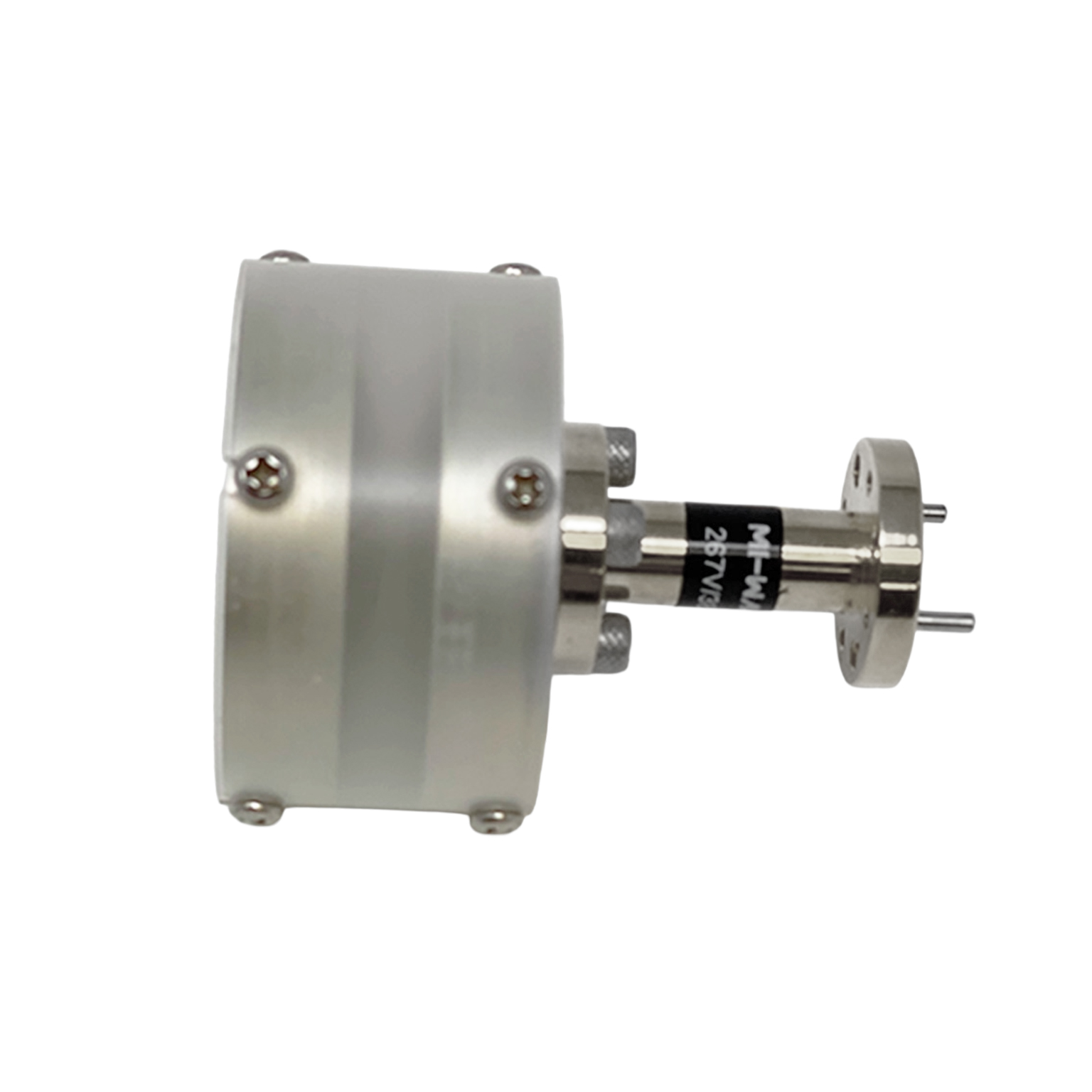
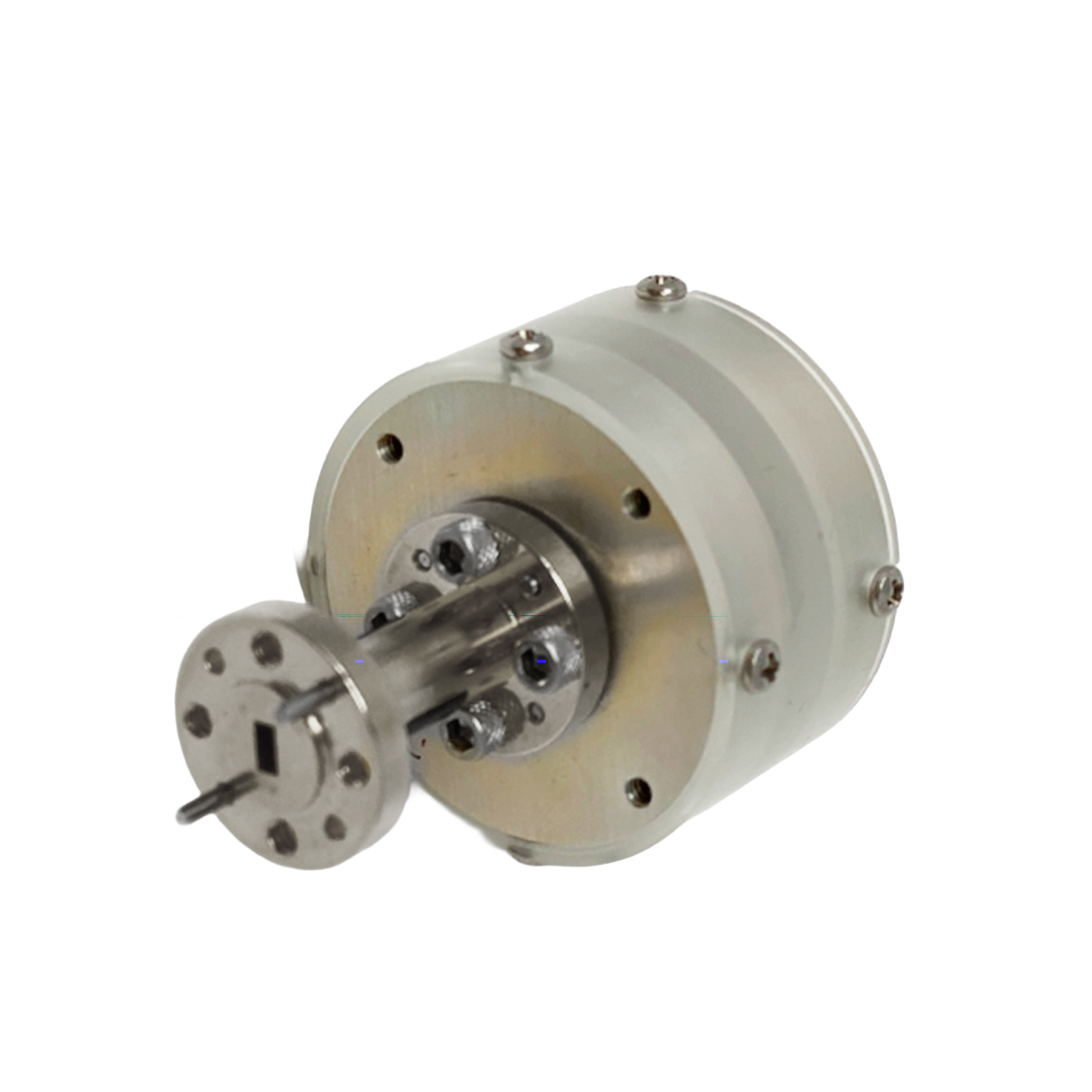
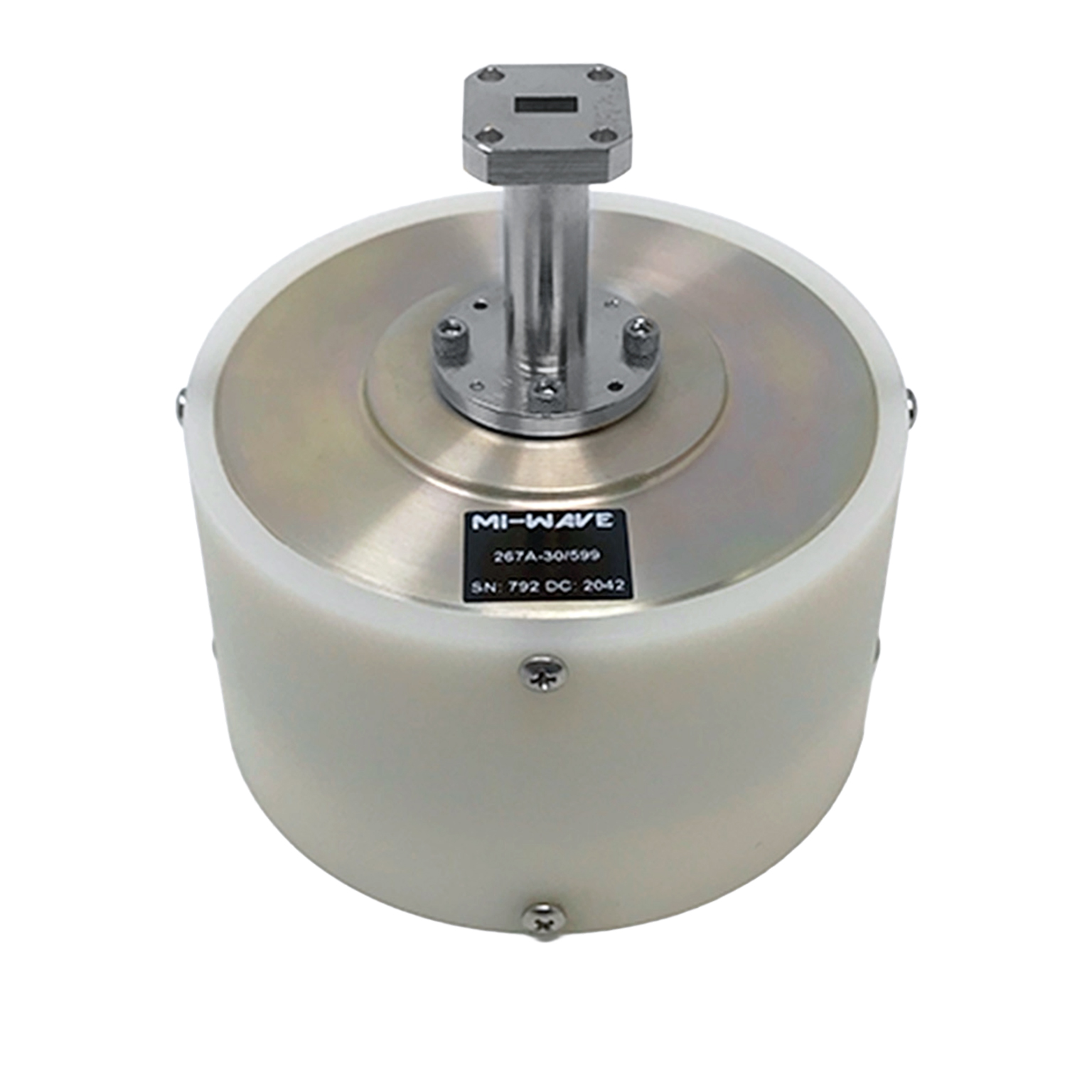
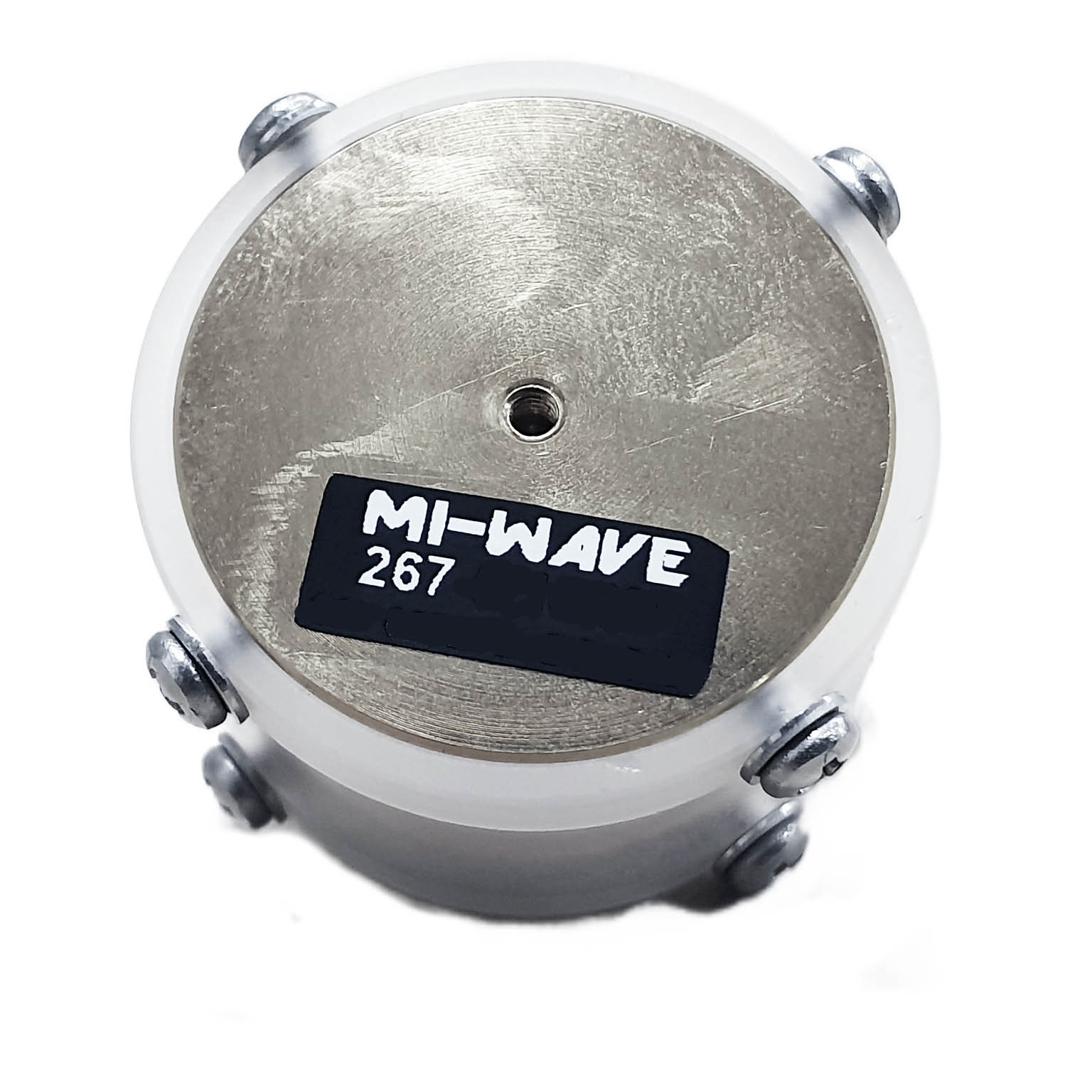
Mi-Wave’s Omnidirectional Antennas, including the Series 267, are precision-engineered antennas designed to provide uniform 360-degree azimuth coverage, stable electrical performance, and reliable signal distribution across microwave and millimeter-wave frequency ranges from 8.2 to 140 GHz.
These antennas are ideal for applications requiring broad area coverage, consistent signal strength, and dependable operation without the need for mechanical scanning or antenna repositioning. Unlike directional antennas, omnidirectional antennas radiate energy evenly in the horizontal plane, making them well suited for systems where continuous signal coverage in all directions is critical.
Series 267 omnidirectional antennas are manufactured using high-precision fabrication techniques to ensure repeatable radiation patterns, low VSWR, and stable gain across their operating bands. This combination of consistent electrical performance and wide-area coverage makes them valuable in communications systems, telemetry platforms, monitoring applications, and RF test environments.
Mi-Wave’s Series 267 Omnidirectional Antennas are available with coaxial or rectangular waveguide interfaces, providing flexibility for integration into a wide range of RF, microwave, and millimeter-wave systems. Their robust construction and predictable performance support both laboratory and field-deployed applications.
The models shown represent only a portion of Mi-Wave’s full capabilities. Custom omnidirectional antenna configurations are available to support specific frequency ranges, mounting options, mechanical designs, and environmental requirements, ensuring optimized solutions for specialized applications.
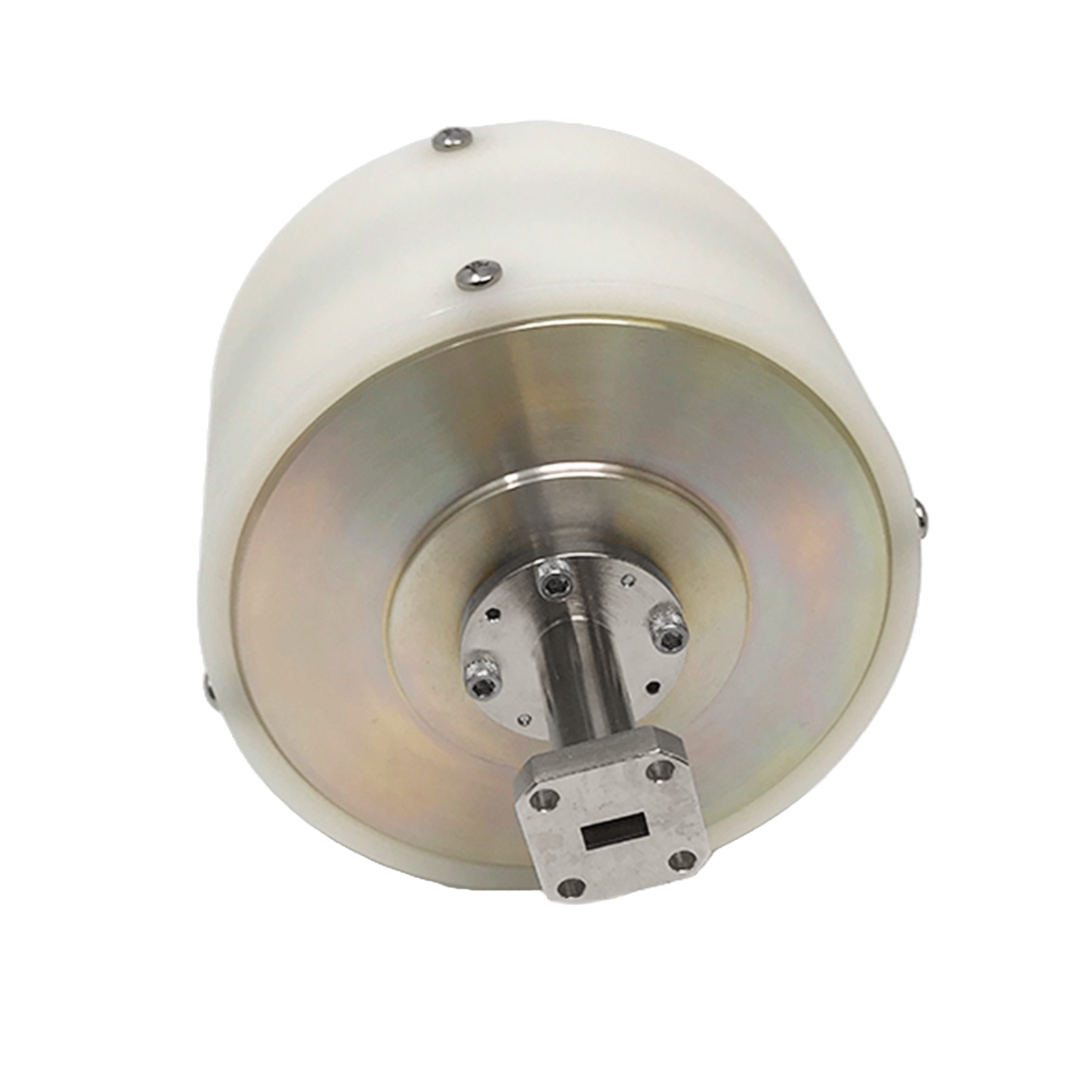


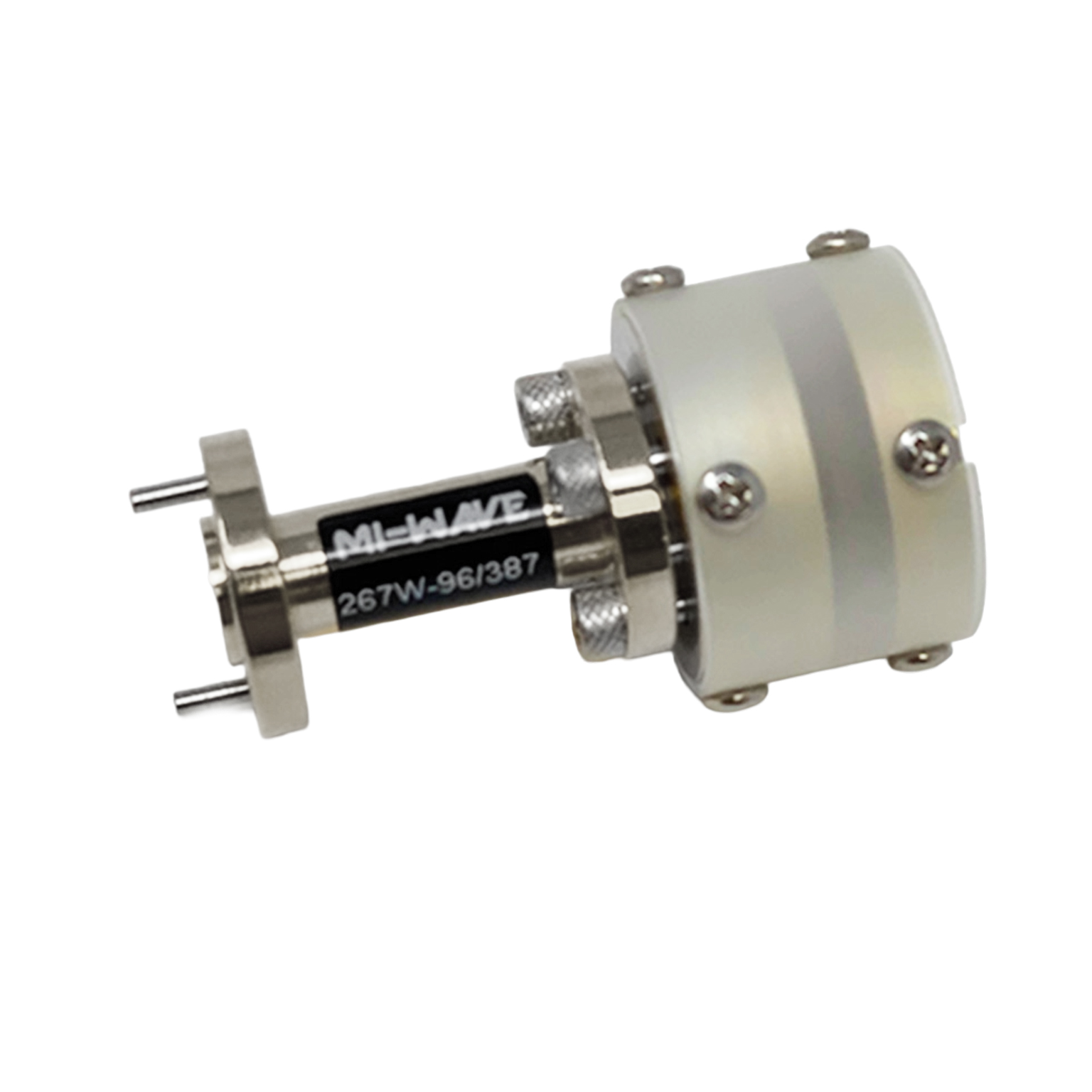
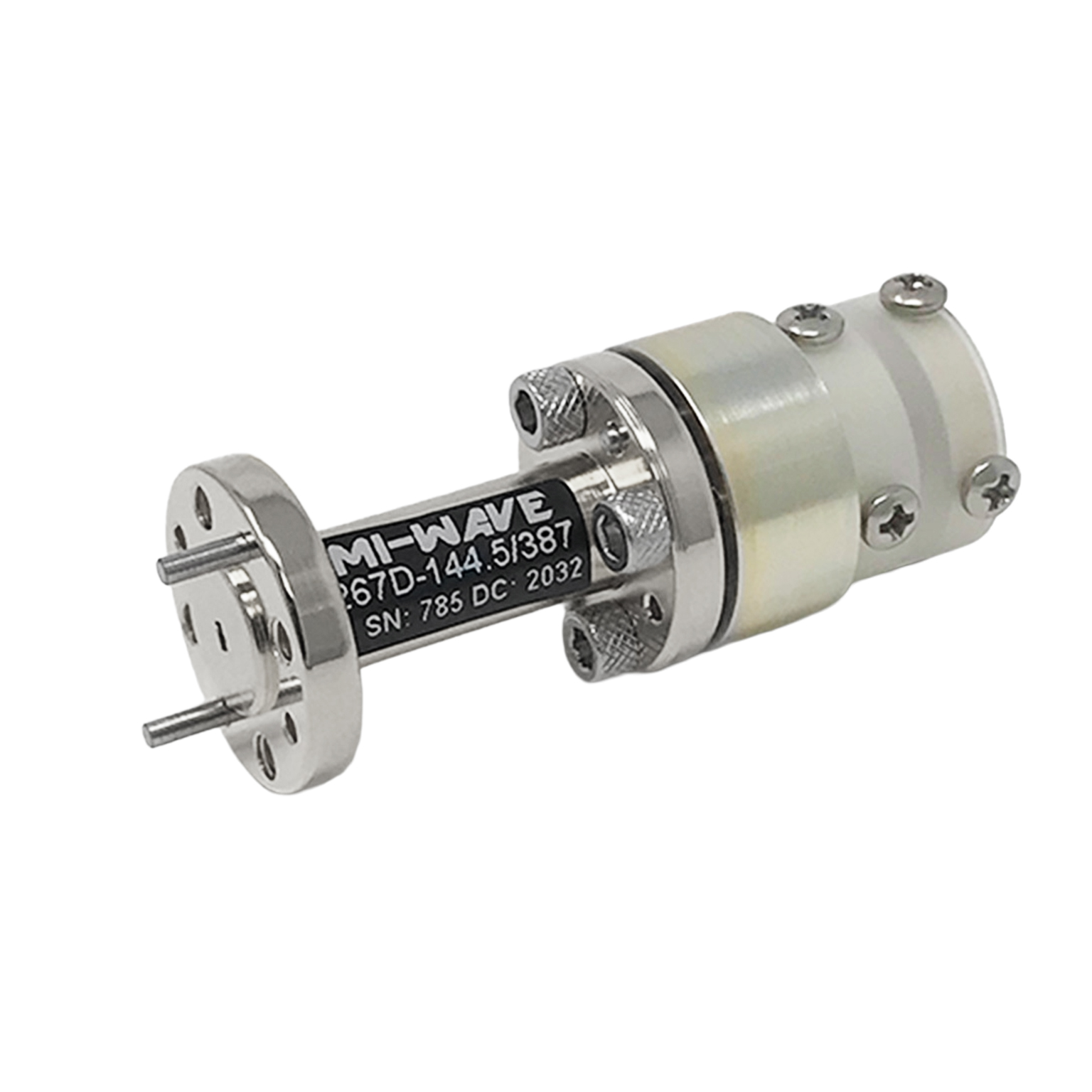
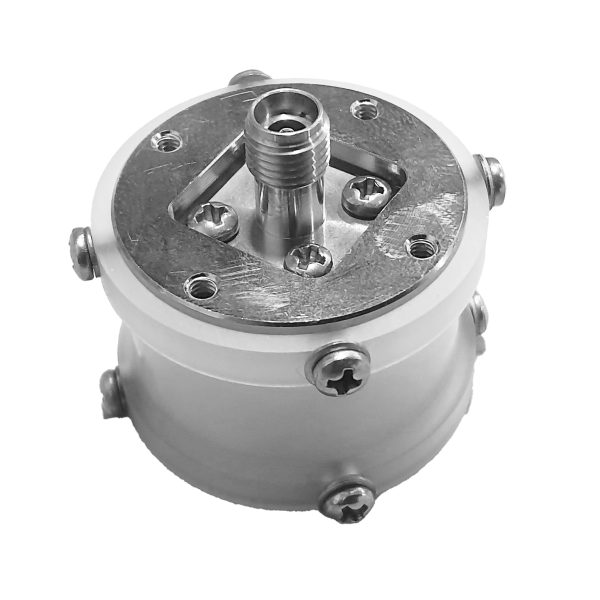

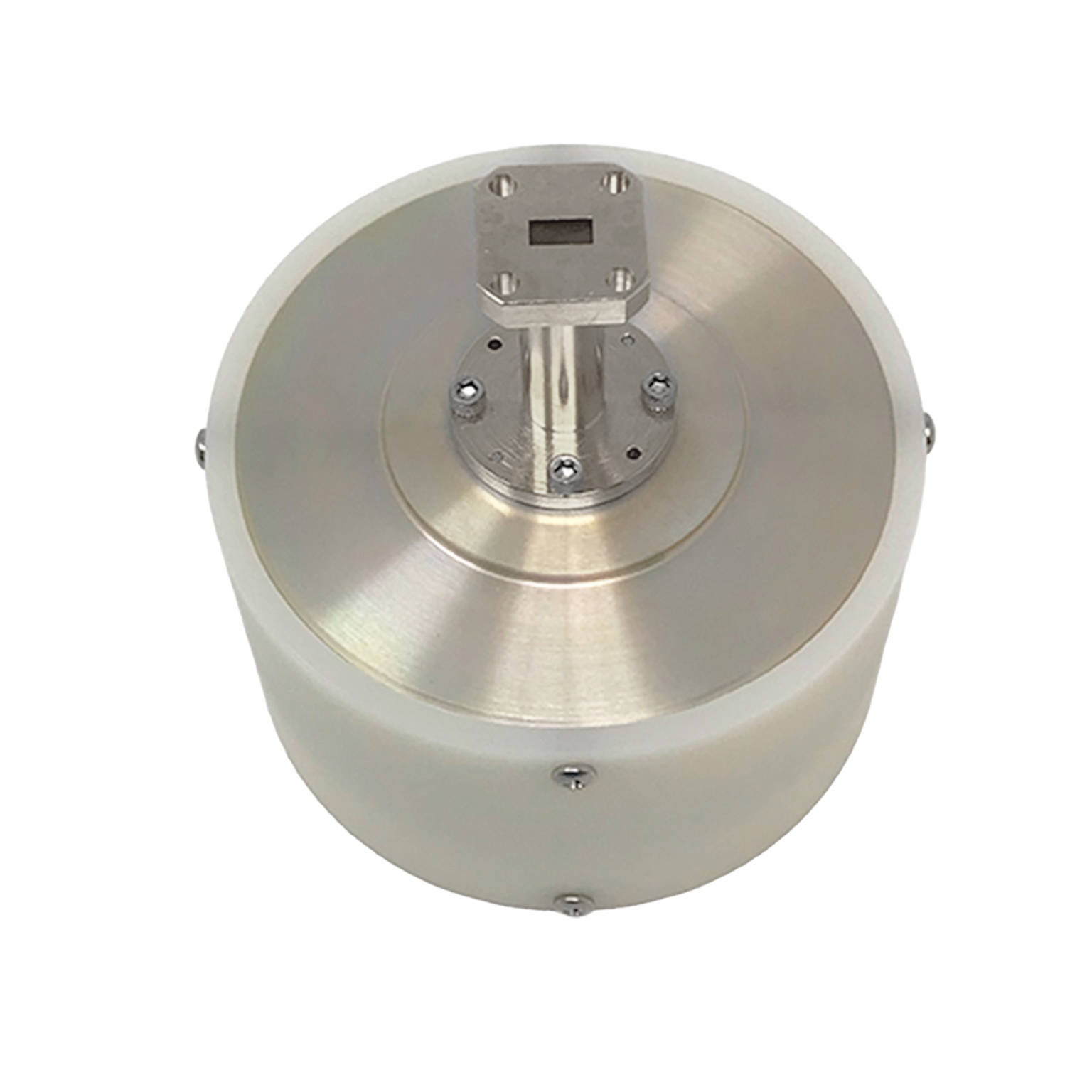
| Model | Band Type | Frequency Range | Beamwidth Az/Vert | Return Loss | Power Handling | Gain Typical | Polarization | RF Ports | LINK |
|---|---|---|---|---|---|---|---|---|---|
| 267-5/40/KF | Wideband | 5–40 GHz | 360° / 45° | 14 dB | 5 W | 3–4 dB | Vertical | K-Female Connector | |
| 267-5/50/2.4mmF | Wideband | 5–50 GHz | 360° / 45° | 14 dB | 5 W | 3–4 dB | Vertical | 2.4mm Female Coax Connector | |
| 267-5/70/1.85mmF | Wideband | 5–70 GHz | 360° / 45° | 14 dB | 5 W | 3–4 dB | Vertical | 1.85mm Female Coax Connector | |
| 267X/SMAF | X-Band | 8.2–12.4 GHz | 360° / 45° | 17 dB | 5 W | 3–4 dB | Vertical | SMA-Female Connector | |
| 267Ku/SMAF | Ku-Band | 12–18 GHz | 360° / 45° | 17 dB | 5 W | 3–4 dB | Vertical | SMA-Female Connector | |
| 267K/595 | K-Band | 18–26.5 GHz | 360° / 45° | 20 dB | 5 W | 3–4 dB | Vertical | WR-42 Waveguide, UG-595/U Flange | |
| 267A/599 | Ka-Band | 26.5–40 GHz | 360° / 45° | 20 dB | 5 W | 3–4 dB | Vertical | WR-28 Waveguide, UG-599/U Flange | |
| 267B/383 | Q-Band | 33–50 GHz | 360° / 45° | 20 dB | 5 W | 3–4 dB | Vertical | WR-22 Waveguide, UG-383/U Flange | |
| 267U/383 | U-Band | 40–60 GHz | 360° / 45° | 20 dB | 5 W | 3–4 dB | Vertical | WR-19 Waveguide, UG-383/U-M Flange | |
| 267V/385 | V-Band | 50–75 GHz | 360° / 45° | 20 dB | 3 W | 3–4 dB | Vertical | WR-15 Waveguide, UG-385/U Flange | |
| 267E/387 | E-Band | 60–90 GHz | 360° / 45° | 20 dB | 2 W | 3–4 dB | Vertical | WR-12 Waveguide, UG-387/U Flange | |
| 267W/387 | W-Band | 75–110 GHz | 360° / 45° | 20 dB | 1 W | 3–4 dB | Vertical | WR-10 Waveguide, UG-387/U-M Flange | |
| 267D/387 | D-Band | 110–170 GHz | 360° / 45° | 20 dB | 0.01 W | 3–4 dB | Vertical | WR-06 Waveguide, UG-387/U-M Flange |
*All data presented is collected from a sample lot.
* Actual data may vary unit to unit, slightly.
*All testing was performed under +25 °C case temperature.
*Consult factory to confirm if material, plating, size, shape, orientation and any electrical parameter is critical for the application as website information is for reference only.
*Millimeter Wave Products, Inc. reserves the right to change the information presented on website without notice as we continue to enhance the performance and design of our products.
Omnidirectional Antenna Engineering Calculators
These RF engineering calculators help estimate antenna performance for omnidirectional antennas, including communications systems, telemetry networks, RF monitoring platforms, radar systems, and microwave and millimeter-wave test environments. Use them to calculate antenna gain, wavelength, free-space path loss, effective aperture, aperture size required for target gain, and approximate beamwidth across RF, microwave, and millimeter-wave frequencies.
Omnidirectional antennas are designed for uniform 360-degree azimuth coverage, stable signal distribution, low VSWR, and reliable multi-directional performance. A typical starting efficiency range for many systems is 0.50 to 0.75.
Antenna Gain Calculator
Antenna Gain (dBi):
Approximate Vertical Beamwidth Calculator
Aperture Size Required for Target Gain
Antenna Effective Aperture Calculator
Effective Aperture (m²):
Free Space Path Loss Calculator
RF Wavelength Calculator
Wavelength (mm):
Key Features & Performance Benefits
True 360° Azimuth Coverage
Provides uniform radiation in all horizontal directions, eliminating the need for antenna rotation or mechanical scanning.
Wideband Frequency Coverage (8.2–140 GHz)
Supports microwave and millimeter-wave systems across a broad frequency range, enabling flexible multi-band operation.
Stable Radiation Patterns
Designed to maintain consistent omnidirectional coverage with minimal variation across frequency, ensuring reliable system performance.
Low VSWR and Efficient Power Transfer
Optimized impedance matching minimizes reflections and maximizes signal transmission efficiency.
Consistent Gain Performance
Delivers predictable gain across the operating band, supporting stable communication links and measurement accuracy.
No Mechanical Steering Required
Provides full-area coverage without moving parts, improving reliability and simplifying system design.
Compact and Integration-Friendly Designs
Available in configurations suitable for both laboratory setups and field-deployed systems with minimal footprint.
Coaxial and Waveguide Interfaces Available
Supports flexible integration into a wide range of RF, microwave, and millimeter-wave systems.
Reliable Performance in Dynamic Environments
Well suited for applications where signal direction changes or coverage must remain continuous.
Custom Engineering Available
Supports custom frequency bands, mounting options, environmental sealing, and mechanical configurations.
Applications
Omnidirectional Antenna Applications
Mi-Wave Omnidirectional Antennas are used in RF, microwave, and millimeter-wave systems requiring uniform signal coverage, stable performance, and continuous communication in all directions.
Communications Systems
Designed for systems requiring consistent signal coverage across a wide area.
Typical applications include:
- Wireless communication links
- Multi-node communication networks
- Mobile communication platforms
- Distributed RF systems
- Broadband communication testing
Telemetry Systems
Widely used in telemetry applications where continuous signal transmission and reception are required.
Typical applications include:
- Data transmission systems
- Remote monitoring platforms
- UAV and autonomous system telemetry
- Sensor networks
- Real-time data acquisition
RF Monitoring and Surveillance
Supports systems that require continuous signal detection from all directions.
Typical applications include:
- Spectrum monitoring
- Signal detection and analysis
- RF surveillance systems
- Interference monitoring
- Situational awareness systems
RF Test & Measurement
Used in environments where uniform field distribution and consistent signal exposure are required.
Typical applications include:
- RF system testing
- Antenna validation
- Signal coverage testing
- Lab-based measurement systems
- Calibration setups
Radar and Detection Systems
Supports radar and sensing applications where broad coverage is required.
Typical applications include:
- Short-range radar systems
- Detection and tracking systems
- RF sensing platforms
- Experimental radar setups
Research and Development (R&D)
Used in research environments for broadband RF experimentation and system development.
Typical applications include:
- Academic research programs
- Government research labs
- Prototype system validation
- Wireless propagation studies
- Advanced RF experiments
Frequently Asked Questions (FAQ)
What is an omnidirectional antenna?
An omnidirectional antenna radiates RF energy uniformly in all directions within the horizontal plane, providing 360-degree azimuth coverage.
What are omnidirectional antennas used for?
They are used in applications requiring continuous signal coverage, such as communications systems, telemetry, RF monitoring, and testing environments.
What frequency range do Mi-Wave omnidirectional antennas support?
Mi-Wave Series 267 omnidirectional antennas operate from 8.2 GHz to 140 GHz.
How does an omnidirectional antenna differ from a directional antenna?
Omnidirectional antennas provide uniform coverage in all directions, while directional antennas focus energy in a specific direction for higher gain.
Do omnidirectional antennas have lower gain than directional antennas?
Yes. Because energy is distributed evenly, omnidirectional antennas typically have lower gain but wider coverage.
Are these antennas suitable for mobile or dynamic environments?
Yes. They are ideal for systems where signal direction changes frequently, eliminating the need for repositioning.
What interfaces are available?
These antennas are available with coaxial and rectangular waveguide interfaces for flexible system integration.
Can these antennas be used for RF testing?
Yes. They are commonly used in RF measurement and test environments where consistent signal distribution is required.
Are omnidirectional antennas polarization specific?
They are typically designed for linear polarization, though custom options may be available.
Can Mi-Wave omnidirectional antennas be customized?
Yes. Custom configurations are available for frequency range, mounting, environmental conditions, and mechanical design.
Glossary of Omnidirectional Antenna Terms
Antenna Fundamentals
Omnidirectional Antenna
An antenna that radiates RF energy uniformly in all directions in the horizontal plane.
Directional Antenna
An antenna that focuses energy in a specific direction for higher gain.
Radiation Pattern
The spatial distribution of radiated RF energy.
Azimuth Coverage
Horizontal coverage of an antenna, typically 360° for omnidirectional designs.
Electrical Performance
Gain (dBi)
A measure of how effectively an antenna radiates energy in a given direction.
VSWR (Voltage Standing Wave Ratio)
Indicates how well the antenna is impedance matched.
Return Loss
The amount of signal reflected due to impedance mismatch.
Bandwidth
The frequency range over which the antenna performs effectively.
Efficiency (η)
The ratio of radiated power to input power.
RF and Frequency
Radio Frequency (RF)
Electromagnetic signals used for communication and sensing.
Microwave Frequencies
1 GHz to 30 GHz.
Millimeter-Wave (mmWave)
30 GHz to 300 GHz.
Frequency Range
The operational span of frequencies supported by the antenna.
Wavelength (λ)
The physical length of an RF wave cycle.
Antenna Behavior
Uniform Radiation
Equal signal distribution in all directions.
Coverage Area
The physical region where the antenna provides signal.
Beamwidth
For omnidirectional antennas, typically narrow vertically and wide horizontally.
Polarization
Orientation of the electric field, usually linear.
System and Applications
Telemetry
Transmission of data from remote systems.
RF Monitoring
Detection and analysis of RF signals.
Communications Systems
Systems used to transmit and receive RF signals.
Test & Measurement Systems
Equipment used to evaluate RF performance.
Radar Systems
Systems that detect objects using RF signals.
R&D (Research and Development)
Experimental and engineering development environments.
Engineering Concepts
Impedance Matching
Ensuring maximum power transfer between RF components.
Signal Coverage
The area over which signals are effectively transmitted.
System Integration
Combining components into a working RF system.
Dynamic Environment
Conditions where signal direction or position changes frequently.
Select Your Frequency Band
Click the frequency band you’re interested in for more specific Omnidirectional antenna information.
Why Choose Mi-Wave
Mi-Wave is a trusted manufacturer of RF, microwave, and millimeter-wave antennas and components, supporting commercial, government, and research systems worldwide. Our Series 267 omnidirectional antennas are engineered to deliver reliable 360° coverage, stable electrical characteristics, and long-term performance in demanding high-frequency environments.
High-Frequency Engineering Expertise
With decades of experience in microwave and millimeter-wave antenna design, Mi-Wave develops omnidirectional antennas optimized for uniform azimuth coverage, low VSWR, and predictable radiation behavior across wide operating bandwidths.
Precision Manufacturing and Quality Control
Each Series 267 antenna is manufactured using precision machining and controlled assembly processes to ensure repeatable electrical performance, mechanical stability, and long-term reliability in both laboratory and field-deployed systems.
Broad Frequency and Application Support
Mi-Wave supports omnidirectional antennas across a wide range of microwave and millimeter-wave frequency bands, making them suitable for communications, telemetry, monitoring, and test environments.
Custom Antenna Solutions
In addition to standard offerings, Mi-Wave provides custom omnidirectional antenna designs tailored to specific frequency ranges, polarization requirements, waveguide or coaxial interfaces, mechanical constraints, and environmental conditions. Our sales engineering team works closely with customers to ensure seamless system integration.
What Omnidirectional Antennas Are and What They Do
Omnidirectional antennas are antennas designed to radiate and receive RF energy uniformly in all directions within the horizontal plane, providing 360-degree azimuth coverage. Unlike directional antennas that focus energy into a narrow beam, omnidirectional antennas distribute energy evenly, enabling consistent coverage around the antenna.
In microwave and millimeter-wave systems, omnidirectional antennas are commonly used when:
-
Signal coverage is required in multiple directions simultaneously
-
System orientation may change
-
Mechanical scanning or antenna steering is impractical
How Omnidirectional Antennas Work
RF energy enters the antenna through a coaxial or waveguide feed interface and is distributed along the antenna structure in a way that produces uniform radiation around the antenna’s axis. The antenna geometry is carefully designed to maintain stable impedance matching and consistent radiation behavior across the operating frequency band.
This design enables:
-
Uniform azimuth radiation patterns
-
Low VSWR and efficient power transfer
-
Stable gain across frequency
-
Minimal pattern distortion
Frequency Coverage, WR Waveguides, and Supported Bands
Mi-Wave Series 267 omnidirectional antennas support operation across a wide range of microwave and millimeter-wave frequencies, depending on configuration.
Typical frequency coverage includes operation from X-Band through W-Band, with custom options available.
Supported Frequency Bands and WR Waveguide Interfaces
-
X-Band
WR-90 | 8.2–12.4 GHz -
Ku-Band
WR-62 | 12.4–18.0 GHz -
K-Band
WR-42 | 18.0–26.5 GHz -
Ka-Band
WR-28 | 26.5–40.0 GHz -
Q-Band
WR-22 | 33.0–50.0 GHz -
V-Band
WR-15 | 50.0–75.0 GHz -
W-Band
WR-10 | 75.0–110.0 GHz
Antennas may be supplied with coaxial or waveguide interfaces, depending on frequency band and application requirements.
Why Omnidirectional Antennas Matter
Omnidirectional antennas are critical in systems that require continuous, all-around coverage without complex pointing or tracking mechanisms. Their ability to provide uniform signal distribution simplifies system design and improves reliability in dynamic or distributed environments.
They are especially valuable for:
-
Monitoring and telemetry systems
-
Communication links with variable orientation
-
Test and measurement setups requiring uniform field distribution
Features
-
360-degree azimuth coverage
-
Uniform radiation patterns
-
Low VSWR across the operating band
-
Stable gain across frequency
-
Wideband microwave and millimeter-wave performance
-
High power handling capability
-
Precision mechanical construction
-
Coaxial or waveguide interface options
-
Suitable for laboratory and field environments
-
Custom configurations available
Applications
-
RF, microwave, and millimeter-wave communication systems
-
Telemetry and monitoring systems
-
Distributed RF sensing applications
-
Test and measurement environments
-
System validation and calibration
-
Research and development platforms
-
Fixed and mobile RF systems
-
Situational awareness and coverage applications