
Product Description
Mi-Wave’s Dual-Feed, Dual-Frequency Wideband Horn Lens Antennas are engineered to support advanced satellite communications (SatCom) systems requiring multi-band operation, high gain, and precise beam control from a single antenna aperture. Operating across 10 GHz to 170 GHz, these antennas combine broadband horn feeds, precision dielectric lens correction, and a dual-port feed architecture to deliver exceptional performance for modern satellite ground and gateway infrastructure.
This architecture enables simultaneous uplink and downlink operation, multi-band feeder links, and parallel RF functions without the need for multiple antennas. The result is reduced platform complexity, improved link efficiency, and reliable performance across Ka-Band, Q-Band, and V-Band SatCom systems.
Note: The antennas shown represent only a portion of Mi-Wave’s dual-feed and wideband horn lens antenna offerings. Custom designs are available to support unique frequency bands, dual-band combinations, gain targets, and system-specific requirements.
Dual-Feed Architecture
The dual-feed design incorporates two physically independent feed ports, each functioning as its own RF channel. This allows:
-
Operation in different SatCom frequency bands
-
Support for orthogonal polarizations
-
Flexible assignment of uplink and downlink paths
By consolidating multiple RF paths into one antenna aperture, system designers can reduce antenna count, save space, and simplify mechanical integration at satellite gateways and ground stations.
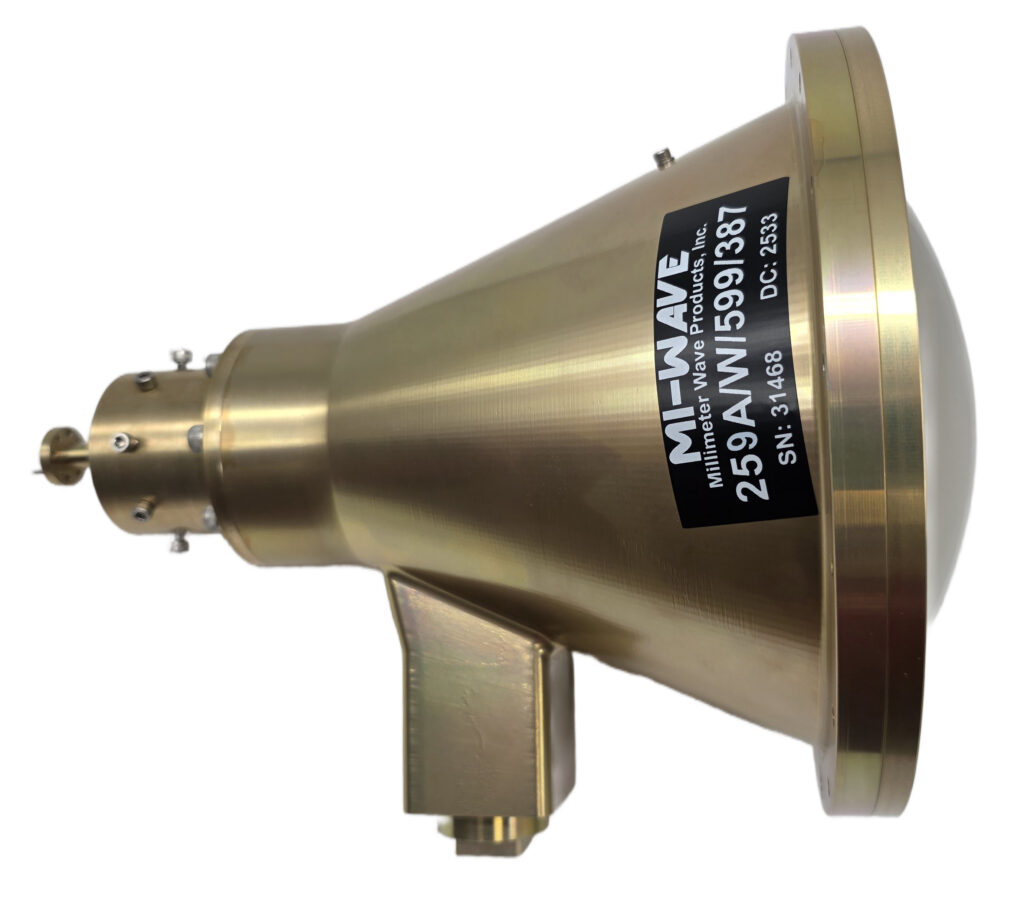
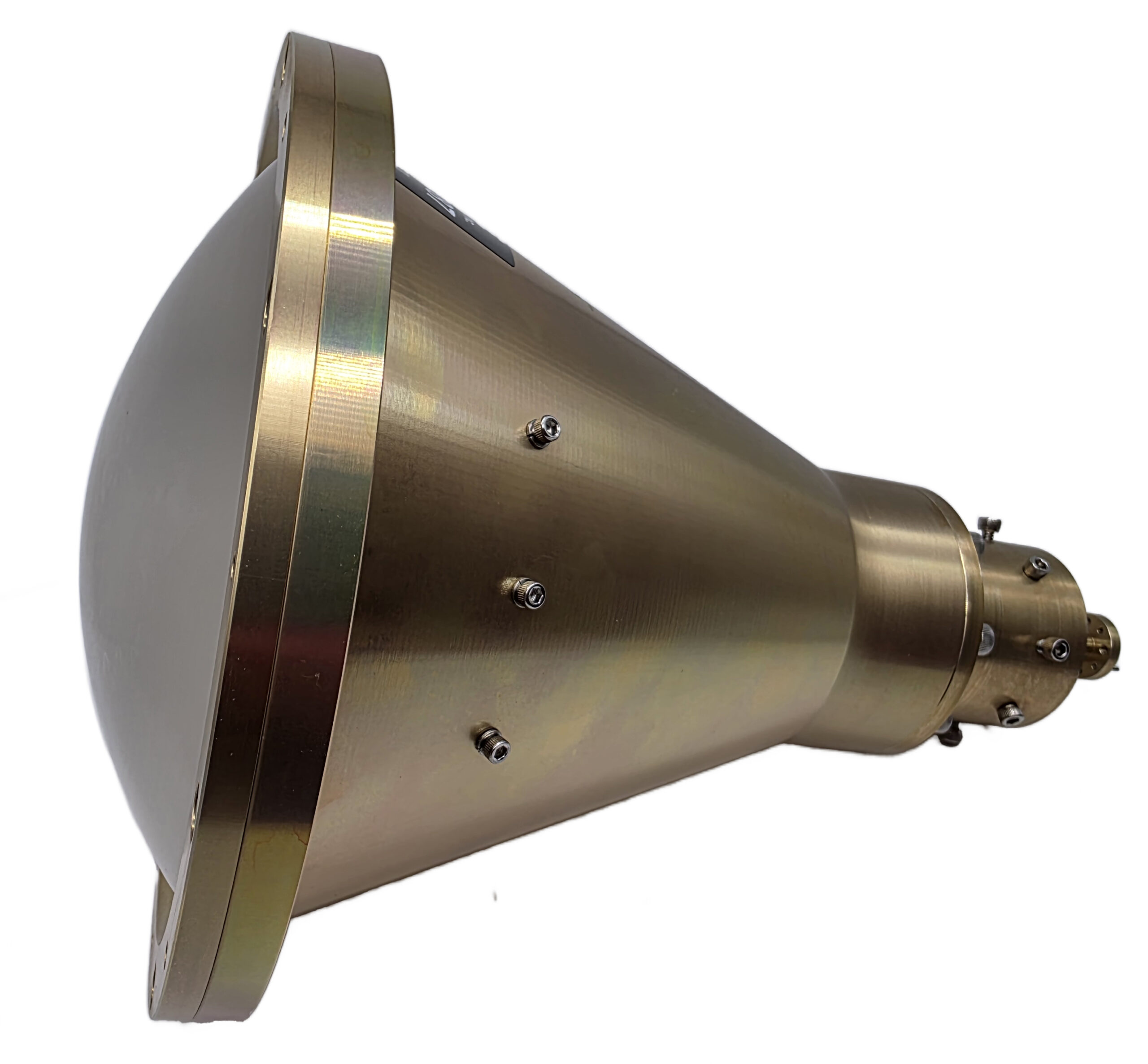
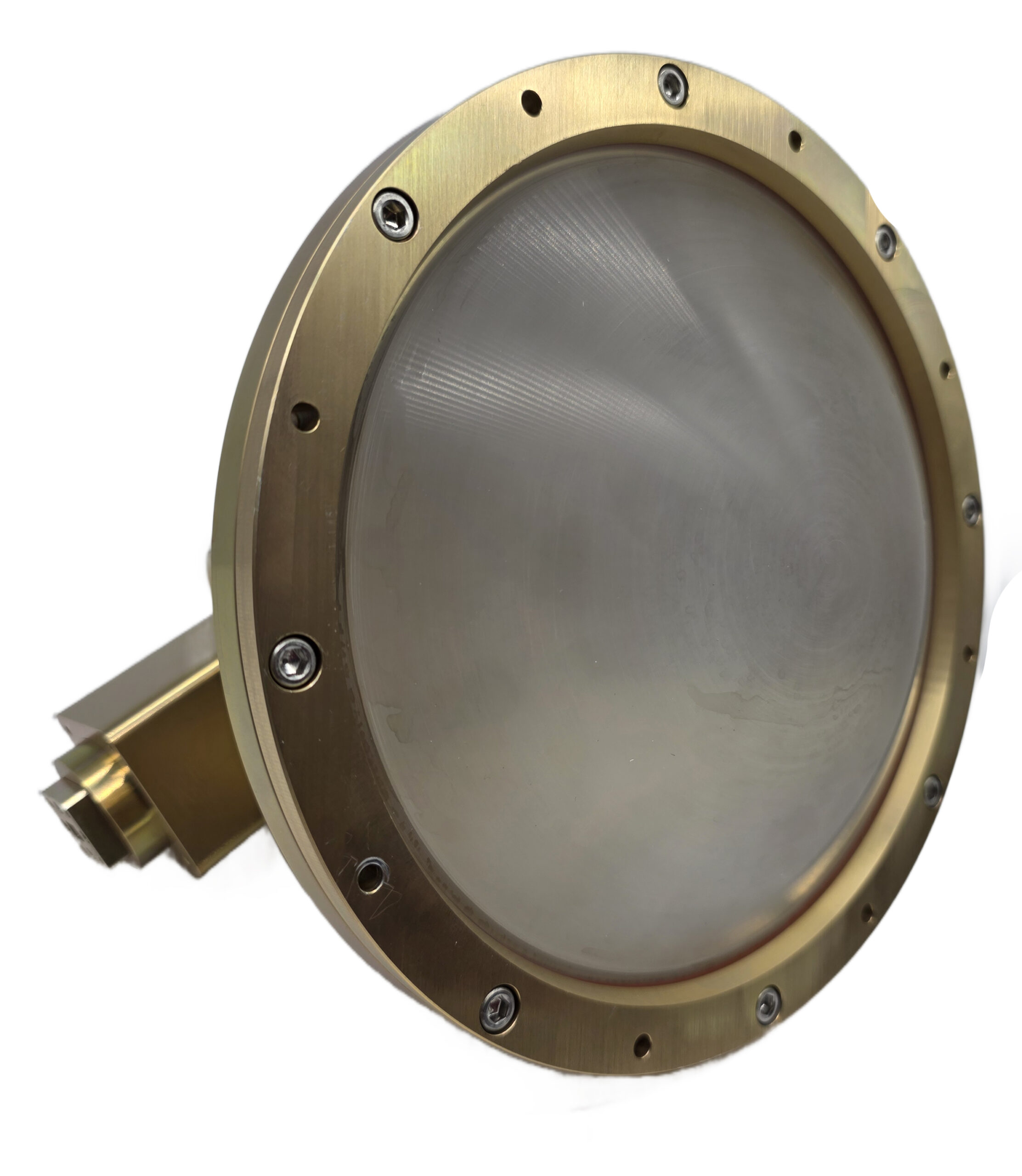
*Actual product may be different from the image shown per customers specifcations
*All data presented is collected from a sample lot.
* Actual data may vary unit to unit, slightly.
*All testing was performed under +25 °C case temperature.
*Consult factory to confirm if material, plating, size, shape, orientation and any electrical parameter is critical for the application as website information is for reference only.
*Millimeter Wave Products, Inc. reserves the right to change the information presented on website without notice as we continue to enhance the performance and design of our products.
Dual- and Four-Frequency Operation
Dual-Frequency Mode
Each feed port is designed for a dedicated frequency band. Example SatCom configurations include:
-
Port A: Ka-Band (27–31 GHz) uplink
-
Port B: Q-Band (37–42 GHz) or V-Band (47–51 GHz) downlink
This configuration supports simultaneous multi-band operation with high isolation and stable performance.
Dual- and Four-Frequency Operation
Dual-Frequency Mode
Each feed port is designed for a dedicated frequency band. Example SatCom configurations include:
-
Port A: Ka-Band (27–31 GHz) uplink
-
Port B: Q-Band (37–42 GHz) or V-Band (47–51 GHz) downlink
This configuration supports simultaneous multi-band operation with high isolation and stable performance.
SatCom Frequency Coverage
Mi-Wave dual-feed horn lens antennas support satellite communication bands including:
-
Ka-Band (26.5–40 GHz) for high-capacity uplinks and downlinks
-
Q-Band (33–50 GHz) for next-generation feeder links
-
V-Band (50–75 GHz) for emerging high-throughput and future satellite networks
Extended coverage up to 170 GHz supports payload development, RF validation, and advanced research programs.
Scalable Aperture Options
Standard lens diameters allow performance to be tailored to system requirements:
-
6-inch lens
Compact and lightweight for space-constrained gateway or test systems -
9-inch lens
Balanced size and gain for general SatCom ground infrastructure -
12-inch lens
Highest gain and narrowest beamwidth for long-range feeder links and precision measurements
What This Antenna Does for SatCom Systems
Dual-feed horn lens antennas enable multiple satellite communication links to operate concurrently from a single physical aperture. Each feed path is electrically isolated and independently optimized, allowing different frequency bands or polarizations to be used simultaneously without cross-interference.
For SatCom applications, this means:
-
Uplink and downlink paths can be separated by frequency or polarization
-
Feeder links and gateway links can operate in parallel
-
Telemetry, tracking, and auxiliary channels can coexist with primary communication links
The lens-corrected horn structure focuses RF energy into a high-gain, narrow beam, improving link margin and reducing susceptibility to interference and atmospheric losses, which is especially critical at Q-Band and V-Band frequencies.
Why Choose Mi-Wave for SatCom Horn Lens Antennas
Mi-Wave is a trusted supplier of microwave and millimeter-wave RF hardware supporting satellite communication systems worldwide. Our dual-feed horn lens antennas are designed, manufactured, and tested to meet the demanding requirements of modern SatCom gateways, ground stations, and payload test environments.
SatCom-Driven Engineering
Each antenna is engineered with careful attention to feed isolation, beam shaping, polarization purity, and wideband performance, ensuring reliable operation across Ka-, Q-, and V-Band systems.
Broad Frequency and System Expertise
With coverage from 10 GHz to 170 GHz, Mi-Wave supports both current SatCom deployments and next-generation satellite architectures.
Custom SatCom Solutions
Mi-Wave offers custom antenna configurations including:
-
Specific SatCom frequency combinations
-
Integrated diplexers and filters
-
Polarization control
-
Mechanical and mounting adaptations for gateway environments
Proven Manufacturing and Test Capability
All antennas are precision manufactured and validated to ensure consistent, repeatable performance, making Mi-Wave a reliable partner for production programs and critical satellite communication infrastructure.
Typical SatCom Applications
-
Satellite ground stations and gateway terminals
-
Ka-, Q-, and V-Band feeder links
-
High-throughput satellite (HTS) systems
-
Payload and RF subsystem validation
-
Multi-band uplink and downlink architectures
-
System commissioning and long-term performance monitoring
Key Features for SatCom Applications
-
Dual-feed architecture for simultaneous multi-band operation
-
Dual- or four-frequency capability from a single aperture
-
High gain with narrow beamwidth and low sidelobe levels
-
Excellent polarization purity and channel isolation
-
Optimized for Ka-, Q-, and V-Band SatCom systems
-
Scalable lens sizes for system-specific gain requirements
-
Suitable for laboratory, rooftop, and outdoor gateway environments
-
Custom configurations available
Notes on Specifications and Customization
-
All performance data is based on sample lots.
-
Actual unit performance may vary slightly.
-
Testing is performed at +25 °C case temperature.
-
Consult Mi-Wave if material, plating, size, orientation, or electrical parameters are critical to your SatCom application.
-
Specifications are subject to change as designs and performance continue to be enhanced.