

Next-Gen RF SatCom Systems
High-Performance Q/V-Band SatCom Hardware and System Solutions
Mi-Wave delivers high-performance millimeter-wave solutions for next-generation SatCom infrastructure, feeder links, and emerging satellite networks. From precision RF components to integrated Q/V-band subsystems, we support engineers developing wideband satellite communications and advanced testing platforms with reliable, production-ready hardware.
New for SAT SHOW 2026!
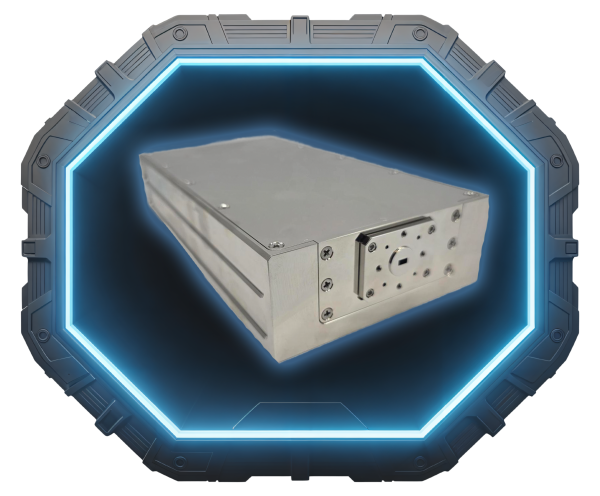
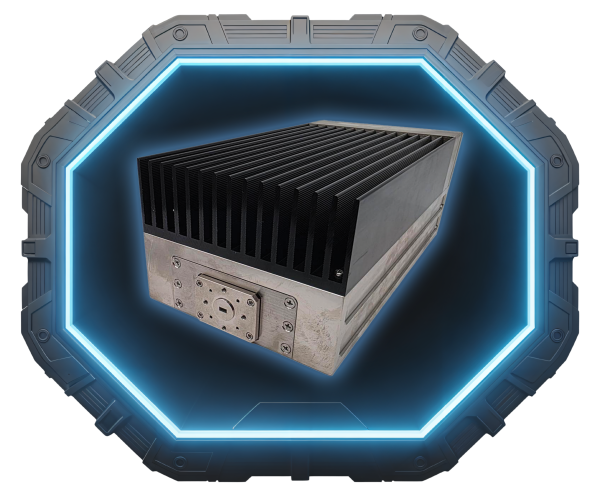
Key Frequency Coverage (Q/V-Band SatCom)
Mi-Wave supports the most common frequency allocations used in Q/V-band satellite feeder link and gateway communications, with custom coverage available for program-specific architectures.
-
Q-Band Downlink Hardware: 37.5 – 42.5 GHz
-
V-Band Uplink Hardware: 47.5 – 54.0 GHz
-
Wideband SatCom Channel Support: Multi-GHz instantaneous bandwidth options
-
Custom Frequency Plans: Tailored RF/IF/LO designs for satellite network requirements
-
Waveguide Interfaces: WR-series Q/V-band waveguide integration (model dependent)
These bands provide significantly more available spectrum than Ku- or Ka-band systems, enabling higher throughput satellite communications and scalable gateway expansion.
Satellite Communications RF Performance Highlights
Mi-Wave Q/V-band components are designed for high-throughput satellite communications, where link margin, sensitivity, and linearity directly impact system performance.
-
Low Noise Figure Receiver Chains (Q-band LNAs): Optimized for satellite downlink sensitivity
-
High Linearity Uplink Hardware (V-band Transmit Assemblies): Supports wideband modulation and multi-carrier operation
-
Stable Conversion Gain (Up/Down Converters): Precision frequency translation for feeder link architectures
-
Gain Flatness Across Wideband Coverage: Engineered for consistent SatCom channel performance
-
High Spectral Purity and Spurious Control: Designed for regulatory and system compliance
-
Thermal and Environmental Stability: Reliable operation across demanding satellite infrastructure deployments
Mi-Wave solutions are built to support both operational SatCom systems and controlled lab characterization environments.
Frequency Conversion and Feeder Link Architectures
Q/V-band satellite networks often require precise frequency translation stages to support feeder link uplinks, downlinks, and gateway backhaul.
Mi-Wave provides Q/V-band frequency converter hardware including:
-
Upconverters for V-band uplink transmission chains
-
Downconverters for Q-band downlink receive architectures
-
Wideband IF and LO planning for satellite gateway integration
-
Low phase noise conversion suitable for high-order modulation
These converter systems are critical building blocks for satellite ground segment expansion, gateway hubs, and next-generation NGSO feeder link deployments.
Phase Noise, Spurs, and Signal Integrity for SatCom
Satellite communications at millimeter-wave frequencies require strict control of spectral performance.
Mi-Wave Q/V-band systems are engineered for:
-
Low Phase Noise Architectures: Suitable for wideband satellite modulation schemes
-
Reduced Spurious Content: Clean spectral performance across tuning ranges
-
Image and Harmonic Suppression: Minimizing unwanted conversion products
-
Multi-Carrier Linearity: Supporting broadband SatCom network operation
-
High Signal Fidelity: Preserving link quality in feeder link and gateway environments
System Integration, Monitoring, and Control
Mi-Wave hardware supports integration into complex SatCom architectures, including gateway infrastructure, satellite terminals, testbeds, and payload validation platforms.
Available integration features include:
-
Remote Frequency and Gain Configuration for converter and subsystem architectures
-
Digital Control Interfaces for repeatable SatCom system tuning
-
Subsystem-Level Assemblies including integrated Q/V-band front ends
-
Waveguide and Coax Packaging Options for flexible deployment
-
Ruggedized and Rack-Mount Enclosures for commercial and defense installations
Mi-Wave supports programs from prototype development through full-scale manufacturing.
RF, Microwave, and SatCom Calculators
These WordPress-safe calculators support RF and microwave system planning for SatCom, Q/V-band links, 5G/mmWave, radar, and test and measurement. Use them for link budget, EIRP, cascaded noise figure, IF/LO/RF frequency planning, and rain fade margin. Results are idealized for fast engineering estimates.
Tip: For best SEO, keep this page text visible, and use the accordions to organize tools without hiding the topic keywords.
Link Budget Calculator (Rx Power + Link Margin)
Estimates received power and link margin using EIRP, free-space path loss (FSPL), receiver antenna gain, and system losses. Useful for SatCom uplink/downlink, point-to-point microwave, and mmWave links.
EIRP Calculator (Power + Gain − Loss)
Computes EIRP from transmit power, antenna gain, and losses. Outputs in dBW and dBm. Helps with SatCom spectral planning, regulatory paperwork, and quick transmitter comparisons.
Cascaded Noise Figure Calculator (Friis)
Calculates overall noise figure and overall gain for a cascaded chain (LNA, filters, converters, IF amps). Uses the Friis formula, which heavily weights the first stage. Great for receiver front end design.
IF / LO / RF Planner (Injection + Image)
Plans ideal mixer relationships for upconversion and downconversion. Solve for the missing frequency and compute the image frequency. Useful for frequency plans and multi-band system design.
Rain Fade Calculator (Simple Fade + Margin)
Quick estimate of rain attenuation using a simplified model: Fade (dB) = Specific Attenuation (dB/km) × Effective Path Length (km). This is a practical planning tool for Ka-band, Q-band, and V-band SatCom links.
Q/V-Band SatCom Products FAQ
These quick answers cover Q-band and V-band SatCom products including upconverters, downconverters, up/downconverters, wideband synthesizers/LO sources, and supporting concepts such as phase noise, frequency stability, image rejection, LO leakage, and SatCom terminal performance targets.
Quick Answers
What is Q-band and V-band in satellite communications?
In SatCom, Q-band and V-band refer to millimeter-wave frequency ranges used for high-capacity links. Q/V-band systems are used for gateway-to-satellite and feeder links where higher bandwidth and spectrum availability can support higher throughput, especially in modern HTS and next-generation satellite networks.
What does a Q/V-band upconverter do in a SatCom uplink?
A Q/V-band upconverter translates a lower-frequency input (often IF or L-band, depending on architecture) to a higher Q-band or V-band RF frequency for transmission. In gateway uplinks, the upconverter is commonly followed by a high power amplifier before the antenna.
What does a Q/V-band downconverter do in a SatCom downlink?
A Q/V-band downconverter converts a high-frequency received signal down to a lower IF or L-band output that is easier to filter, amplify, digitize, and demodulate. In weak-signal receive chains, downconverters are often paired with an LNA to preserve receiver sensitivity and system G/T.
Why are phase noise and frequency stability so important for Q/V-band SatCom?
At millimeter-wave frequencies, phase noise and frequency stability directly impact EVM, carrier recovery, adjacent-channel interference, and overall link margin. Lower phase noise and stable references help maintain spectral purity and support high-order modulation used in high-throughput SatCom.
When should you use an external 10 MHz reference in a Q/V-band system?
Use an external 10 MHz reference when you need improved long-term accuracy or synchronization across multiple devices (for example, multi-channel gateways, redundant chains, phased arrays, or coherent test setups). Locking to a shared reference improves frequency alignment and repeatability.
More Technical Questions
What is a feeder link and why does Q/V-band matter for it?
What is LO leakage and why does it matter in Q/V-band converters?
What is image frequency and why is image rejection critical at Q/V-band?
What is conversion gain and how is it used in SatCom chains?
What does “frequency inversion” mean in a downconverter?
What IF frequencies are common for Q/V-band SatCom equipment?
What is instantaneous bandwidth and why does it matter for SatCom?
How do phase noise and spurs show up in a spectrum analyzer?
What interfaces are common for controlling Q/V-band converters and synthesizers?
Where are Q/V-band SatCom converters and LO sources typically used?
Satellite System Architecture
Satellite Communications (SatCom)
The use of orbiting satellites to transmit and receive RF signals for data, voice, video, and sensing applications. Modern SatCom systems rely heavily on microwave and millimeter-wave technologies, particularly Ka-, Q-, and V-band, to support high data rates and global coverage.
Ground Segment
The terrestrial portion of a SatCom network, including gateway stations, teleports, network operation centers (NOCs), antennas, LNAs, power amplifiers, frequency converters, and synthesizers. Ground segment performance directly impacts link reliability and throughput.
Space Segment
The satellite payload and onboard RF subsystems, including transponders, frequency converters, local oscillators, and amplifiers used to relay signals between Earth and space.
User Terminal
A fixed, transportable, or mobile station that communicates directly with a satellite. User terminals rely on low noise receivers, compact power amplifiers, and frequency converters to maintain link quality.
Frequency Bands Used in SatCom
Ku-Band
Typically 12–18 GHz, widely used for broadcast, VSAT, and legacy SatCom services.
Ka-Band
Typically 26–40 GHz, supporting high-throughput satellites (HTS) and broadband services with wider available bandwidth.
Q-Band
Typically 33–50 GHz, increasingly used for feeder links and gateway-to-satellite connections where large bandwidths are required.
V-Band
Typically 40–75 GHz, used in next-generation SatCom feeder links and experimental ultra-high-capacity satellite systems.
Feeder Link Bands
Higher frequency links (Ka/Q/V) used between satellites and gateways to offload high-capacity traffic to terrestrial networks.
RF Front-End Components for SatCom
Low Noise Amplifier (LNA)
An RF amplifier placed at the receiver front end to amplify extremely weak satellite signals with minimal added noise. LNAs are critical in SatCom because path loss and atmospheric attenuation significantly reduce signal levels.
Noise Temperature
A representation of receiver noise performance expressed in Kelvin (K). Closely related to noise figure, noise temperature is commonly used in SatCom link budgets.
RF Power Amplifier
An amplifier that boosts RF signals to power levels suitable for transmission to a satellite. In SatCom uplinks, power amplifiers must balance output power, linearity, efficiency, and thermal management.
High Power Amplifier (HPA)
A power amplifier designed for uplink transmission, often operating near saturation. HPAs are used in gateways, teleports, and uplink earth stations.
Frequency Conversion in SatCom Systems
Upconverter
Converts IF or L-band signals to high-frequency RF bands (Ka/Q/V) for satellite uplink transmission.
Downconverter
Converts high-frequency satellite downlink signals to IF for demodulation and processing.
Block Upconverter (BUC)
An integrated unit combining an upconverter and power amplifier, commonly mounted near the antenna feed to minimize waveguide loss.
Low Noise Block Downconverter (LNB)
An integrated unit combining an LNA and downconverter, widely used in SatCom receive systems.
Local Oscillators & Frequency Sources
Frequency Synthesizer
A tunable RF signal source used for carrier generation, local oscillator distribution, and system testing. Synthesizers are essential for precise frequency planning in SatCom networks.
Phase-Locked Loop (PLL)
A control system that locks an oscillator to a stable reference, ensuring accurate and stable frequency generation.
External 10 MHz Reference
A highly stable frequency reference used to synchronize multiple gateways, converters, and synthesizers in large SatCom networks.
Phase Coherence
The ability to maintain consistent phase relationships between multiple RF channels, critical for beamforming and phased array SatCom antennas.
Signal Quality & Modulation Metrics
Phase Noise
Random short-term fluctuations in signal phase that degrade modulation accuracy. Low phase noise is essential for high-order QAM modulation used in modern SatCom.
EVM (Error Vector Magnitude)
A measure of modulation quality. Poor EVM results in reduced data rates and higher bit error rates.
BER (Bit Error Rate)
The rate at which errors occur in transmitted data. BER is directly influenced by noise figure, phase noise, and amplifier linearity.
Spectral Mask
Regulatory limits defining how much RF energy may appear outside the assigned channel. Power amplifiers and converters must meet these masks.
Atmospheric & Propagation Effects
Free Space Path Loss (FSPL)
Signal attenuation due to distance traveled between satellite and Earth.
Rain Fade
Signal attenuation caused by rainfall, especially severe at Ka-, Q-, and V-band frequencies.
Atmospheric Absorption
Loss caused by oxygen and water vapor absorption, particularly significant in V-band SatCom systems.
Fade Margin
Additional link budget margin designed to compensate for atmospheric and environmental losses.
Advanced SatCom Architectures
High-Throughput Satellite (HTS)
Satellites designed to deliver significantly higher data rates using spot beams, frequency reuse, and higher frequency bands.
Spot Beam
A focused satellite beam covering a specific geographic area, improving frequency reuse and capacity.
Beamforming
The use of multiple antennas and controlled phase relationships to electronically steer and shape beams.
Phased Array Antenna
An antenna system using multiple radiating elements with phase-controlled signals, increasingly common in modern SatCom terminals.
Test, Measurement & Gateway Operations
Gateway Earth Station
A high-capacity SatCom hub connecting satellite networks to terrestrial infrastructure.
Carrier-to-Noise Ratio (C/N)
A measure of signal quality at the receiver.
Link Budget
A comprehensive calculation of gains and losses from transmitter to receiver.
RF Test & Measurement
Laboratory and field testing of SatCom components using signal generators, synthesizers, spectrum analyzers, LNAs, and power amplifiers.
System Reliability & Deployment
Redundancy
Use of backup RF chains or components to ensure continuous operation in mission-critical SatCom systems.
Outdoor Unit (ODU)
RF equipment mounted outdoors near the antenna to minimize signal loss.
Thermal Management
Techniques used to dissipate heat from high-power RF components in gateways and uplink systems.
High Power Amplifiers (SatCom)
High-power RF and millimeter-wave amplifiers for satellite uplink transmit chains, gateway stations, and payload testing across Ku-, Ka-, Q-, and V-band frequencies.
Sample applications:
• Satellite uplink transmit chains
• Ground station gateways
• High-throughput SatCom payload testing
| Model | Band | Description | Frequency Range | Gain | Output Power P1dB | Output Power Psat | Input/Output Port | DC Bias | LINK |
|---|---|---|---|---|---|---|---|---|---|
| 955B-35/48/30/27/383H | Q-Band | Power Amplifier | 35–48 GHz | 30 dB | +25 dBm | +27 dBm | WR-22 Waveguide, UG-383/U Flange | +8 V | |
| 955B-37/48.2/30/27/1.85mmFH | Q-Band | Power Amplifier | 37–48.2 GHz | 30 dB | +27 dBm | 1.85 mm Female | +6 V | ||
| 955B-43/46/30/33/2.4mmFH | Q-Band | Power Amplifier | 43–46 GHz | 30 dB | +33 dBm | 2.4 mm Female | +8 V | ||
| 955B-50/25/27/2.4mmFH | Q-Band | Power Amplifier | 49.5–50.5 GHz | 25 dB | +27 dBm | +30 dBm | 2.4 mm Female | +6 V | |
| 955B-50/40/44/383H | Q-Band | Power Amplifier | 49.5–50.5 GHz | 40 dB | +44 dBm | +47 dBm | WR-22 Waveguide, UG-383/U Flange | +28 V | |
| 955BF-30/20/383H | Q-Band | Power Amplifier | 33–50 GHz | 30 dB | +20 dBm | WR-22 Waveguide, UG-383/U Flange | +8 V | ||
| 955V-50/25/20/2.4mmF | V-Band | Power Amplifier | 49.5–50.5 GHz | 25 dB | +20 dBm | +23 dBm | 2.4 mm Female | +6 V | |
| 955V-50/68/35/18/385 | V-Band | Power Amplifier | 50–68 GHz | 35 dB | +18 dBm | WR-15 Waveguide, UG-385/U Flange | +6 V | ||
| 955V-50/70/28/15/385 | V-Band | Power Amplifier | 50–70 GHz | 28 dB | +15 dBm | WR-15 Waveguide, UG-385/U Flange | +6 V | ||
| 955V-55/65/30/24/385 | V-Band | Power Amplifier | 55–65 GHz | 30 dB | +22 dBm | +24 dBm | WR-15 Waveguide, UG-385/U Flange | +6 V | |
| 955V-57/68/25/26/385 | V-Band | Power Amplifier | 57–68 GHz | 25 dB | +26 dBm | WR-15 Waveguide, UG-385/U Flange | +6 V | ||
| 955V-57/70/25/30/385H | V-Band | Power Amplifier | 57–70 GHz | 25 dB | +30 dBm | WR-15 Waveguide, UG-385/U Flange | +8 V | ||
| 955V-60/25/31.5/385H | V-Band | Power Amplifier | 59–61 GHz | 25 dB | +31.5 dBm | WR-15 Waveguide, UG-385/U Flange | +6 V | ||
| 955VF-25/25/385H | V-Band | Power Amplifier | 50–75 GHz | 25 dB | +25 dBm | WR-15 Waveguide, UG-385/U Flange | +6 V | ||
| 955VF-35/15/385 | V-Band | Power Amplifier | 50–75 GHz | 35 dB | +15 dBm | WR-15 Waveguide, UG-385/U Flange | +6 V | ||
| 955VF-40/385 | V-Band | Power Amplifier | 50–75 GHz | 40 dB | +9 dBm | +12 dBm | WR-15 Waveguide, UG-385/U Flange | +6 V |
Low Noise Amplifiers (SatCom)
Low-noise amplifiers optimized for satellite downlink receive chains, ground terminals, and payload front-end receivers where low noise figure and stable gain are critical.
Sample applications:
• Satellite downlink receivers
• Ground terminal front ends
• Payload receive chains
| Model | Band | Frequency Range | Gain | Noise Figure | Output Power Psat | Output Power P1dB | Input/Output Port | DC Bias | LINK |
|---|---|---|---|---|---|---|---|---|---|
| 955BF-15/8/383 | Q-Band | 33–50 GHz | 10–15 dB | 5.5 dB | +8 dBm | WR-22 Waveguide, UG-383/U Flange | +8–12 V | ||
| 955BF-20/10/383 | Q-Band | 33–50 GHz | 20 dB | 5.5 dB | +10 dBm | WR-22 Waveguide, UG-383/U Flange | +8 V | ||
| 955BF-30/10/383 | Q-Band | 33–50 GHz | 30 dB | 5.5 dB | +10 dBm | WR-22 Waveguide, UG-383/U Flange | +8 V | ||
| 955BF-40/10/383 | Q-Band | 33–50 GHz | 40 dB | 6 dB | +10 dBm | WR-22 Waveguide, UG-383/U Flange | +8 V | ||
| 955V-50/68/35/18/385 | V-Band | 50–68 GHz | 35 dB | +18 dBm | WR-15 Waveguide, UG-385/U Flange | +6 V | |||
| 955VF-35/15/385 | V-Band | 50–75 GHz | 35 dB | +18 dBm | WR-15 Waveguide, UG-385/U Flange | +6 V | |||
| 955VF-35/13/1.85mmF | V-Band | 50–75 GHz | 35 dB | 5 dB | +13 dBm | 1.85 mm Female | +6 V | ||
| 955VF-20/15/385 | V-Band | 50–75 GHz | 20 dB | 5 dB | +15 dBm | WR-15 Waveguide, UG-385/U Flange | +6 V | ||
| 955VF-30/10/385 | V-Band | 50–75 GHz | 30 dB | 5 dB | +10 dBm | WR-15 Waveguide, UG-385/U Flange | +6 V | ||
| 955VF-40/385 | V-Band | 50–75 GHz | 40 dB | 5 dB | +9 dBm | WR-15 Waveguide, UG-385/U Flange | +6–8 V |
Frequency Converters (SatCom)
RF upconverters and downconverters for SatCom systems supporting IF-to-RF translation, LO planning, and wideband signal processing in satellite payloads and ground infrastructure.
Sample applications:
• Upconverter and downconverter chains
• Payload frequency translation
• Ground system IF/RF integration
| Model | Band | Description | Frequency Range | Converter Type | # of Channels | Packaging | User Preferences | LINK |
|---|---|---|---|---|---|---|---|---|
| 970B-38.25/383S | Q-Band | Downconverter | 38.0–38.5 GHz | Synthesized | Block | 1, 2, 3, 4 | Commercial Rack Environmental | Bandwidth | Internal/External Ref | Digital Attenuation | AGC | |
| 980B-43.25/383S | Q-Band | Upconverter | 42.0–43.5 GHz | Synthesized | Block | 1, 2, 3, 4 | Commercial Rack Environmental | Bandwidth | Internal/External Ref | Digital Attenuation | AGC | |
| 970V-62.5/385 | V-Band | Downconverter | 70–65 GHz | Synthesized | Block | 1, 2, 3, 4 | Commercial Rack Environmental | Bandwidth | Internal/External Ref | Digital Attenuation | AGC |
RF Upconverters and Downconverters for Q/V-Band SatCom
RF Upconversion Functionality (Q/V-Band)
Mi-Wave RF upconverters and downconverters are designed to support next-generation Q-band and V-band satellite communication systems, enabling precise frequency translation between intermediate frequency (IF), L-band, and high-frequency RF stages used in modern SatCom payloads and ground infrastructure.
In Q/V-band transmit architectures, an upconverter translates a lower-frequency IF or L-band input signal to a high-frequency RF output suitable for millimeter-wave satellite uplinks. The converted signal is typically followed by a Q-band or V-band RF power amplifier, raising the signal to the required transmit level for gateway stations or payload testing.
When paired with external power amplification, Mi-Wave upconverter platforms provide a flexible alternative to fixed-frequency solutions, offering frequency agility, fine tuning resolution, and synthesized local oscillator control to support evolving SatCom frequency plans and channelization requirements.
Key performance characteristics of Mi-Wave Q/V-band RF upconverters and downconverters include:
-
Wide frequency translation coverage for Q-band and V-band SatCom
-
Stable conversion gain with low variation across operating bands
-
Low phase noise for high spectral purity and modulation integrity
-
Fine tuning resolution and frequency repeatability
-
Digital gain control and remote operation for system integration
Typical Q/V-Band SatCom Applications
Mi-Wave RF upconverters and downconverters are commonly used in:
-
Q-band and V-band satellite uplink transmit chains
-
High-throughput SatCom gateway stations
-
Payload and ground segment frequency translation
-
Satellite modem and RF front-end integration
-
Advanced SatCom payload development and testing
-
mmWave RF and SatCom test and measurement systems
-
Frequency-agile SatCom research and system characterization
Their wide frequency coverage and programmable control make them particularly valuable in next-generation satellite systems where dynamic frequency planning, wide bandwidths, and high spectral efficiency are required.
System Integration and Configuration
Mi-Wave RF frequency conversion platforms are designed for system-level integration in SatCom environments, supporting remote configuration, monitoring, and control of frequency and gain. Available configuration options include:
-
Multi-channel architectures
-
Independent digital gain control per channel
-
High IF input power handling
-
Multiple IF and RF input/output paths
-
Commercial rack-mount or ruggedized packaging
These capabilities allow Mi-Wave upconverters and downconverters to be deployed in commercial, defense, airborne, and controlled-environment SatCom installations.
Role in Q/V-Band RF Signal Conversion Systems
Within a SatCom RF signal chain, the upconverter or downconverter serves as a critical frequency translation stage, ensuring signals are delivered to downstream amplification, filtering, and transmission stages with the required frequency accuracy, stability, and spectral cleanliness.
By maintaining tight control over conversion performance, gain, and spurious response, Mi-Wave RF frequency converters support reliable operation in high-capacity Q/V-band satellite communication systems where link integrity and regulatory compliance are essential.
Build Your Q/V-Band RF Upconverter and Downconverter Solutions
With more than 35 years of experience in microwave and millimeter-wave RF engineering, Mi-Wave supports the design, prototyping, manufacturing, and integration of RF upconverters, downconverters, transceivers, and SatCom RF sub-assemblies.
Our team works closely with customers to support application-specific configurations, frequency planning, and system-level integration for Q-band and V-band satellite systems. From early-stage concept development through production-ready hardware, Mi-Wave provides engineering support across the full lifecycle of advanced SatCom RF systems.
Contact Mi-Wave to discuss Q/V-band RF upconverters, downconverters, transceivers, and integrated frequency conversion solutions for next-generation satellite communications.